Turkish Attacks on Journalists: A War Crime and Impunity
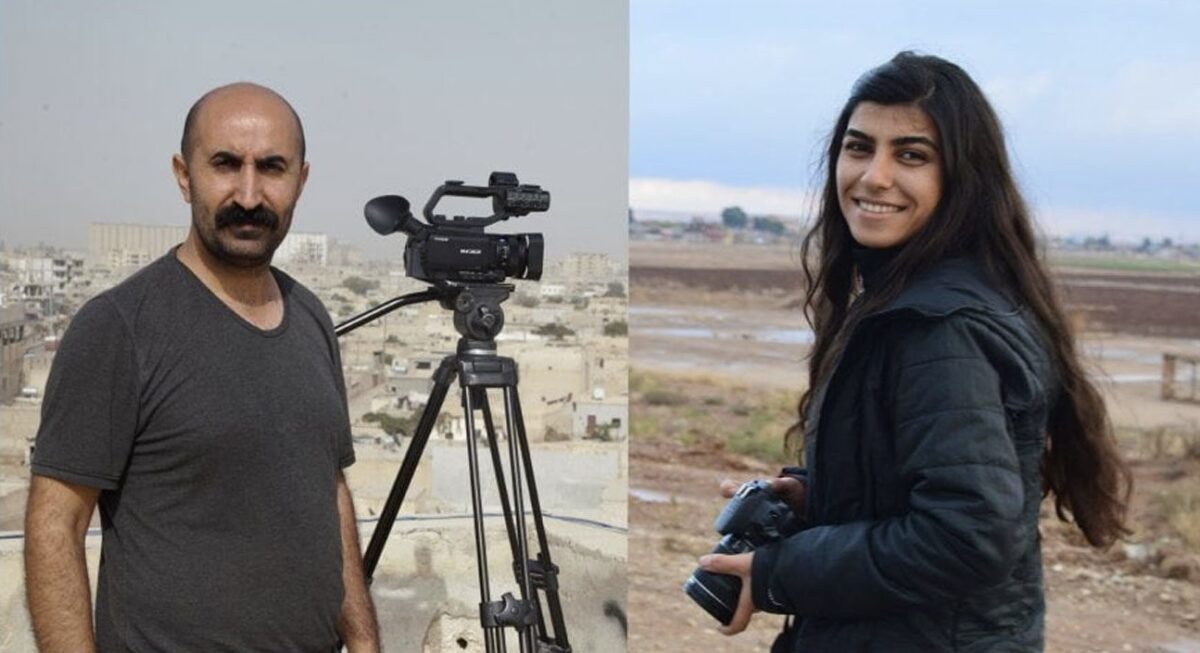
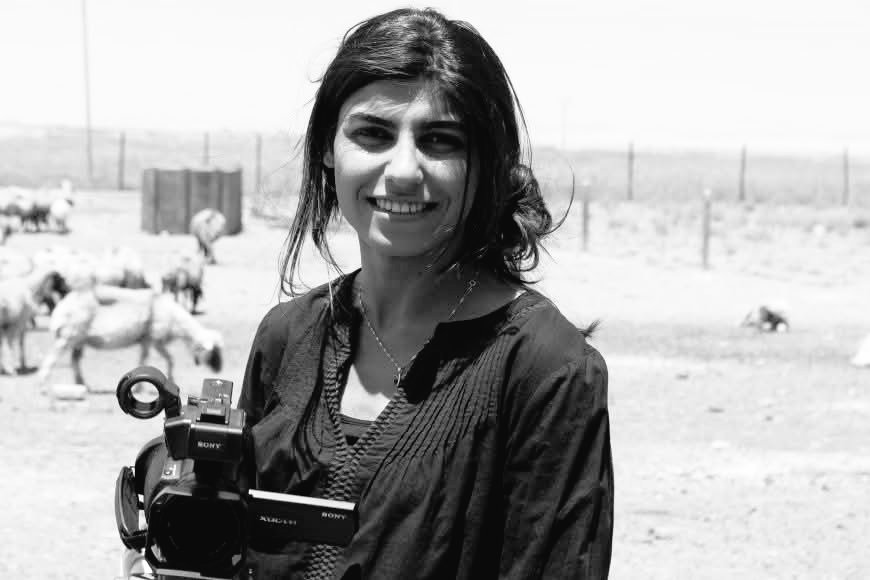
Nazim Dastan and Cihan Bilgin | Picture Credits: Hawar News Agency (ANHA)
On December 19, 2024, a Turkish unmanned aerial vehicle (UAV) killed journalists Nazım Daştan and Cihan Bilgin near the Tishreen Dam in Rojava, Northern Syria. A year has passed, and there has not been any effective investigation into the attack, nor have those responsible been identified.
The murders of Nazım Daştan and Cihan Bilgin took place in a period when the balance of power was rapidly changing after the sudden collapse of the Bashar al-Assad regime.
During this time, paramilitary groups affiliated with the Syrian National Army (SNA), supported and coordinated by Turkey, were advancing toward North and East Syria – aiming to control the Tishreen Dam, located on a strategic transit line between Manbij and Kobanê.
Among the journalists documenting the events in Tishreen were Nazım Daştan and Cihan Bilgin. Nazım was a student of cinema and an award-winning photographer, whose documentary about Yezidi women was screened internationally. And Cihan started out very young, selling newspapers in the streets of Amed (Diyarbakir), before the Kurdish women’s revolution and the fight for Kobanê pushed her toward covering news about Rojava (Kurdistan Region in Syria).
They were both experienced journalists who had reported from the region for years. On 19 December 2024, near the Tishreen dam, they were killed in an attack carried out by an armed Turkish UAV while traveling in a vehicle clearly marked “Press”.
Implicit Admission from the Turkish State
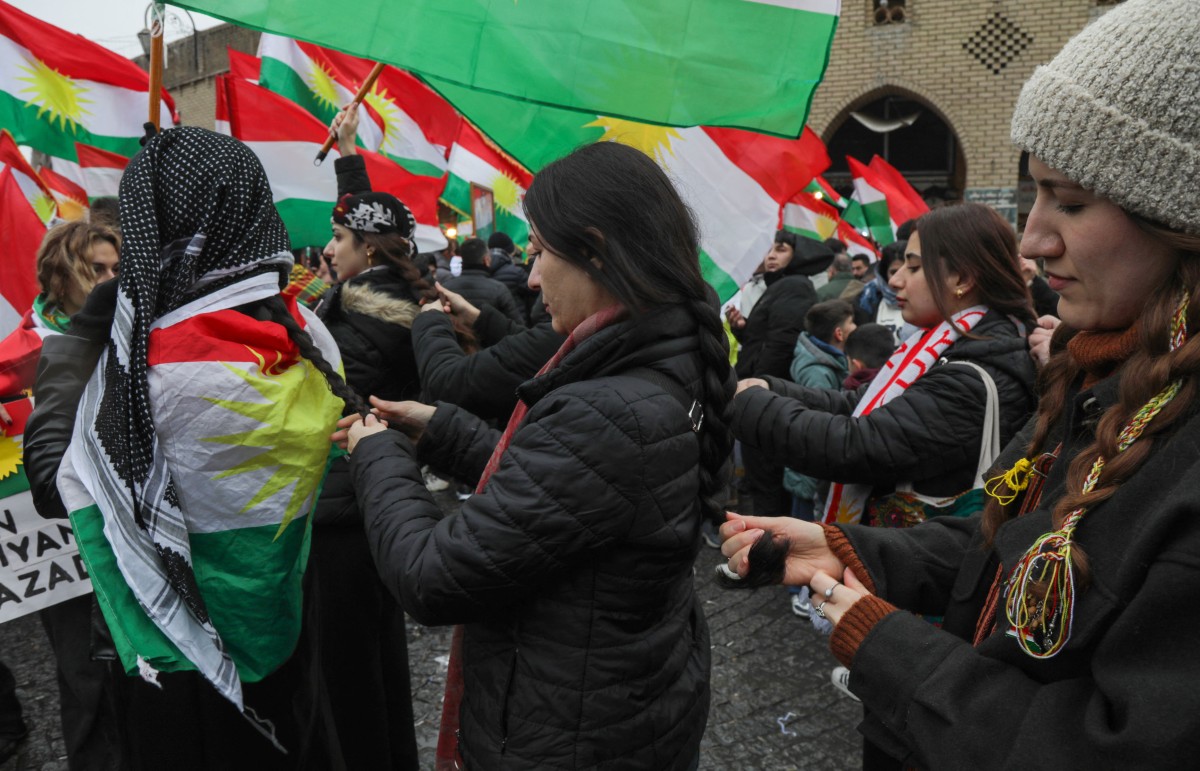
Killing Nazım and Cihan sparked mass public reaction. Numerous institutions, including bar associations, professional press organizations, and human rights groups, issued joint statements. The central demand within all these statements left little room for doubt: conduct an effective, independent investigation and identify those responsible.
In the aftermath, while the Turkish state issued no official statement, an implicit admission came from figures close to the government. Ahmet Hakan, a columnist for the Hürriyet newspaper known for his proximity to the government, acknowledged in his column that Nazım and Cihan were killed in an attack carried out by an armed UAV (SİHA in Turkish) belonging to Turkey, while at the same time arguing that they were not journalists. Additionally, Hüseyin Yayman, a member of parliament from the ruling Justice and Development Party (AKP), commented on the motion for a parliamentary inquiry submitted by the Peoples’ Equality and Democracy Party (DEM Party) by saying, “It is not right to speak of the profession of those who do journalism on behalf of the PKK.”
Attacks against journalists who took to the streets, along with detentions and arrests, were one more development that pointed to the government’s involvement in the murders.
During the protests, dozens of journalists were taken into custody, with seven being arrested. Among those arrested was journalist Hayri Tunç, who has since stated that during his detention and trial process, actions commemorating Nazım Daştan and Cihan Bilgin were treated as “propaganda for a terrorist organization.”
However, Tunç did not give in to the pressure: “We know that states terrorize every segment that opposes them. Therefore, when we said that Nazım and Cihan were journalists, our aim was not only to defend them, but also to remind everyone that journalism is not under the monopoly of the state,” Tunç said to the Amargi. He added that they were acquitted one year after the case was filed and that Nazım and Cihan were officially recorded as journalists in state records as well.
Obstruction of the Right to Burial
Following their deaths, Nazım and Cihan’s families made efforts to retrieve their bodies. However, the Turkish state blocked their return and refused the journalists’ right to be buried in their place of birth, despite holding Turkish citizenship.
Initially, it was announced that the bodies would be brought from Qamishlo to Nusaybin (Nisêbîn) in the district of Mardin (Mêrdîn) and handed over to the families. Yet, despite all attempts, the government would not permit the bodies to be brought into Turkey. Nazım and Cihan were eventually buried in Rojava, in Qamishlo. On the anniversary of their deaths, the families hope to cross into Qamishlo to visit their graves.
14 Journalists in Five Years
Turkey has routinely attacked journalists in the Kurdistan Region of Iraq (KRI) and Rojava. Since 2019, Turkish attacks have killed at least 14 journalists and wounded seven.
These attacks … show that journalism in Kurdistan is carried out under direct threat of death.
This systematic pattern was visible with the air strikes carried out in October 2019 against Ras al-Ain (Serê Kaniyê) and Tel Abyad (Girê Spî), where journalist Vedat Erdemçi, Hawar News Agency (ANHA) reporter Saad Ahmed, Çira Television (Çira TV) reporter Muhammed Hüseyin Reşo, and journalist Dilovan Gever were killed.
In December 2024, the attacks directly targeted vehicles carrying journalists. In August, an attack carried out in Slemani killed Hêro Behadîn and Gulistan Tara, while six other journalists were wounded. This was followed by the killing of Nazım and Cihan. One month later, on January 27, 2025, journalist Aziz Köylüoğlu was killed in Slemani in an attack carried out by a Turkish armed UAV.
These attacks, which took place in different cities, on different dates, and under different circumstances over a period of five years, show that journalism in Kurdistan is carried out under direct threat of death.
What Does the Law Say?
Despite years of systematically targeting journalists, no effective investigation has yet been conducted into any of these attacks. And the responsible political and military actors have neither been identified nor brought to justice.
Ergül emphasized that Turkey’s non-party status to the Rome Statute …does not eliminate its legal responsibility
According to lawyer Rengin Ergül, a member of the International Human Rights and Democracy Association (MAF-DAD), this situation is not only a political choice but a clear violation of international law.
Ergül emphasized that Turkey’s non-party status to the Rome Statute – binding states to the regulations and jurisdiction of the International Criminal Court – does not eliminate its legal responsibility: “The definition of war crimes is clearly set out in the Geneva Conventions, and Turkey is a party to these conventions.”

According to Ergül, the legal characterization of what happened at the Tishreen Dam is unequivocal: dams are categorized as civilian infrastructure under international law and journalists are considered civilians under United Nations resolutions and international humanitarian laws.
And as she highlighted, the fact that the attacks were carried out with UAVs further aggravates responsibility: “In drone attacks, where there is the possibility to monitor the target and to abort the strike, hitting civilians cannot be explained away by any reasonable defense.” She stated that this is a major reason to conclude Nazım Daştan and Cihan Bilgin were deliberately targeted.
Another dimension of legal responsibility is the obligation to investigate: Ergül noted that when a death occurs, an effective investigation must be initiated regardless of the perpetrator’s identity. Yet, as she pointed out, no public prosecutor in Turkey has taken action regarding the attack in Tishreen. And the filing of lawsuits against bar associations and human rights organizations that issued statements about the attack makes the policy of impunity ever more visible.
As for international avenues of recourse, the picture is shaped more by the limits of politics than by law. The fact that neither Turkey nor Syria is a party to the Rome Statute largely blocks the path to the International Criminal Court (ICC). However, Ergül underlined that this does not mean an absolute dead end: “We will apply to the United Nations regarding the war crimes committed by Turkey in North and East Syria, including those against Nazım and Cihan.” She said that this can lead to the United Nations issuing decisions with consequences based on international humanitarian law.
The court established that the Turkish state committed crimes in the cross-border operations in which Nazım and Cihan were killed.
One of the initiatives carried out to document the crimes committed by Turkey in North and East Syria was the Rojava Peoples’ Tribunal established in Belgium. At the beginning of the year, during hearings that lasted two days, the Turkish state was put on trial for its cross-border operations in the region and its attacks against civilians.
The tribunal panel determined that Turkey had carried out targeted attacks, particularly against Kurdish journalists. The court established that the Turkish state committed crimes in the cross-border operations in which Nazım and Cihan were killed.

Rengin Azizoğlu
Rengin Azizoğlu is journalist and news editor based in Istanbul.