Does Turkey Have a New Kurdish Policy or are They Continuing a Century-Old Strategy?
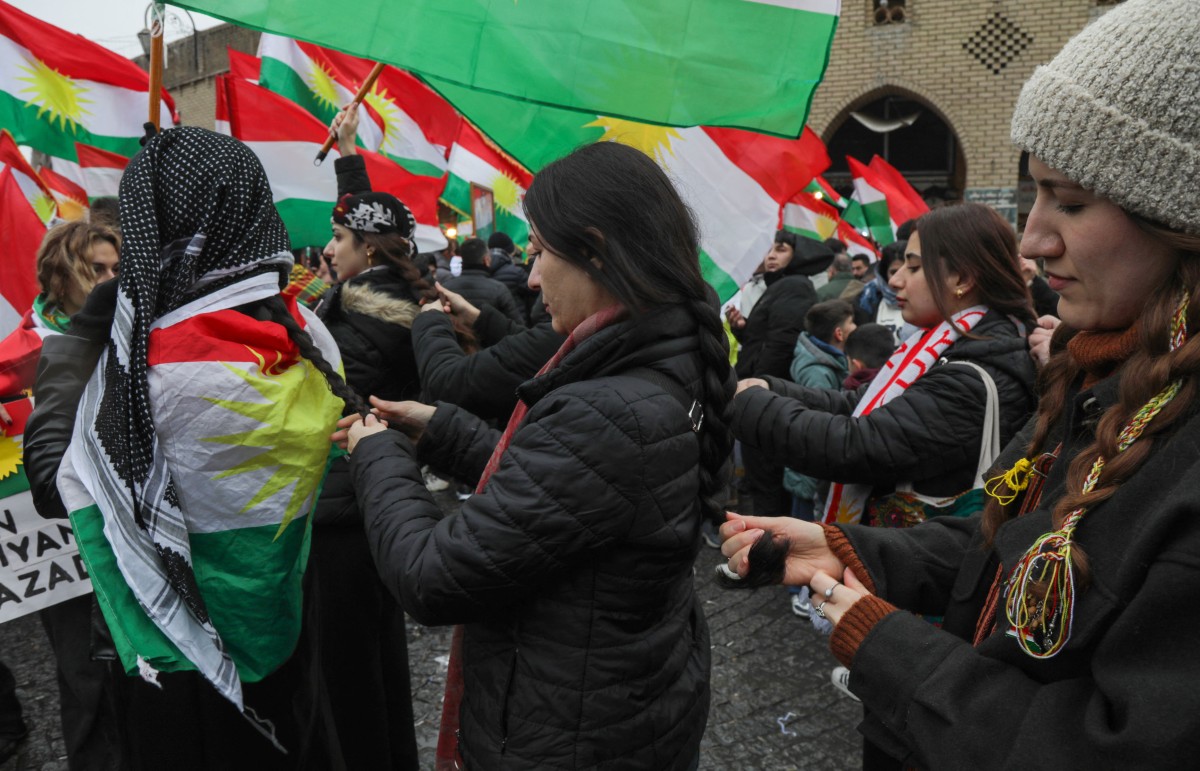
Turkey’s openly hostile stance toward Rojava and even its apparent support for the Syrian Arab Army’s attacks on Kurdish areas and regions under the control of Syrian Democratic Forces (SDF) has drawn significant attention. These developments once again raise critical questions about what Turkey’s current policy toward the Kurds aims to achieve and what kind of future it envisions for Rojava.
From Lausanne to Today: Has Turkey’s Kurdish Policy Changed?
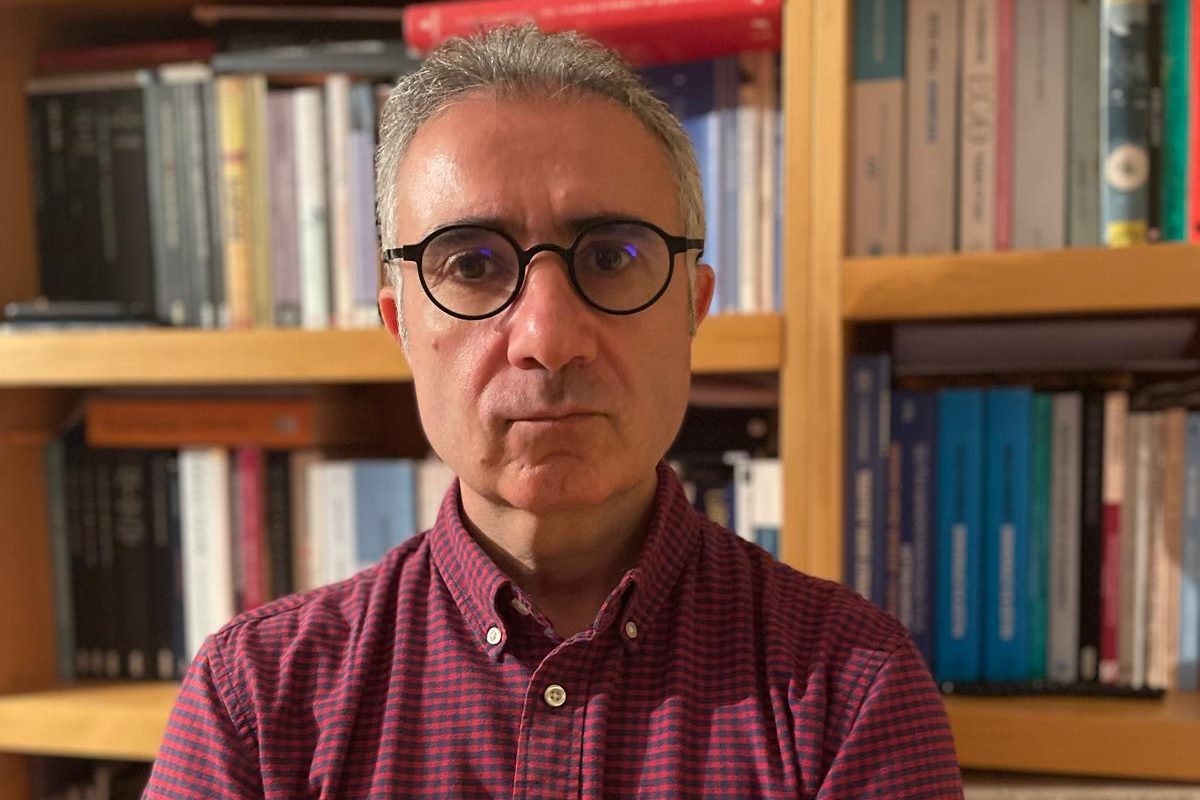
The Kurds were left without any political status after the Middle East was reshaped by the Treaty of Lausanne in 1923, which ratified the establishment of the modern Republic of Turkey. Historian and writer Alişan Akpınar emphasizes that the core of Turkey’s post-1923 Kurdish policy was to ensure that Kurds would not obtain political status or rights in any Middle Eastern country, wether in Iran, Iraq, or Syria. According to Akpınar, as the largest Kurdish population lives within Turkey’s borders, the Turkish state has long believed that any Kurdish gain elsewhere in the region would directly affect it. This concern shaped not only Turkey’s domestic policy but also its foreign and Middle East strategy that remained largely intact until the end of the Cold War in the 1990s.
Following the First Gulf War, the establishment of the autonomous Kurdistan Regional Government (KRG) in Iraqi Kurdistan in 1992 marked the beginning of gradual changes. After the U.S. invaded Iraq in 2003, the formalization of a federal Kurdistan region amounted to the first instance of international powers recognizing Kurdish political status since the Treaty of Lausanne. Akpınar recalls that Turkey fiercely opposed the establishment of the Kurdistan federal region in Iraq, viewing it as an existential threat and an act of aggression. However, Akpınar notes that from 2006–2007 onward, Turkey began to accept this reality. He underlines that Ankara subsequently opened channels of communication with Kurdish parties and leaders in the region and developed close relations with the Kurdistan Region.
“Until the 1990s, there was an absolute policy of denying Kurds any rights or status. With the end of the Cold War and the construction of a new political order in the Middle East, this approach was partially revised. But the essence did not change.”
At the same time, Akpınar stresses that Turkey today still follows a line consistent with its historical approach. As he argues, while Turkey is doing everything it can to prevent Kurds in Syria from gaining any form of political status, it is also attempting to preemptively block the emergence of a Rojava-like autonomous structure in Iran in the event of a future political crisis or fragmentation. In Iraq, Turkey aims to prevent the Kurdistan Region from acquiring a stronger and more autonomous status, exerting particular effort to keep Mosul and Kirkuk outside this framework.
Akpınar summarizes Turkey’s Kurdish policy in historical terms as follows: “Until the 1990s, there was an absolute policy of denying Kurds any rights or status. With the end of the Cold War and the construction of a new political order in the Middle East, this approach was partially revised. But the essence did not change. Kurds should ideally have no status at all; if they must have one, it should be as weak, controllable, and dependent on Turkey as possible.”
Rojava, Turkey, and the Regional Equation
When we look at Rojava and the attacks against it within a broader regional framework, what policy is Turkey pursuing today, and what does it aim to achieve? According to Akpınar, Turkey’s primary objective remains preventing Kurds from gaining political status across the region. However, Turkey is also aware that under current regional and international conditions, it can no longer fully implement this objective as it once did.
Akpınar traces the current phase of the process back to Hamas’s attack on Israel on October 7, 2023. He recalls that this was followed by Israel’s large-scale assault on Gaza, subsequent attacks targeting Hezbollah in Lebanon, and finally the overthrow of the Assad regime in Syria. According to Akpınar, these developments show that Israel’s actions should not be understood as isolated or limited military moves, but rather as part of a broader strategic process aimed at breaking the “Shia Crescent” that Iran has built over decades.
Pointing to meetings held in Paris on January 6 between Israel, Turkey, the United States, and the Syrian Interim Government, Akpınar argues that the increased aggression of HTS on the ground following these talks is no coincidence. He emphasizes that the political and military landscape currently unfolding in Syria is directly linked to this multi-layered regional restructuring process.
The Limits of Turkey’s Rojava Policy
The content of the agreement signed between the SDF and Damascus on January 29 reveals that Turkey’s Kurdish policy toward Rojava is no longer shaped solely by its objective of elimination. The agreement’s rejection of the SDF’s individual integration into the Syrian army and its acceptance of the deployment of SDF forces as divisions in predominantly Kurdish areas indicate that some of the Turkish state’s core demands have not been met. According to Alişan Akpınar, this situation does not alter the fact that “Turkey’s primary preference has always been that Kurds in Syria should not obtain any political status,” but it does demonstrate that current regional and international dynamics are forcing Turkey to operate within certain limits.
Turkey sought to do in Rojava what Israel did out in Gaza.
Akpınar notes that the United States and Israel’s Iran-centered strategy has pushed them to seek stability in Syria, which in turn has temporarily constrained Turkey’s efforts to completely eliminate Rojava. In this context, the agreement stands as a concrete example showing that while the Turkish state continues its historically rooted opposition to Kurdish political subjectivity, it is unable to fully implement its agenda due to Kurdish resistance on the ground and the prevailing international conjuncture.
‘‘What Was Done in Gaza Was Meant to Be Carried Out in Rojava’’
Akpınar compares Turkey’s approach to Rojava with Israel’s strategy in Gaza. He argues that Turkey sought to do in Rojava what Israel did out in Gaza. However, there was a crucial difference: while Hamas is viewed by the West as an enemy, Kurdish forces in Rojava are considered Western allies on the ground. For this reason, Turkey’s expectations did not materialize. However, according to Akpınar, Turkey is still sending a clear message to Syrian Kurds: “We will not allow you to be a political subject or to govern yourselves; you may only exist as a subculture.”
Akpınar summarizes Turkey’s Rojava policy as follows:
“Turkey’s initial plan was to eliminate Rojava militarily from the outset. When this was not permitted, the strategy shifted to gradually pushing Rojava east of the Euphrates, then forcing it out of Deir ez-Zor and Raqqa. If possible, the desired outcome is one in which Hasakah and Kobane also fall, leaving Kurds confined solely to Qamishlo.”
However, alongside these attacks, the SDF has continued its resistance while keeping negotiation channels open to prevent a possible massacre. Globally, a strong wave of reactions against the attacks on Rojava has emerged. According to Akpınar, the SDF’s military and social resistance has become a decisive factor, both preventing a potential mass atrocity and strengthening the Kurds’ position at the negotiating table.
Akpınaralso notes that at the heart of this entire process lies the unique national consciousness that Kurds have built over the past century. Despite repeated defeats and genocides, the Kurds, who rejected assimilation, were able to build a national consciousness without having a nation-state, says Akpınar. According to him, this consciousness does not rest on an inward-looking, exclusionary, and othering model; on the contrary, it is grounded in a framework capable of offering the Middle East a democratic social project.

Şilan Bingöl
Şilan Bingöl is an independent researcher who studied sociology at Galatasaray University and Ecole Normale Supérieure de Lyon. Her master's thesis is on media sociology.