The Return of Thucydides at Davos: Mark Carney, a Broken World Order, and the Kurdish Moment of Truth
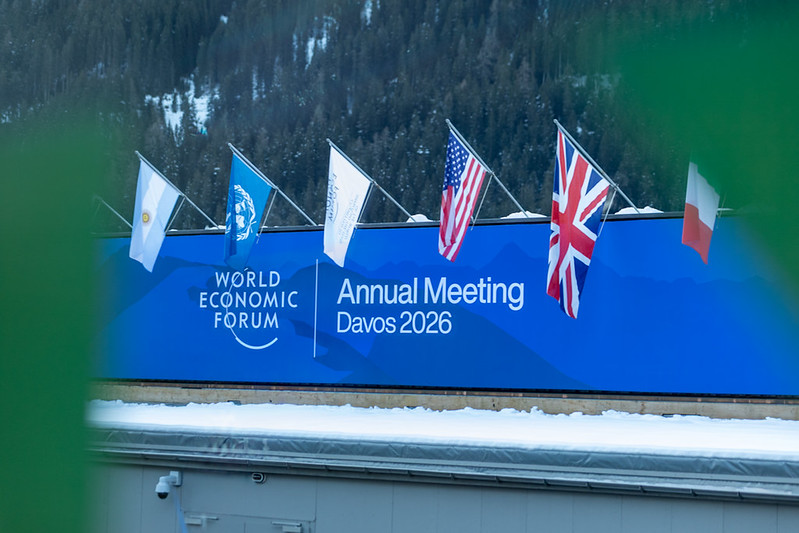
When Canadian Prime Minister Mark Carney addressed the World Economic Forum in Davos, his message cut through years of diplomatic euphemism. “We are in the midst of a rupture, not a transition,” he said, adding that “the old order is not coming back.” This was not rhetorical flourish. It was a declaration that the assumptions underpinning global stability – rules, institutions, predictability – no longer function as advertised.The setting made the message more powerful. Davos has long been a shrine to globalisation, consensus, and elite coordination. Yet what unfolded over two days exposed how fractured that consensus has become. Carney spoke as one of the assembled leaders – measured, precise, and fluent in the language of global finance – but with a clarity that many of his peers now struggle to summon. He never referred to the United States directly, instead referring to “great powers” and “hegemons,” acknowledging – without illusion – that Washington would no longer serve as the glue holding alliances together.Carney described a world in which the language of cooperation masks intensifying rivalry, where economic integration has become a tool of coercion, and where restraint is increasingly optional. The comforting fiction of a universally applied rules-based order, he argued, has been sustained less by truth than by habit. And habits, once broken, reveal what has been true all along.
Realism in Power Without Pretence
Where Carney sought connection and collective purpose, Trump offered grievance, threat, and spectacle
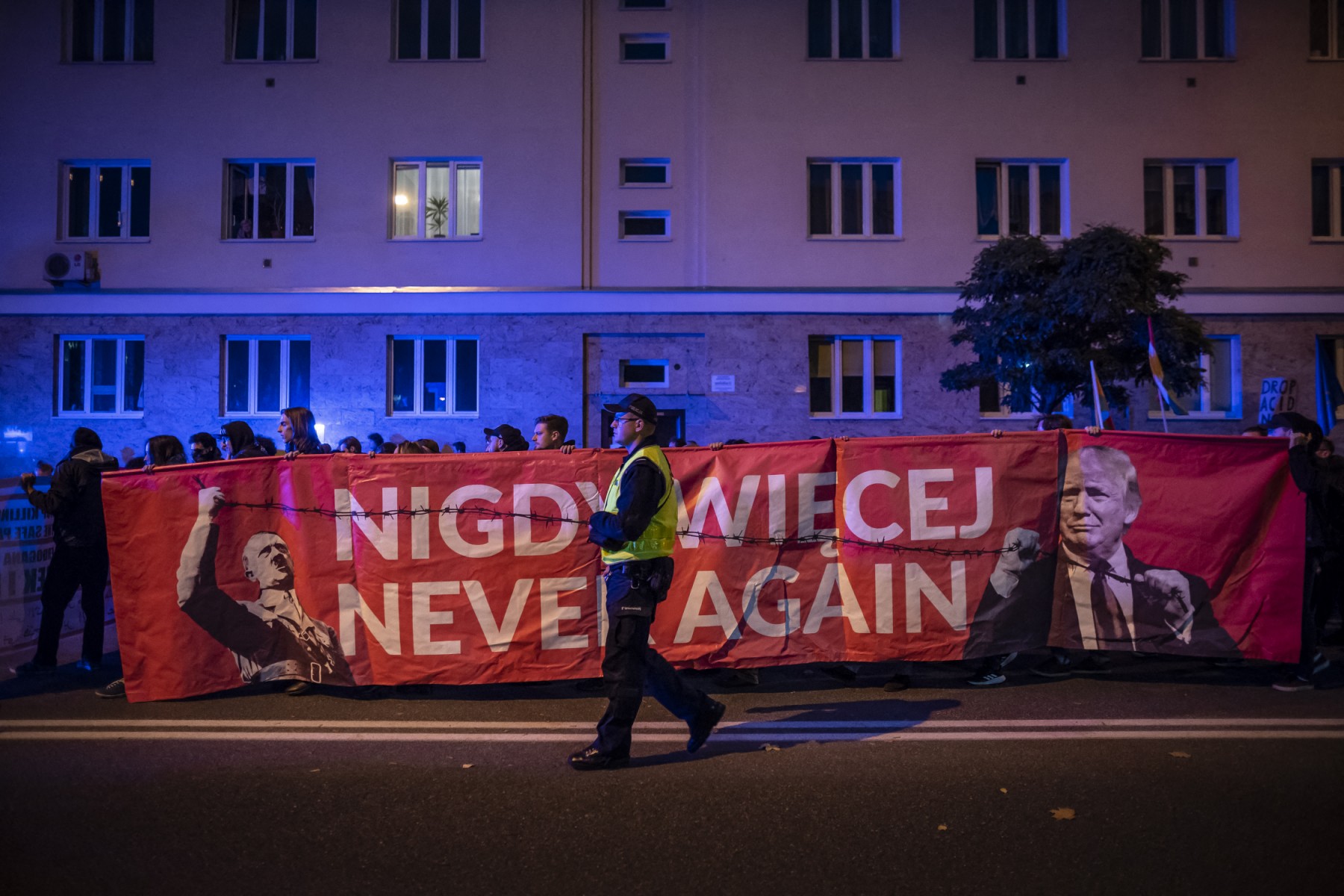
At the heart of Carney’s warning (here is a full transcript of Carney’s quoted speech) was a return to an older logic of international relations. Invoking Thucydides, he noted that “the strong can do what they can, and the weak must suffer what they must.” What is new is not the existence of this logic, but the willingness of states to act on it openly, without even the pretence of shared rules.This was thrown into stark relief the following day when United States President Donald Trump took the Davos stage. Where Carney sought connection and collective purpose, Trump offered grievance, threat, and spectacle. His vision of the world was unmistakably zero-sum; for him to win, others must lose. Support could be bought, territory could be acquired, and loyalty mattered more than law. His musings on acquiring Greenland – wrapped in the language of “national and international security” – reinforced Carney’s central point – coercion is no longer disguised.This shift is global. Trade, finance, energy, and security are no longer neutral domains governed by institutions; they are instruments of leverage, all symptoms of the ‘age of danger.’ Carney warned against the instinct “to go along to get along. To accommodate. To avoid trouble. To hope that compliance will buy safety.” His conclusion was unequivocal; “It won’t.”For states, particularly those without overwhelming power, this marks a dangerous moment. Middle powers, Carney argued, must either act together or accept subordination. But his framework also exposes a deeper vulnerability – one that applies to actors who are not states at all.
Where Stateless Peoples Fit in a Ruptured Order
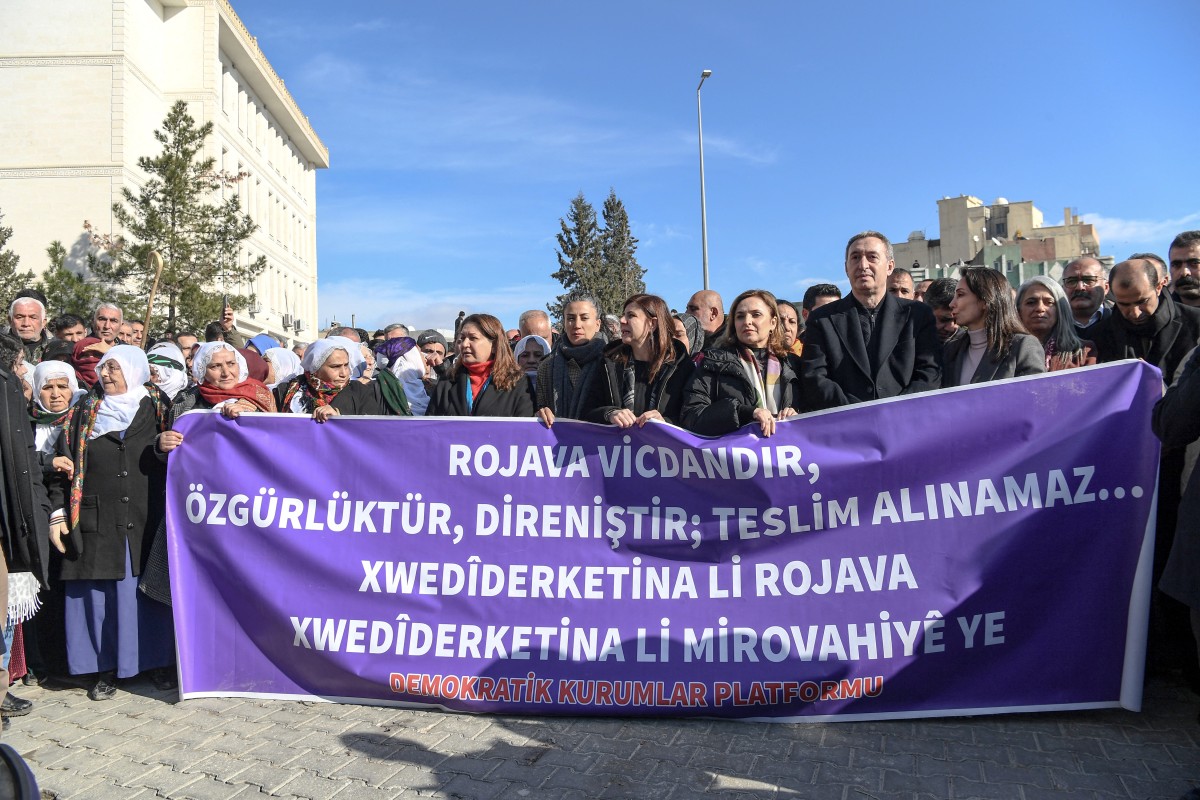
If middle powers struggle in this environment, stateless nations are even more exposed. They do not control borders in full, command formal alliances, or sit at negotiating tables as equals. Their safety depends on arrangements that can be revised or revoked by others.The Kurdish people occupy precisely this space. They are not a middle power, nor even a lesser sovereign power. They are a nation divided across states, exercising partial autonomy where permitted, and subject to coercion where tolerated. In a world Carney describes as increasingly transactional, this status is uniquely precarious.The contrast at Davos matters here. Carney articulated a vision in which legitimacy, coalitions, and shared restraint might still be wielded – if countries choose to do so together. Trump’s performance suggested the opposite; a world where power is personal, commitments are conditional, and protection is temporary. For stateless peoples, that distinction is existential.
Syria Is Not an Exception
Ankara’s approach has remained consistent over time; prioritising military solutions while deferring, limiting, or excluding durable political arrangements
The recent events in Syria do not equate to that of an isolated case. Across the region, Kurdish areas are under sustained and compounding pressure from multiple states, each pursuing its interests through force, leverage, or administrative constraint. In recent years and months, the Iran has carried out missile and drone strikes on Kurdish-linked targets beyond its borders, framing them as counterterrorism operations while raising serious concerns about sovereignty and civilian safety. These actions reflect a broader pattern of unilateral force in an environment where enforcement of international norms is inconsistent.Turkey continues extensive cross-border military operations, treating large areas of Kurdish geography as permanent security zones rather than inhabited political spaces. Ankara’s approach has remained consistent over time; prioritising military solutions while deferring, limiting, or excluding durable political arrangements. Meanwhile, Iraq has pursued administrative, legal, and economic measures that constrain the autonomy of the Kurdistan Region, relying on budgetary controls and judicial mechanisms without resolving foundational political disputes between Erbil and Baghdad.Taken together, these approaches align with what Carney described as a world in which states increasingly “pursue their interests using economic integration and force as tools of coercion.” The Kurds are not outside this system – they are among those most exposed to it.
A Pattern Older Than the Current Crisis
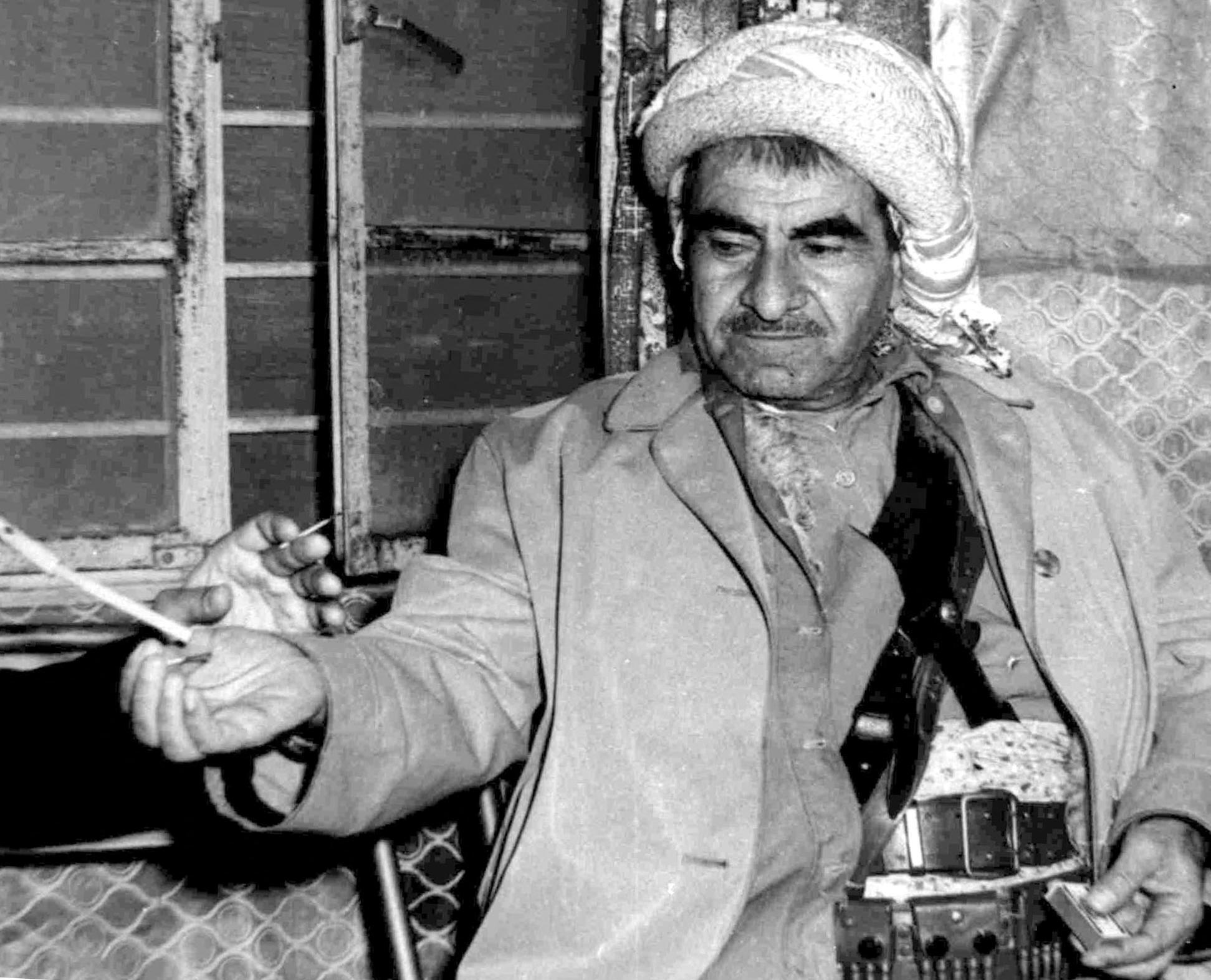
This exposure has deep roots. The modern Middle East was shaped by imperial design, not self-determination. The post–World War I settlement, crystallised in the logic of Sykes–Picot, acknowledged Kurdish existence while denying Kurdish sovereignty. Borders were drawn for manageability, not justice.Throughout the twentieth century, Kurdish aspirations were alternately encouraged and abandoned. During the Cold War, Kurdish movements were supported when useful and discarded when inconvenient. United States Secretary of State Henry Kissinger famously captured this realism by implying that foreign policy is not about charity – a principle the Kurds have paid for repeatedly.
The End of Utility
The United States partnership with Kurdish forces in Syria followed this same pattern. Kurdish-led forces were supported to defeat ISIS, not to secure political rights or long-term protection. That distinction now matters.Recent United States government statements make clear that Kurdish forces are expected to fold into the Syrian state, with little acknowledgement of the Islamist threats they confronted or the governance structures they built. In simple terms, American officials have stated that the mission is over – and with it, the justification for continued backing.This is precisely the dynamic Carney warned against; reliance on a system that no longer functions as promised.
Taking the Sign Down
“Nostalgia is not a strategy.”
Carney invoked Czech dissident and later president Václav Havel’s idea of “living within a lie” – participating in rituals that sustain a false reality. “It is time for companies and countries to take their signs down,” he said. For the Kurds, this means recognising that endurance alone is not a strategy, and that moral legitimacy, while essential, is insufficient without resilience.“The old order is not coming back,” Carney warned. “Nostalgia is not a strategy.” For a world adjusting to raw power, this is an uncomfortable truth. For the Kurds, it is a familiar one.The existential threat to Kurds in Syria of late, and Davos’ clarity belong to the same moment. The rupture is global. Its consequences, however, will fall hardest on those least protected by the system as it unravels.

Bamo Nouri
Bamo Nouri is an award-winning senior lecturer in International Relations at the University of West London, an Honorary Research Fellow at City St George’s, University of London, and a One Young World Ambassador. He is also an independent investigative journalist and writer with interests in American foreign policy and the international and domestic politics of the Middle East. He is the author of Elite Theory and the 2003 Iraq Occupation by the United States.