Why the West’s story about the Middle East no longer fits reality
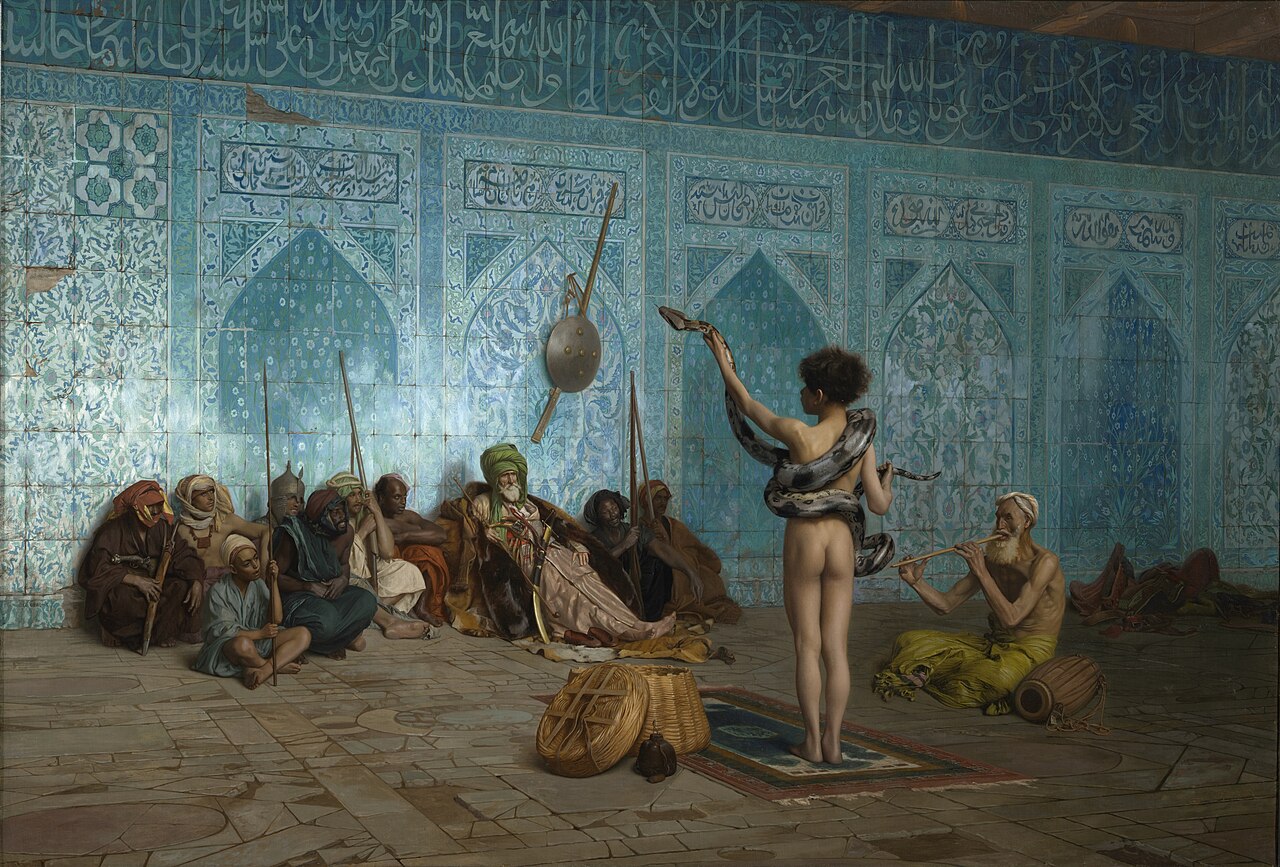
The Snake Charmer (c. 1879), by the French orientalist artist, Jean-Léon Gérôme. This painting, due to its problematic depiction of a “timeless” East that is stagnant and devoid of modern progress, was also used as the cover of Edward Said’s ‘Orientalism’
For more than a century, Orientalism gave Western power a moral language by portraying the East – particularly the Middle East and Asia – as backward, irrational, and violent – and therefore in need of Western intervention and tutelage. Empire was framed as advancement, and war as freedom or peacebuilding. From colonial mandates to Afghanistan and Iraq, the same claim resurfaced; these societies could not govern themselves, and Western intervention was both necessary and benevolent. That era is now ending, not because Western power has become more ethical, but because reality no longer sustains the narrative.
How Orientalism made power appear moral
…the wars in Iraq and Afghanistan… rested on the assumption that governance, security, and social order were Western possessions that had to be imposed elsewhere
Orientalism, as coined by Edward Said, was never merely a cultural prejudice; it functioned as a political infrastructure. By framing non-Western societies as inherently unstable or barbaric, Western states could present coercion as order-making and domination as responsibility. Violence became justifiable, international law conditional, and power could be exercised without accountability.
This logic underpinned the export-of-values narrative that accompanied the wars in Iraq and Afghanistan. Those interventions rested on the assumption that governance, security, and social order were Western possessions that had to be imposed elsewhere. Presented as reluctant rescues, they produced long-term instability instead. Today, the assumption that order flows outward from the West has become increasingly difficult to defend.
Why history has never supported the story
Even at its height, Orientalism never persuaded those who knew history. Among well-trained historians and archaeologists, the idea that the Middle East was deficient as a civilization was always incoherent. The region so often depicted as backward was, in fact, the cradle of organised human civilization.
Mesopotamia – largely modern-day Iraq – produced writing systems to manage trade and law, some of the earliest legal codes, such as Hammurabi’s, and advanced forms of urban planning, taxation, irrigation, and timekeeping. These were responses to complex social organisation, not signs of primitivism.
The shift from nomadic life to settled society emerged in the Fertile Crescent, while advances in astronomy, geometry, and medicine flourished across Mesopotamia, Persia, and the wider Islamic world. These bodies of knowledge later travelled westward through translation movements that shaped European modernity. Medieval centres such as Baghdad, Cordoba, and Damascus were hubs of science and philosophy when much of Europe remained fragmented, rendering the civilizational hierarchy implied by Orientalism historically untenable.
Orientalism, then, was not an academic mistake but a political strategy rooted in selective amnesia. Flattening history allowed domination to be reframed as guidance and coercion as benevolence, even though the claim that these societies were incapable of self-rule never aligned with historical fact.
When the script collapsed under real-world evidence
The limits of this narrative have become increasingly visible. Qatar’s hosting of the 2022 World Cup, described by FIFA President Gianni Infantino as“the best World Cup ever”, was widely predicted in Western media to descend into chaos; yet millions of visitors moved through Doha with relative ease.
London, often imagined as a benchmark of urban governance, has struggled with persistently high levels of knife crime, making everyday insecurity a visible feature of life in a major Western city.
Transport functioned, logistics held, and the large-scale hooliganism familiar from several European tournaments was notably absent. What mattered was not spectacle but normality. Public space worked, and crowd safety was maintained without the hyper-militarised policing – now common in many Western capitals. This has proven uncomfortable for audiences accustomed to assuming that safety and order are Western exports.
London, often imagined as a benchmark of urban governance, has struggled with persistently high levels of knife crime, making everyday insecurity a visible feature of life in a major Western city. At the same time, Gulf cities have acquired reputations for safety, predictability, and social order, complicating long-held assumptions about where stability resides.
The United Arab Emirates –ranked the safest country in the world in 2025 – illustrates this shift clearly. Once framed through clichés of oil wealth and authoritarian excess, Dubai and Abu Dhabi are now experienced as safe, efficient, and stable global hubs for tourism, finance, and residence. Saudi Arabia has gone further by repositioning itself as a centre of global culture and sport, with major boxing events increasingly staged in Riyadh, elite football reshaped by Saudi capital, and Formula One, esports, and entertainment circulating through the Gulf in ways that signal a redistribution of cultural gravity.
These changes are reflected in individual choices as well as in institutions, with figures such as Cristiano Ronaldo and Karim Benzema relocating their professional lives to Saudi Arabia, and others establishing homes across the Gulf, with the most recent high-profile example being Rio Ferdinand. Such movements quietly undermine the assumption that security and modernity naturally flow from the West outward.
Who gets to tell the story now?
Alongside these material shifts has come a transformation in representation. For much of the twentieth century, the Middle East and Asia were depicted primarily through Western cinema and media that reproduced Orientalist tropes of violence and dysfunction. That monopoly is eroding as Gulf and East Asian societies invest in film, television, and digital platforms as tools of narrative autonomy.
Jordan, despite hosting one of the highest refugee-to-citizen ratios in the world, has avoided the social collapse long predicted by Western observers
This is visible not only in high culture but in mass entertainment. Global streaming hits increasingly portray everyday life and aspiration in places long framed as threatening, from South Korea’s Squid Game and Parasite to Japanese animation such as Spirited Away, and Gulf-based series like Dubai Bling and Love Is Blind: Habibi. These portrayals do not erase political contradictions, but they disrupt the habit of viewing entire regions solely through crisis imagery.
Order and representation without Western supervision
Beyond the Gulf, the wider Middle East continues to undermine the old frame through forms of governance that emerge without Western tutelage. Oman has maintained internal cohesion and diplomatic credibility for decades without civil war or foreign occupation, while Jordan, despite hosting one of the highest refugee-to-citizen ratios in the world, has avoided the social collapse long predicted by Western observers.
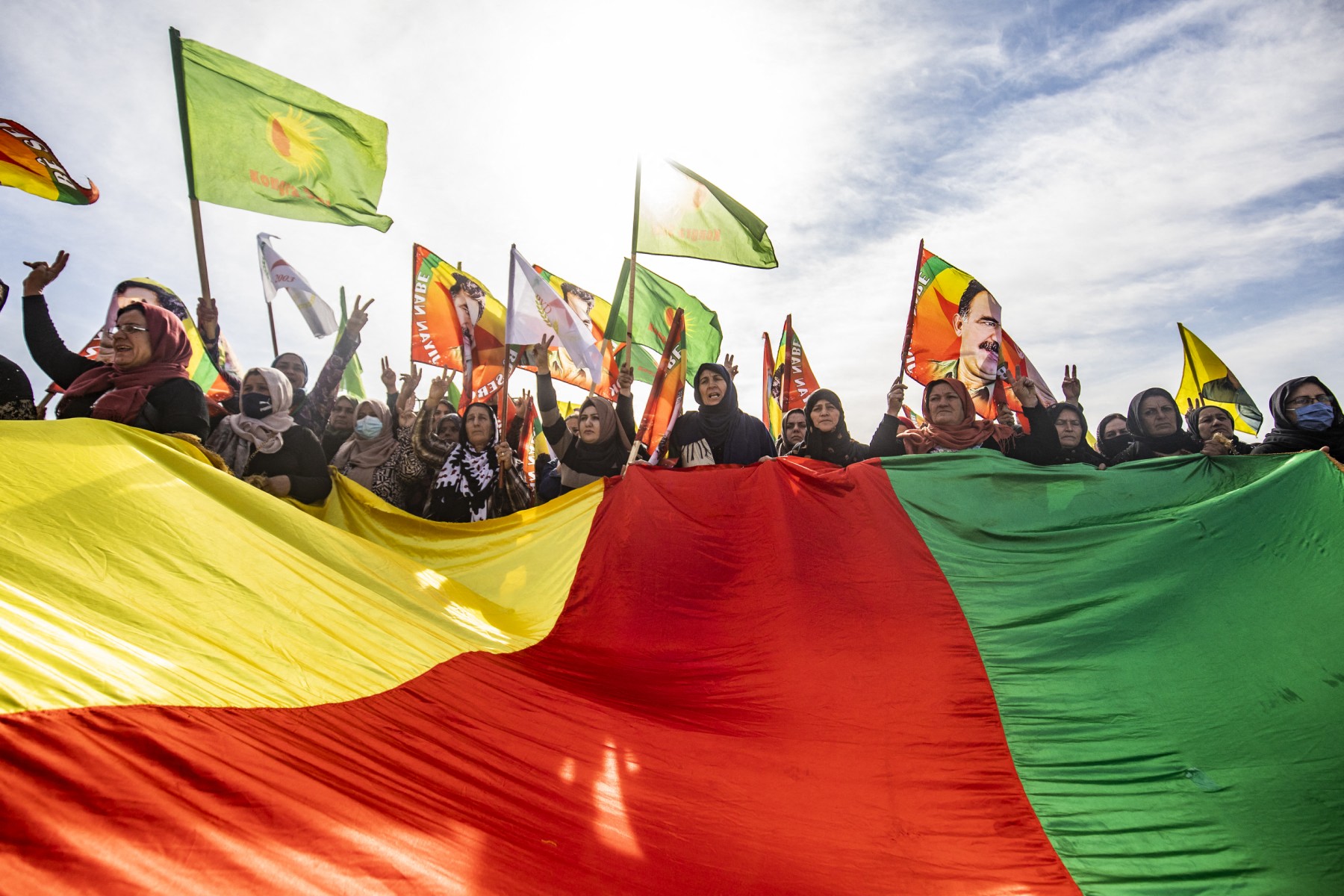
More unsettling for the Orientalist narrative are governance models emerging in places still described almost exclusively through instability and violence. In northeastern Syria, areas administered by the Democratic Autonomous Administration of North and East Syria (DAANES) and protected by the Syrian Democratic Forces (SDF) have institutionalised women’s political participation through co-leadership structures, gender-balanced representation, and autonomous women’s councils. Senior civilian posts operate under a co-chair system shared by a woman and a man, while women also hold prominent roles in local security through forces such as the Women’s Protection Units (YPJ), which gained international recognition during the campaign against ISIS. These arrangements are neither utopian nor uncontested, but they demonstrate political innovation and gender representation that challenge long-standing assumptions about governance capacity in the region.
These trajectories extend further into East Asia: Japan maintains one of the lowest violent crime rates globally despite dense urban populations and minimal everyday policing. Singapore has sustained prosperity, safety, and global centrality without conforming to Western liberal orthodoxy, which has long been treated as universal. As China also becomes a leading innovator in infrastructure and technological advancement, it becomes evident that modernity is not borrowed or imposed but is produced locally in each of these cases.
When the moral alibi expires
What now unites these cases is not ideology or regime type, but outcomes. Safety, efficiency, and global relevance are no longer Western monopolies, and the Orientalist assumption that modernity belonged to the West and had to be exported outward has collapsed under the weight of lived reality.
This does not mean that power politics has disappeared or that Middle Eastern and Asian societies are free of repression or contradiction, but it does mean that the moral language that once justified intervention is no longer persuasive. The world has not become what the West claimed it could make; it has become evidence that the claim itself was never necessary.

Bamo Nouri
Bamo Nouri is an award-winning senior lecturer in International Relations at the University of West London, an Honorary Research Fellow at City St George’s, University of London, and a One Young World Ambassador. He is also an independent investigative journalist and writer with interests in American foreign policy and the international and domestic politics of the Middle East. He is the author of Elite Theory and the 2003 Iraq Occupation by the United States.