Under Islamist Chants, Damascus’s Kurdish Zorava Neighbourhood Comes Under Pressure
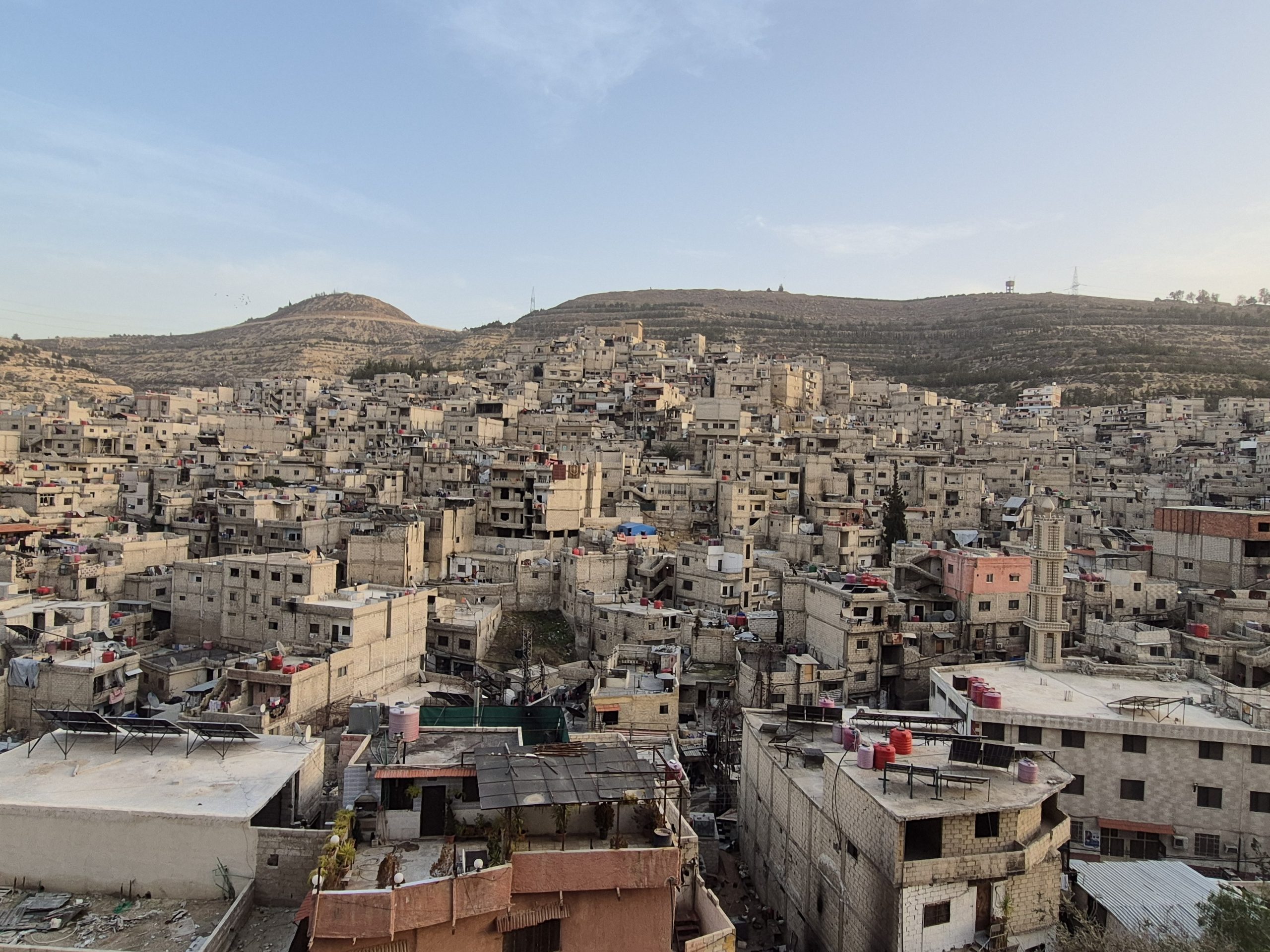
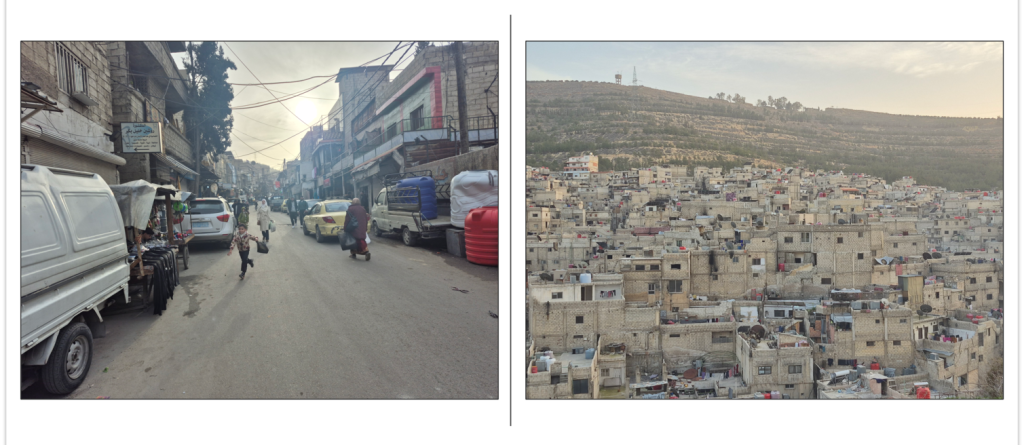
Zorava neighborhood in the western suburbs of Damascus, 2 February, 2026 | Picture Credits: Soha Ezzi
Some Kurdish families are fleeing Damascus as Islamist forces target the Kurdish neighbourhood of Zorava, which has been subject to security raids and government forces arresting multiple residents.
Last January, Kurds across Syria faced a renewed wave of violence after public calls for jihad by Islamist forces that reign in Syria. The attacks began in Aleppo and soon extended into the country’s northeastern region. As the military attacks in North and East Syria (NES) ramped up, the government also imposed a security cordon on Zorava.
Kurds from Zorava, which is home to 50,000 Damascene Kurds, describe tightening security, harassment at government checkpoints based on ethnic identity and political affiliation and having their cell phones searched, and forces chanting extremist Islamist anthems. The current conditions are eerily familiar to many of its residents, who have lived through both the dictatorial al-Assad regime and witnessed the terror rule of ISIS.
The roots of the Kurds in Damascus
The Kurdish presence in Syria’s Damascus can be traced back more than a thousand years, but it was during the 16th century Ottoman rule that Kurds migrated from what is now southern Turkey in large groups. In that period, several Kurdish neighbourhoods emerged in Damascus. The largest and oldest of these was “Hayy al-Akrad” (Arabic: The Kurdish Neighbourhood), which was later renamed to “Rukn al-Din” in the mid-20th century as part of the Arabization policies enforced during Egyptian-Syrian unification.
Following the union’s dissolution in 1961, the new Ba’athist state continued to promote the idea of an Arab nation based on one shared language, culture, and history. At its extreme, this took the form of racism and chauvinism, with non-Arab identities being labelled a threat to national unity and security.
Syria’s Kurds under the modern nation-state
Life for Kurds under the Syrian state changed dramatically in 1962. Presidential Decree No.93 ordered a census in the northeastern governorate of Hasakah, where most Kurds lived. Ostensibly, this was for the purpose of identifying “alien infiltrators”, by recording how many people had crossed the border from the Kurdistan region in Turkey. All Kurds had to prove they could date their presence in Syria back to at least 1945. Conducted in a hasty and arbitrary manner, the census saw 120,000 Kurds stripped of their citizenship; some 20% of the Syrian Kurdish population at that time. Those who lost their state citizenship were categorised either as “ajanib” (Arabic: foreigners/aliens) or “maktoumeen”(Arabic: unregistered/stateless). While the former had formal “Alien” ID cards, often called “red cards”, that recorded their census serial numbers, the latter were not registered in any official state books.
In 1974, with the creation of the Tabqa Dam, thousands of Arab farmers lost their homes and agricultural lands to flooding. As part of the Arab Belt plan, the Ba’ath government seized Kurdish lands in Hasakah and granted them to these Arab farmers. Displaced and dispossessed, many Kurds survived with a fragile legal status and scarce economic opportunities. Families increasingly moved towards big cities like Damascus. Many found employment in the Dummar project,a governmental housing project that was launched to expand the urban areas in the western suburbs of Damascus alongside 15 cooperative unions and figures of considerable influence.
Zorava – the neighbourhood built through toil and strain
When we built ourselves houses at night, the municipality would come demolish them the next day. When we built during the day, they demolished our houses at night.”
While working on the Dummar construction site, Kurds began building small houses for their families to live in nearby. This unauthorised building created a tense cycle of construction and demolition with the governmental authorities, but eventually led to the creation of Zorava as a distinct neighbourhood. The Kurdish word “Zorava” could be translated as “built through force”, conveying the years of stubborn effort required to establish it.
Abdul Satar Hussein, a former construction worker himself, who at the time was stripped of his citizenship and held a red card ID, said, “When we built ourselves houses at night, the municipality would come and demolish them the next day. When we built during the day, they demolished our houses at night.” He said the government “got tired of our persistence” after a few years. Hussein still lives in the house he built, alongside his family.
A Kurdish haven in the Syrian Civil War
When the national uprisings against Bashar al-Assad’s regime began in March 2011, Zorava’s population joined in with numerous protests and marches. In an attempt to appease the Kurds, Assad issued Decree No. 49, granting citizenship to those who had been registered as “alien”, who had grown to around 500,000 at that time. Later on, many Zorava residents aligned themselves with the Rojava Revolution that was underway in Syria’s Kurdish regions in the north.
“The residents of Zorava have protected their Kurdish roots”, explained Kurdish sociology scholar Shirko Mahmoud. “Over the past 14 years, tens of thousands of their Kurdish relatives and family members have fled to Zorava due to the war and forced displacement.”
While the Zorava neighbourhood is poor and not well-serviced, Mohammed al-Abdullah, who is amongst the oldest residents, described it as “our Damascene Kurdistan”. He points to the Kurdish shop signs and owners’ names: “You can hear the Kurdish songs from people’s windows.” However, recently, many families have removed Kurdish flags and photos of martyrs from their houses’ walls and in public spaces, as Zorava’s Kurds feel increasingly under threat.
Zorava and Rojava’s Connection
Syria entered a new era when Hayat Tahrir al-Sham (HTS) came to power in December 2024. While many hoped for a transition towards democracy and justice, the past year saw the Syrian Arab Army conduct sectarian massacres against the Alawite population on the coast and the Druze community in Suwayda. Meanwhile, hostile government rhetoric aimed at the Syrian Democratic Forces (SDF) – the military force of the Kurdish-led Autonomous Administration of North and East Syria (DAANES) – turned into open attacks at the beginning of 2026. After seizing over 80% of NES, leaving the DAANES with only the region’s Kurdish-majority areas, the Syrian Transitional Government and SDF signed a ceasefire deal on January 29.
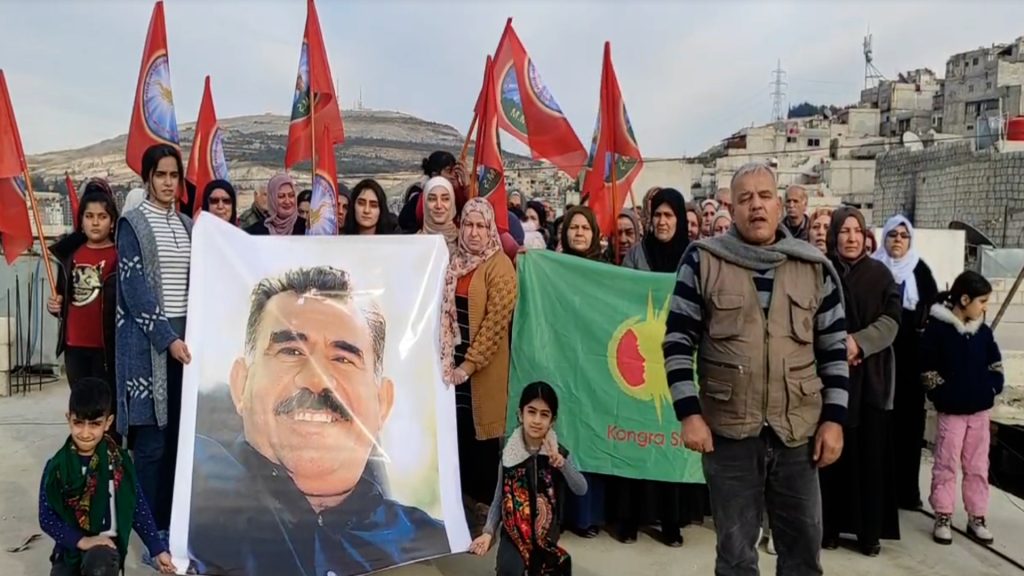
The massive displacement of Kurds from Aleppo, Raqqa, and Tabqa, plus the series of abuses and violations conducted by government forces as they moved in, has left many unable to trust the new power in Damascus: “After the massive hostilities and demographic changes that we witnessed in Aleppo’s Kurdish neighbourhoods and Rojava, we cannot fully trust this de-factotransitional government – despite the recent security agreement,” said the aforementioned Zorava resident Abdul Satar Hussein.
“Decades on, the same scenes are being repeated, but under a new flag with a new power.”
For Abdul Qadir Hussein, a 60-year-old estate officer – and well-known builder in Zorava – there is a strange familiarity to the situation. “Zorava was always Rojava’s reflection in Damascus – and it is still now.” He recalled the events that followed the Qamishlo football stadium insurrection in 2004, when Kurds rose up against the Assad government after regime-linked hooligans attacked local fans at a match. At that time, the Syrian army moved to surround Zorava – 650 kilometers from Qamishlo – with tanks and imposed a heavy siege. “The Syrian army, alongside the intelligence services, had launched a systematic campaign of arbitrary arrests against us in Damascus. They arrested many of my friends and Kurdish students,” Hussein said. “Decades on, the same scenes are being repeated, but under a new flag with a new power.”
Bari Ali, a 29-year-old artist at Damascus’ Higher Institute of Dramatic Arts, said it was a shock to hear public calls for jihad made against the Kurds of Rojava. She witnessed how fear spread in the community as hardline Sunni Arabs in Zorava repeated these calls: “I saw how the general security forces were chanting jihadist anthems inside their vehicles, patrolling the streets of Zorava to terrorise us.” She said it reminded her of 2014-2015, when ISIS was taking power and “the Islamic State flag was raised in Raqqa”.
Bari Ali said that every time she leaves her house, her Kurdish ethnicity is flagged at checkpoints. She stressed about returning home too late – to the point that she would avoid leaving her house at all. Eventually she escaped Zorava as threats continued mounting. Her situation is not unique. According to the neighbourhood committee, the number of Kurds in Zorava has declined below 50,000.
When the governor of Damascus arranged a meeting with Zorava residents and the neighbourhood committee, he asked them about their demands with regards to public services and infrastructure repairs. Abdul Satar Hussein said the governor was taken aback by the residents’ reply: “Our demands mirror those of Rojava. Preserve our dignity as Kurds in Syria. Stability can only be ensured once Damascus’ forces end military escalation against the Kurdish areas.”

Soha Ezzi
A filmmaker, civil activist, and independent journalist based in Damascus, Syria