The Strategic Paradox of Targeting Iran’s Supreme Leader
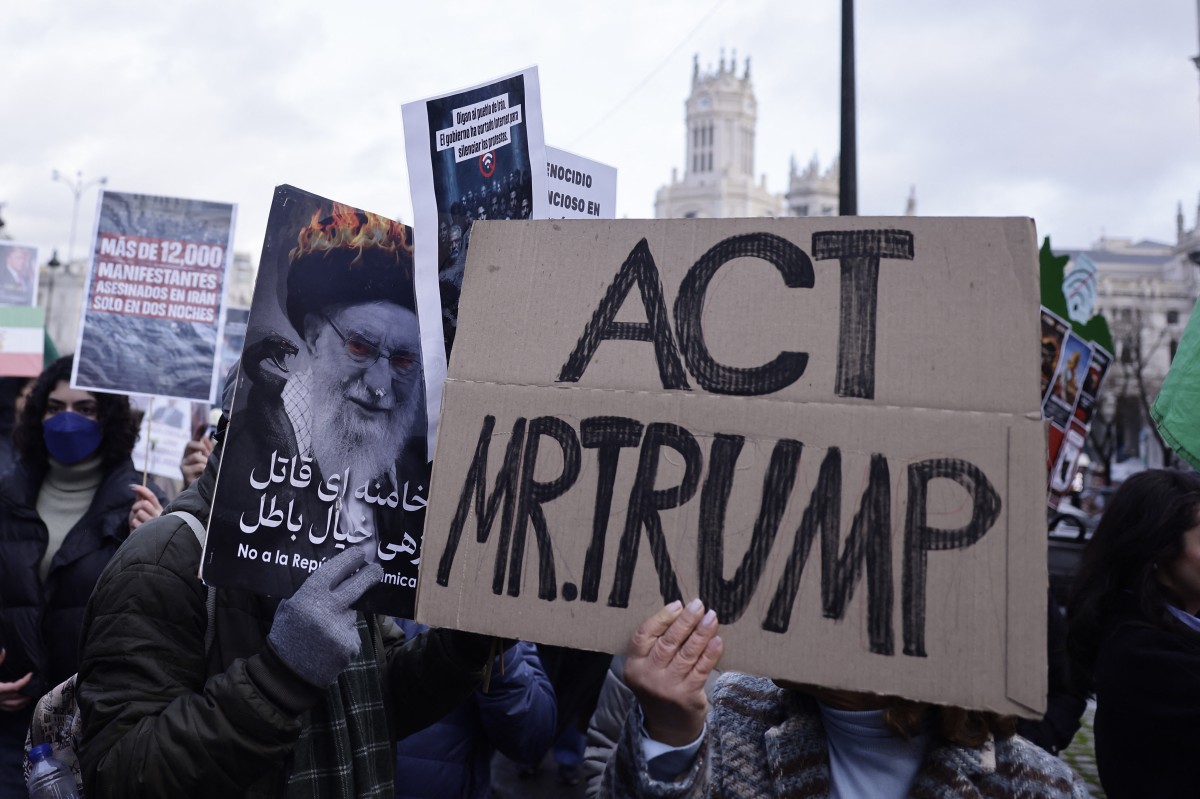
Protestors hold signs reading ‘Act Mr. Trump’ and against Iran’s supreme leader Ayatollah Ali Khamenei during a demonstration in support of Iranian People in Madrid on January 17, 2026. (Photo by Oscar DEL POZO / AFP)
The U.S. President’s recent call for “new leadership in Iran” didn’t come out of nowhere. It landed right when the Middle East was already on edge, with multiple flashpoints lining up towards a potential direct clash. Against this backdrop—and with Israeli officials now openly talking about targeting Iran’s Supreme Leader—the comment raises a question that would have been almost unthinkable to ask publicly just a few years ago: has removing the most powerful figure in Tehran shifted from being a strict theoretical taboo to being a strategic option?
When President Trump told Politico it’s “time to look for new leadership in Iran,” it broke from the careful ambiguity that had long defined U.S. policy toward Tehran
Until recently, the notion of directly targeting the Supreme Leader stayed mostly in academic papers and hypothetical war games. That line separating them from reality has started to fade. A mix of military escalation, explicit political messaging, and regional chaos has dragged once-forbidden scenarios into serious security discussions. When President Trump told Politico it’s “time to look for new leadership in Iran,” it broke from the careful ambiguity that had long defined U.S. policy toward Tehran. Even if one reads it as just tough rhetoric, the timing makes it hard to brush off as meaningless.
From taboo to open strategic debate
The bigger picture is impossible to ignore. During the twelve-day regional showdown in June 2025, Israeli security circles quite bluntly described Iran’s Supreme Leader as the central node holding the whole system together. With heightened military alert levels, ongoing proxy fighting, and an extremely volatile neighborhood, ideas that used to be dismissed as outlandish are now part of mainstream policy conversations. The real question isn’t whether these ideas are being floated anymore—it’s under what circumstances someone might actually pull the trigger.
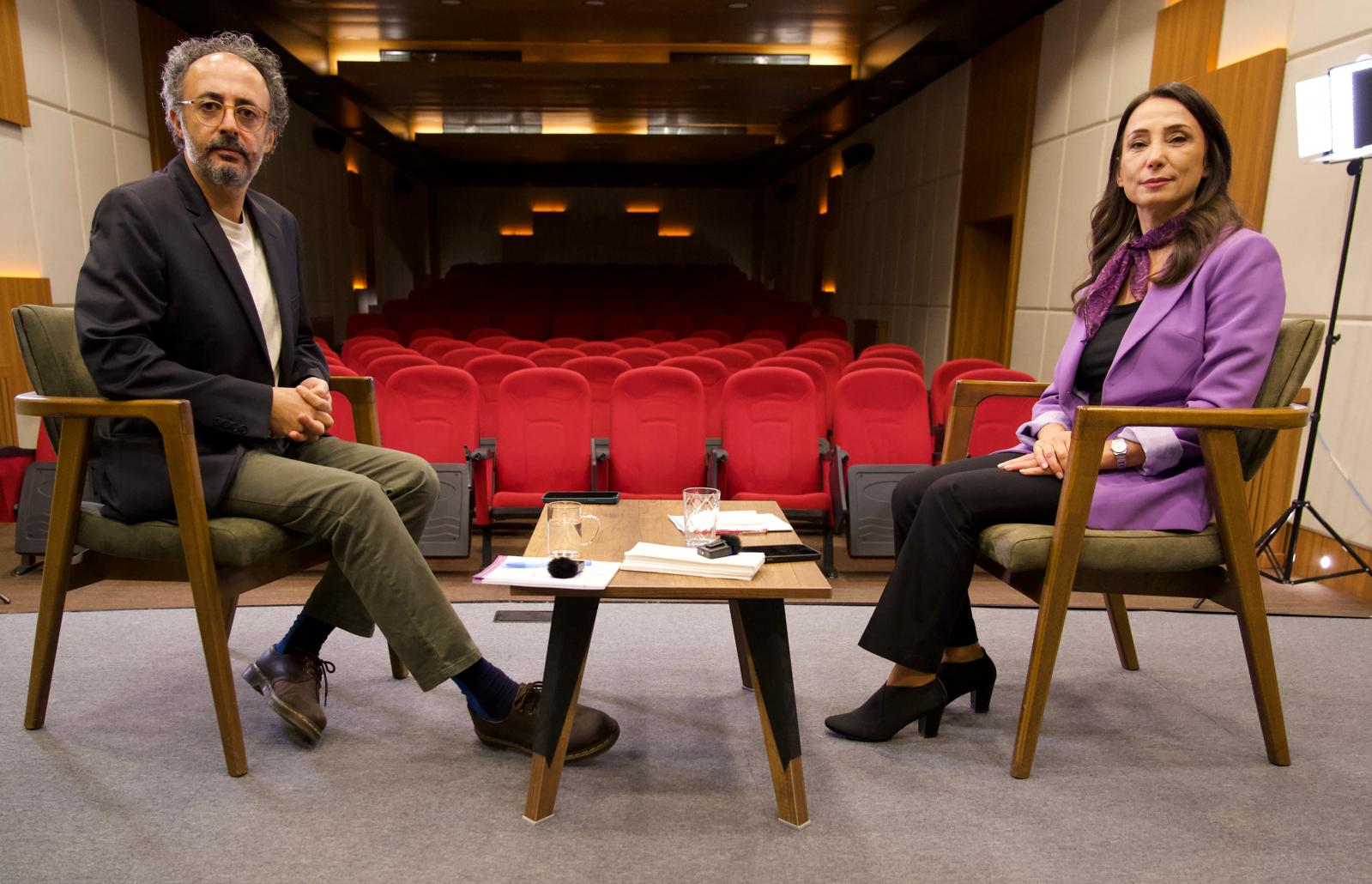
As international security analyst Shahin Modarres pointed out in an interview with The Amargi, one cannot answer this in the abstract. Everything would depend on the nature of the initial U.S. strike inside Iran. That first move would immediately reveal Washington’s true intentions, especially since the U.S. doesn’t have a wide menu of coherent strategic choices right now.
Why all-out war still looks unlikely
One path could be a massive military campaign to dismantle the Islamic Republic’s entire coercive machinery: the IRGC, military command, police, Basij, and so on. That wouldn’t be about deterrence or limited punishment; rather, it would be an effort to break the regime itself.
Modarres, though, argues this remains strategically improbable. An operation on that scale would almost certainly pull the United States into long-term post-war reconstruction and stabilization — burdens that have become politically radioactive in Washington. In the foreign-policy worldview tied to Donald Trump’s “MAGA” approach, nation-building is seen as a trap rather than an opportunity. So even though it might be militarily doable, collapsing the Iranian state entirely is something the U.S. seems determined to steer clear of.
The logic of limited, coercive strikes
What’s left is a narrower, more calibrated option—one Modarres sees as far more plausible. Here, U.S. military action could look like a focused coercive intervention aimed at curbing systemic violence rather than forcing regime change through occupation. Strikes would hit the infrastructure of repression: key command nodes and, possibly, certain individual political figures.
In this framework, the targeted elimination of those directly tied to systemic violence—including, in theory, the Supreme Leader himself—starts to look strategically feasible. It wouldn’t be classical warfare or territorial takeover. The goal would be to throw Iran’s internal power balance off-kilter without anyone having to take responsibility for the aftermath.
The domestic risks: power vacuum or hardened security state?
Independent analysts warn that externally imposed leadership removal poses significant internal risks. Instead of creating room for a democratic opening, such a sudden top-down shock could easily backfire and consolidate power in the hands of the most coercive parts of the elite.
History shows foreign military pressure usually triggers a nationalist backlash rather than empowering society.
Nader Hashemi from Georgetown’s School of Foreign Service cautions that, without a strong, organized civil society and a homegrown strategy for democratic change, “leadership decapitation” is more likely to deepen chaos than to fix anything. History shows foreign military pressure usually triggers a nationalist backlash rather than empowering society. In a crisis atmosphere, the state gets a free hand to centralize control, beef up security forces, and crush dissent, often coming out on the other side more militarized than before.
Tehran’s deterrence posture and its limits
Tehran’s official line has always been maximum deterrence. Senior political and military figures repeatedly warn that any direct strike on the leadership would trigger a harsh, multi-front response. In their framing, targeting the Supreme Leader isn’t a limited operation—it’s an act of war against the entire political order.
In reality, though, Modarres believes survival instincts would trump ideology. Inside Iran, the regime would probably rush toward even tighter securitization: heavier repression, fast-tracked succession planning, and urgent efforts to keep the elite from fracturing. Still, decapitation strikes are destabilizing by nature. Removing the Supreme Leader would shatter the fragile balance between clerical authority, the IRGC, and bureaucratic institutions. It is plausible that repression alone might not be able to restore this balance.
Conclusion: an ending without a clear beginning
Regional experience tells us that cutting off the head of power doesn’t automatically lead to democracy
Targeting the Supreme Leader wouldn’t, by itself, force the current regime to reform or change. However, it would certainly bring the Islamic Republic as we know it to an end, kicking off a highly uncertain and turbulent post-Khamenei era, as it could also lead to an even more conservative politician to take over the reins. Regional experience tells us that cutting off the head of power doesn’t automatically lead to democracy; sometimes it leads to a more rigid system, as in Egypt. Without a viable, organized internal alternative, the shock could just as easily produce a more entrenched security state or a fragmented political mess.
What was once unthinkable is now being openly discussed. Igniting that kind of instability might prove a lot easier than containing it.

Ali Asghar Faridi
Kurdish-Iranian journalist based in Germany