Syria’s Tribes at a Crossroads

A fighter from Bedouin tribes stands behind a camouflaged vehicle along a road in al-Mazraa village leading to the predominantly Druze city of Sweida in southern Syria on July 18, 2025. (Photo by Sam HARIRI / AFP)
“There’s no Middle East – there are tribes and villages,” said U.S special envoy to Syria Tom Barrack in September 2025. Across Syria and the wider region the tribes have a complicated reputation. Once dismissed as patriarchal or regressive, they have nonetheless remained a source of authority that local and regional actors continually seek to harness for their own ends.
At the end of 2025, Syrians debated whether the March 10 agreement – the agreement between the Syrian Democratic Forces (SDF) and the Syrian Transitional Government (STG) to integrate the Kurdish-led Autonomous administration’s military and civilian institutions in northeast Syria – will bring stability or another round of conflict. At the center of this uncertainty are tribes. With some aligned with the SDF, others with the STG, many Syrians worry about whether the tribes will fuel conflict, as seen in Suwayda, or broker peace, as seen in countless local disputes across Syrian history?
Field research conducted in 2025 by Syrians for Truth and Justice (STJ), shows that in tribal areas, a huge majority of family disputes are settled through informal tribal and family settings rather than through courts.
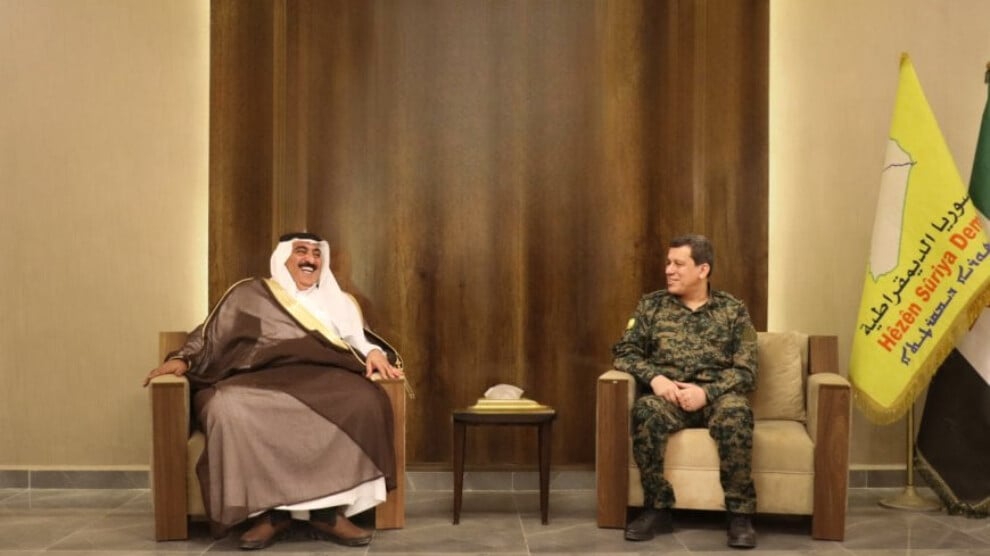
Recently, Manaa ibn Humaydi al-Hadi, the influential leader of the Shammar tribe, met with Syrian transitional president Ahmed al-Sharaa, and later with commander-in-chief of the SDF Mazlum Abdi. These meetings reflect a broader dynamic in Syria, where tribal leaders, historically engaged by the state and later by armed factions during the war, are again being courted by competing political and military actors who seek legitimacy, stability, or leverage in a fragmented landscape.
Rethinking Syrian Tribes: Between Conflict and Community
Years of weak state services, poor education, and limited access to courts left tribal communities relying on their own customs and leadership.
Syria is home to over 23 major Arab tribes, encompassing millions of people across the country. But tribal communities carry a negative reputation shaped by history, social norms, and war. Family feuds, land disputes, and minor disagreements can escalate into armed clashes, with some disputes leading to bloody outcomes framed as breaches of honor, fueling negative perceptions both inside and outside tribal areas.
Tribal authority is most entrenched in the Euphrates basin (Deir ez-Zor and Raqqa), Arab-majority areas of Hasakah, the Syrian Badia, rural Daraa, and Bedouin belts around Suwayda. These regions share limited state presence, weak legal courts, poor infrastructure, and inconsistent security – conditions that push communities to rely on tribal leaders for dispute resolution.
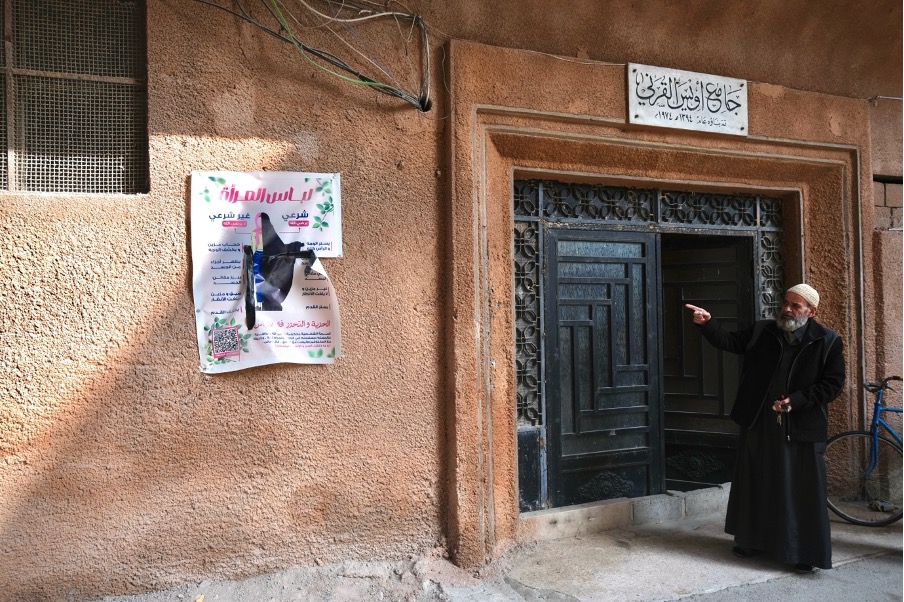
Field research conducted in 2025 by Syrians for Truth and Justice (STJ), shows that in tribal areas, a huge majority of family disputes – including marriage, divorce, inheritance, and custody – are settled through informal tribal and family settings rather than through courts. Norms including arranged marriages, male guardianship over women’s mobility and education, and collective family oversight are often applied.
“Being born in a tribal region shapes your life from the start,” a woman using the alias Zeynab Mohamed told The Amargi. Given that authority rests with male elders and courts are absent or inaccessible, women seldom have the power to make decisions regarding education, marriage, and mobility.
Years of weak state services, poor education, and limited access to courts left tribal communities relying on their own customs and leadership. Combined with strong religious norms and male-dominated authority, this shaped a perception among Syrians that tribal areas stood outside modern civic life.
This strict control has made tribal networks attractive targets to external actors – including extremist groups – who have recognized the strategic value of tribal influence. Research from the Washington Institute notes that ISIS institutionalized tribal hierarchies to control them, often replacing older tribal heads with their sons or others from the clan in case he refused cooperation.
The Syria’s Baath governments used a similar approach. Sheikh Nawaf al-Bashir of the Baggara tribe, explained that the Assad regime “sidelined the tribal sheikhs and put obstacles” between tribal leadership and the people, while empowering leaders tied to state security to “solve the problems of their clansmen,” creating localized power aligned with the state.
“The tribes have never been a problem in themselves. They have always represented a social framework that, if guided wisely, can stabilize communities.”
Government forces using the tribes for their own agendas remains a living practice, as in Suwayda, multiple tribes – reportedly affiliated with the STG – were mobilized to commit violence against the Druze community.
Shammar’s al-Hadi who said that he refused to participate, explained “Tribes must act as protectors of the region and a refuge for anyone in need.” In his view, their role and influence should be used to “build cohesion, not fuel revenge.”
These dynamics have often led to the tribes being viewed with suspicion rather than as constructive actors, despite their central role in Syrian society. Akram Mahshoush, Advisor of the Al-Jubour tribe told The Amargi that throughout the Syrian War “some tribes were exploited politically or militarily,” which negatively impacted the tribes’ reputations. But Mahshoush argued that this image can be now be fixed.
Mobilizing Power for Good
“The tribes have never been a problem in themselves. They have always represented a social framework that, if guided wisely, can stabilize communities,” Mahshoush said. He stated that in times of crisis – whether displacement, armed clashes, kidnappings, or the sudden collapse of security – tribal structures often act faster than formal institutions. They can mobilize thousands, resolve disputes outside courts, and shelter vulnerable populations through long-standing solidarity networks.
For example, when Turkish-backed factions attacked Syria’s Shehba region, displaced Kurdish families had to flee to Tabqa with what little they could carry. Hamed Al-Faraj, a sheikh of the Sunni Arab Al-Walda tribe, immediately urged his community to provide shelter and food. “I will treat them like my own sons and daughters,” al-Faraj told me in an interview.
Another example is the concept of “Faza”: the rapid mobilization of tribe members in response to crises. After the 2022-Syria-Turkey-earthquake, tribal networks helped families who had lost everything by delivering food, shelter, and protection when formal authorities struggled to respond.
Many tribal communities themselves are eager to transform their long-damaged reputation into something constructive and positive. “We should show the world our real essence,” Sheikh al-Hadi said, backing the demand of many tribe members who want to invest their power in initiatives that serve their societies.
In northeast Syria, the Kurdish-led Autonomous Administration’s initiatives that included tribal leaders in local councils and reconciliation committees have shown how traditional authority can be redirected toward collective problem-solving. And in some parts of northeast Syria, tribal women have begun to take part in local councils and mediation efforts. These developments show that deeper structural change is viable to prevalent issues.
On the other hands, in areas under the STG, tribal activities has appeared mostly in the context of conflict rather than organized participation in governance, with the STG benefiting from their ability to assert power over regions outside of government control – such as northern and eastern Syria and the Druze-majority regions in the south.
Tribal structures risk reproducing exclusion and inequality when, like many other social structures, their downsides are not properly addressed. But when practices like “faza” are organized and accountable rather than spontaneous and militarized, tribal power can contribute to stability and recovery in building Syria’s future.

Ghassan Bazo
Ghassan Bazo is a journalist, researcher, and translator based in North and East Syria. He has worked with the Rojava Information Center and reports for international outlets, focusing on Kurdish affairs, regional politics, and conflict dynamics in Syria through on-the-ground reporting and research.