One Year After Ahmad al-Sharaa’s Transformation
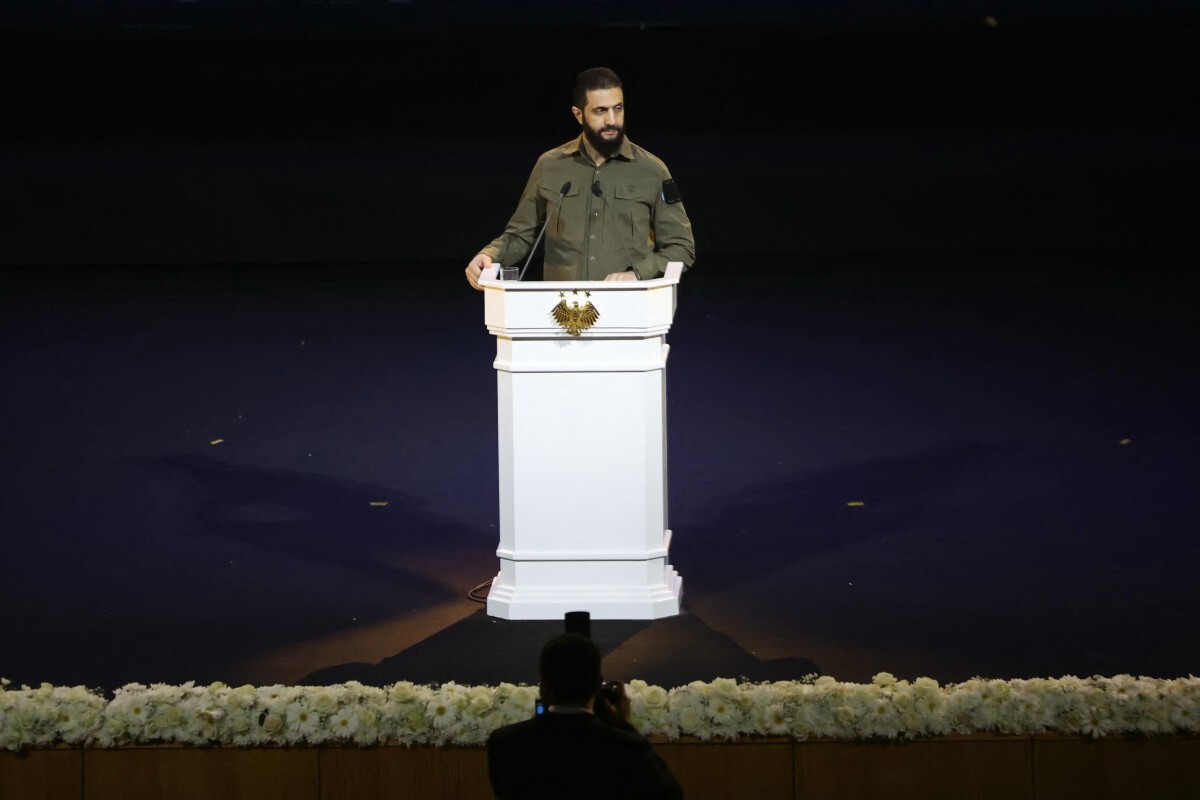
Syrian President Ahmed al-Sharaa addresses a ceremony at the Damascus Convention Center on December 8, 2025, as tens of thousands across Syria marked one year since the fall of Bashar al-Assad’s regime. Photo: OMAR HAJ KADOUR / AFP
A year has passed since Mohammad Al-Joulani, a former al-Qaeda leader with an extreme Islamist mindset, transformed into Ahmad Al-Sharaa, a pragmatic and moderate politician who now governs a fragile, exhausted, and war-torn region known as the Syrian Arab Republic. However, the Syrian Arab Republic does not belong only to Arabs but also to many others, including Kurds, Druze, Alawites, Christians, Assyrians, and more. Over the past year, Al-Sharaa has relentlessly sought to win the trust of Western powers in order to consolidate his authority domestically. He has engaged pragmatically with numerous stakeholders, including Western powers, the US, Russia, Saudi Arabia, and Israel, understanding that the key to maintaining power lies in balancing the interests of different alliances both at home and abroad.
Facilitated by Saudi Crown Prince Mohammed bin Salman, al-Sharaa met the President of the United States for the first time in Riyadh in May 2025, where Trump described him as a “young, attractive guy, tough guy, Strong past, very strong past, fighter.” Al-Sharaa promised to remain a good boy and follow Trump’s advice. Remaining a good boy required expelling all foreign fighters, cutting ties with Islamist extremism, normalising relations with Israel, and preventing Iran from using Syria to support terrorism. Washington and the West do not want Syria to become a terrorist hub once again; they believe the best way to prevent that outcome is to engage with and attempt to shape the behaviour of the new leadership. They also pressed al-Sharaa to form an inclusive and democratic government to accommodate minorities. However, the accommodation of minorities is the lowest prerequisite and one that can be violated with impunity.
“Washington and the West do not want Syria to become a terrorist hub once again; they believe the best way to prevent that outcome is to engage with and attempt to shape the behaviour of the new leadership.”
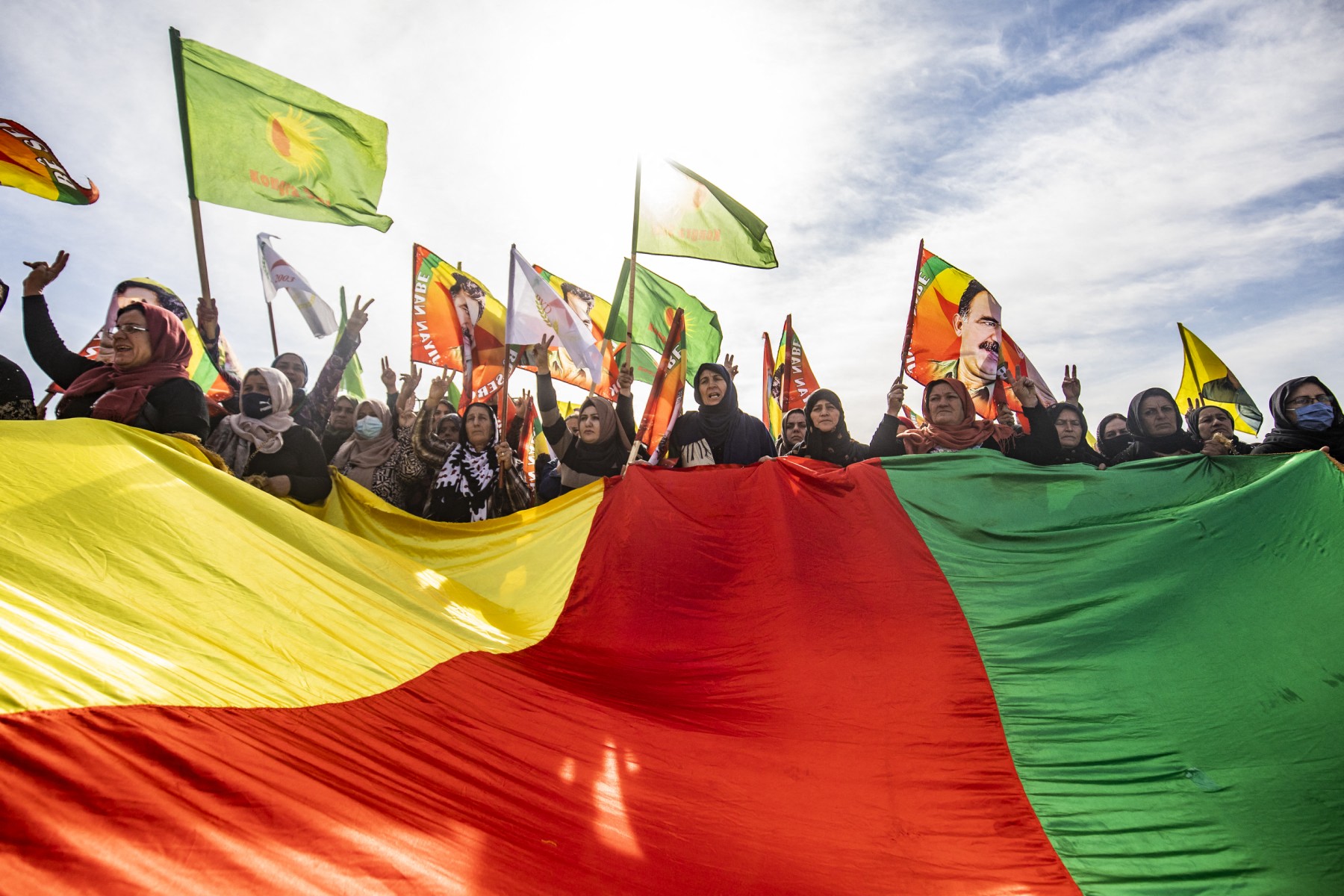
Since Assad’s overthrow on December 8, 2024, around 200,000 Kurds, already displaced once by the Turkish incursion into Afrin in 2018, were forced to flee Manbij, west of the Euphrates River, and move eastward. In March 2025, HTS forces attacked Alawite communities in Latakia and massacred 1,500 people within a few days. This was followed by another deadly assault on Druze communities in Suwaida in July. Using slaughter and mass violence was not the only path to creating a single, unified state. To consolidate his power and gain legitimacy domestically and internationally, al-Sharaa signed a ten-point agreement with the commander-in-chief of the Syrian Democratic Forces (SDF) to peacefully integrate the territory of the Democratic Autonomous Administration of North and East Syria (DAANES). Yet progress on the ground has been minimal.
Al-Sharaa’s interim government also convened a constitutional assembly in March, granting the president extensive authority. In October, he organised elections, yet excluding the DAANES and Suwaida, to fill two-thirds of the new parliament. An electoral college composed of vetted voters selected representatives from a pre-approved list, while al-Sharaa will appoint the remaining members. The entire process left many deeply dissatisfied.
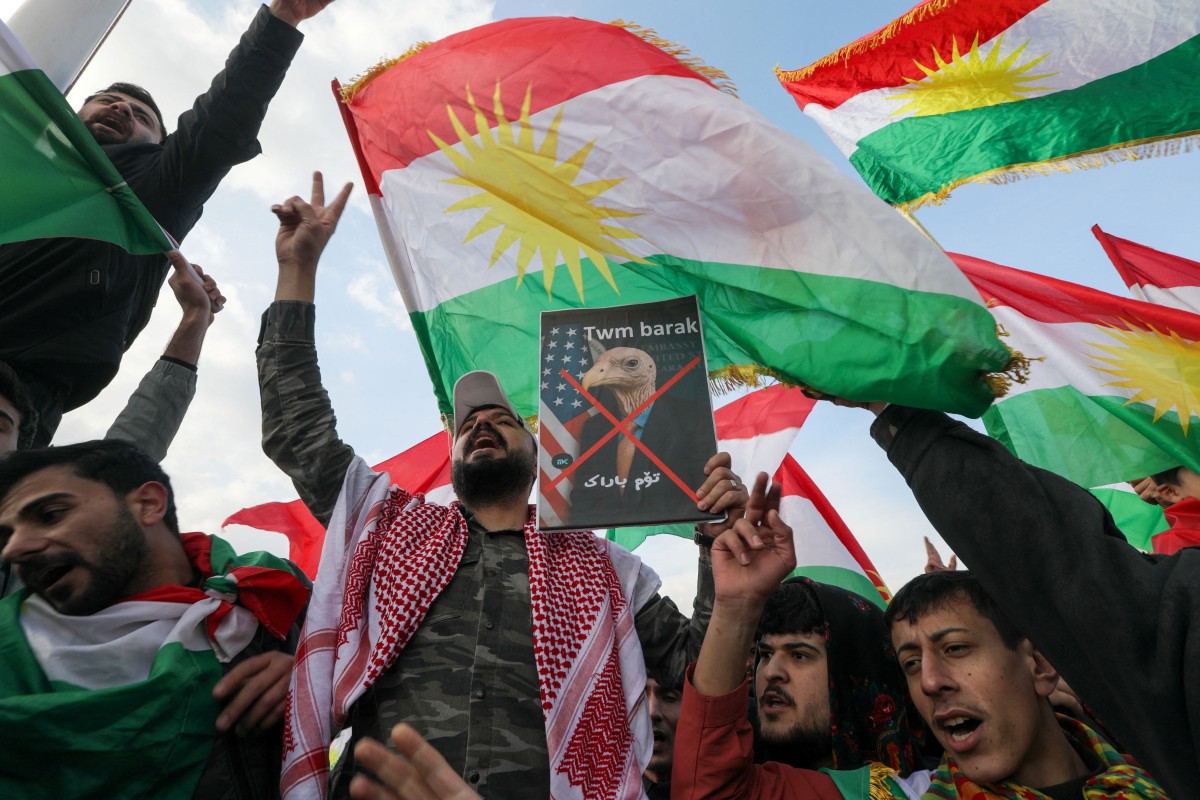
Many fear that Syria is not moving toward anything resembling an inclusive democracy. Democracy requires the dispersal of political power, not its concentration in the hands of one individual or faction. The accommodation of minorities and the embrace of pluralism requires sharing political space with these groups—not merely acknowledging their existence. For Syria to flourish, for democracy to grow, and for stability and peace to replace war and insecurity, decentralisation is essential. Centralisation—especially under a leader with al-Sharaa’s “very strong past”—offers no reassurance. In this context, the Kurdish-led SDF and the DAANES model have become pivotal. In reality, the Kurds have become an unavoidable force in shaping post-Assad Syria for several reasons.
ISIS
Syria was the breeding ground for one of the most brutal terrorist organisations in contemporary history, and evidence indicates that ISIS remains active.
HTS itself consists of diverse and fragmented factions, many of which are not even Syrian, making the country highly vulnerable to renewed civil war or another wave of Islamist fundamentalism. This risk is particularly concerning given al-Sharaa’s historical alliances with ISIS.
Lack of trust in Ahmad al-Sharaa:
A year has passed, and Syria “is not Afghanistan under the Taliban,” many argue. Wine is still served in restaurants. Yes, change is possible, it is always possible, but that is precisely the danger. The transformation of Mohammad al-Joulani into Ahmad al-Sharaa could easily be reversed. No one has access to anyone’s true intentions. The danger is not that change is impossible, but that change could be a reversion to the Islamist mean. Al-Sharaa and HTS could slip back into their past and once again turn Syria into a haven for extremism. Despite his efforts, trust in al-Sharaa’s government remains limited, both domestically and internationally. This is evident in the cautious and partial suspension of Caesar sanctions by the United States. The Kurds are essential to ensuring that Syria does not once again become a refuge for terrorism or a platform for Iran’s regional agenda. They are the only force capable of counterbalancing and constraining al-Sharaa’s power.
SDF and Global Coalition to Defeat ISIS Partnership
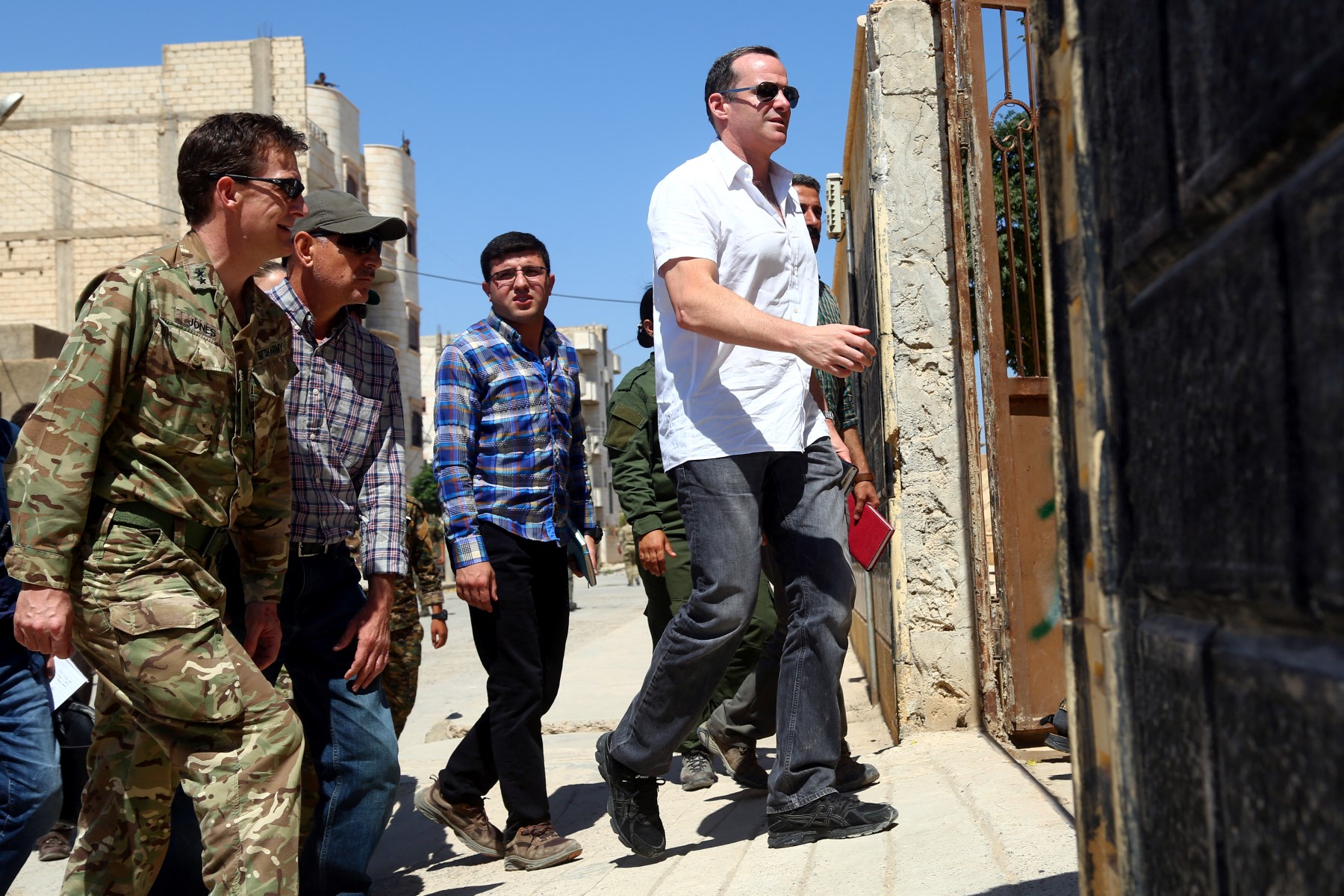
The SDF provides a strong example because it has already shown what inclusion looks like in practice. It is a truly multi-ethnic and multi-religious force that unites Kurds, Arabs, Assyrians, Armenians, and other communities across North and East Syria. Besides its diverse makeup, the SDF has built a lasting and trusted relationship with Western powers in the US-led Global Coalition to Defeat ISIS, especially the United States. This alliance will be vital for Syria’s economic recovery, long-term stability, and ongoing efforts to fight terror in Syria. This relationship didn’t happen by chance. It was built over years of collaboration within the Global Coalition to Defeat ISIS, which deserves credit for both dismantling the caliphate and establishing the security conditions necessary for governance, reconstruction, and peaceful coexistence in the northeast.
“Besides its diverse makeup, the SDF has built a lasting and trusted relationship with Western powers in the US-led Global Coalition to Defeat ISIS, especially the United States. This alliance will be vital for Syria’s economic recovery, long-term stability, and ongoing efforts to fight terror in Syria.”
Uncertainty in Syria harms regional and global actors
The Kurds sacrificed more than 10,000 fighters in the war against ISIS. They paid a heavy price to secure their region and built parallel institutions and administrative structures to protect their communities. For over a decade, the people of DAANES have lived under an inclusive, gender-egalitarian, and democratic administration. This region has demonstrated the capacity to provide security, education, daily needs, and healthcare. For these reasons, the Kurds will not surrender their territory lightly. They will not accept domination by al-Sharaa after all they have endured. With more than 100,000 well-trained and well-equipped fighters, backed by strong social cohesion, the SDF is fully prepared to defend its gains. Their communities refuse to flee their homeland and instead choose to stay and defend their existence, something made clear in battles such as Tishrin Dam and in Sheikh al-Maqsoud and Ashrafiyeh in Aleppo.
Kurds Have Other Options
The Kurds and the SDF in Syria are also not without options. The fluidity of alliances, combined with the fact that many regional and global powers have a stake in Syrian affairs, has led the Kurds to engage pragmatically with all of these actors, including Israel, and even Israel’s adversary, Iran.
Denying the Kurds their basic rights could ignite war between the Kurds and HTS, potentially leading to renewed civil war, prolonged instability, and political turmoil, conditions from which Islamist fundamentalists, Iran, and Russia would all benefit. ISIS could easily regroup, and Iran could exploit the chaos to rebuild its “axis of resistance.” Uncertainty in Syria’s future harms key regional actors including Saudi Arabia, the UAE, and Turkey, as well as major international powers, including the United States.
It is not in the interest of the United States to see Syria become a fragile, failed state; nor is it in its interest to confront an overly centralised, uncontrollable Syrian regime that could transform into an absolute adversary. The Kurds and the SDF offer the middle ground: a force capable of limiting and constraining al-Sharaa’s power while ensuring the emergence of a secure, stable, and prosperous Syrian state.

Rojin Mukriyan
Rojin Mukriyan has PhD in the Department of Government and Politics at University College Cork, Ireland. Rojin’s main research areas are in political theory, feminist and decolonial theory, and Middle Eastern politics, especially Kurdish politics. She has published articles in the Journal of International Political Theory, Philosophy and Social Criticism, and Theoria. Her research has thus far focused on the areas of Kurdish liberty, Kurdish statehood, and Kurdish political friendship. She has published many think tank commentaries and reports on recent political developments in eastern Kurdistan (Rojhelat), or north-western Iran. She has also frequently appeared on a variety of Kurdish and Persian language news channels. X account: @RojinMukriyan