How Feminist Kurdish and Arab Women in Syria are Defending their Gains
Picture Credits: Lea Kleinsorge
A year after Ahmad al-Sharaa consolidated power in Damascus, women in Rojava fear that Syria’s new government, comprised of many ex-HTS figures with a jihadist background, will impose a Sharia-inspired ideology. Kurdish and Arab women’s organizations are now working to protect the region’s feminist movements by empowering women and strengthening cross-ethnic solidarity.
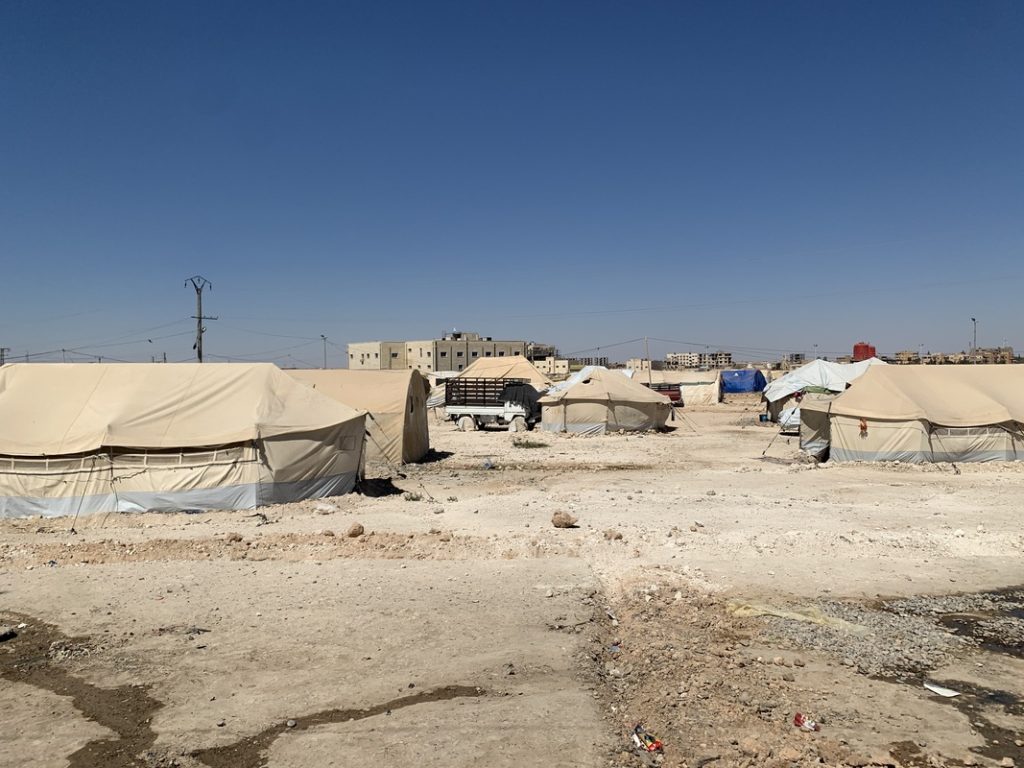
It has not rained in Tabqa for about a year. The city sits on the banks of the Euphrates River, within the borders of the Kurdish-led Democratic Autonomous Administration in North and East Syria (DAANES). Hundreds of families found refuge here after being displaced during al-Sharaa’s takeover last December.
For many of the families, this is the second time they have needed to escape to survive: originally from Afrin – a predominantly Kurdish city in northwest Syria that at the time was led by the DAANES – they were displaced when Turkey launched a major assault on the city in 2018.
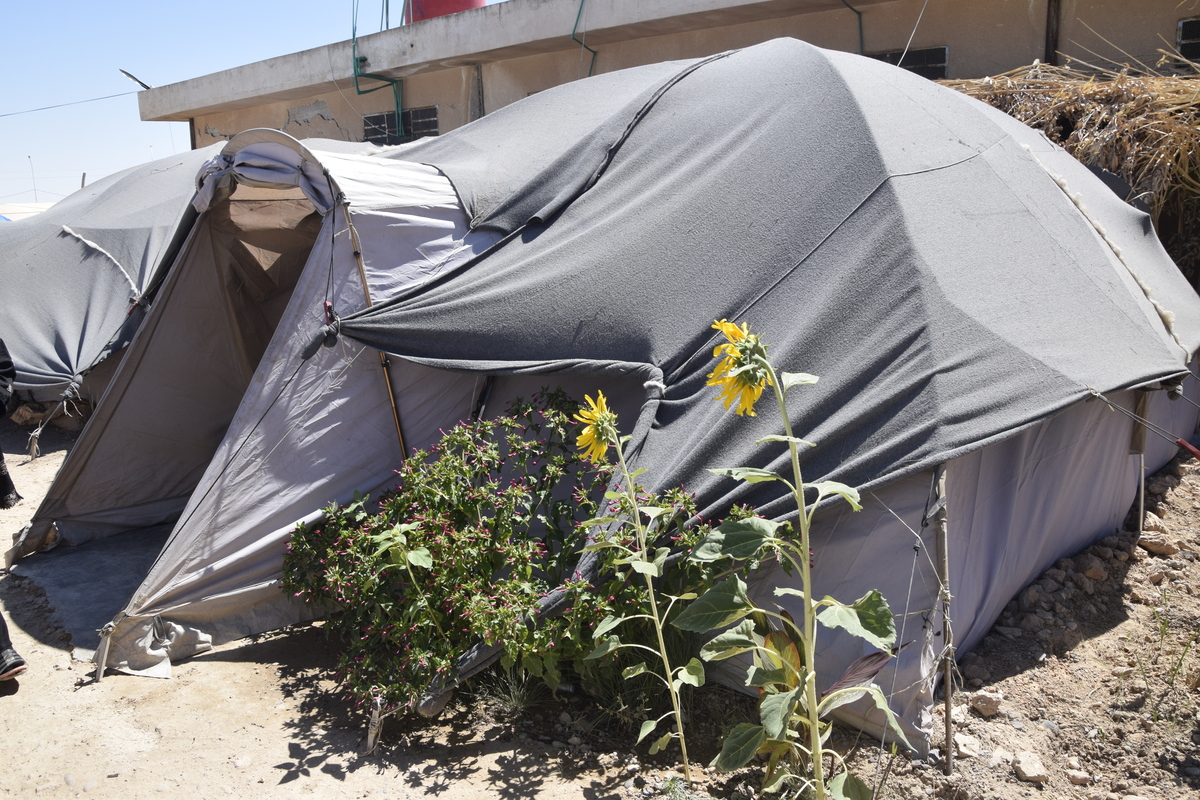
“The autonomy was particularly well-developed in Afrin, and women’s organization was very strong,” said Hevrin. She had sunflowers planted outside her tent; they followed the sun and endured the summer heat. Hevrin has lived in the camp since last winter and participates in women’s self-organization on the ground. “The state had lost significance in Afrin. That’s exactly why we became a target. That was an attack on our self-organization,” she said.
Turkey launched “Operation Olive Branch” in January 2018 with a massive airstrike. The offensive, conducted in cooperation with Syrian Islamist militias, resulted in the occupation of Afrin and major demographic changes.
Twice Displaced
After the attacks, the Kurdish population initially sought refuge in the nearby Şehba and Manbij areas, where the hope to return to Afrin remained the main goal.
However, on November 27, 2024, as Hay’at Tahrir al-Sham (HTS) was taking power in Syria, troops from the Turkish-backed Syrian National Army (SNA) used the chaos to attack Manbij and Şehba, and many families were displaced again.
“Our philosophy is to resist,” said Hevrin. “But if we hadn’t left, there would have been a massacre. And no one can be responsible for that.”
Instead of returning to Afrin, they left all they had and headed further east toward Tabqa with only the clothes on their back. The Kurdish-led Syrian Democratic Forces (SDF) organized an escape corridor, but, along the way, factions of Turkish-backed militias targeted women in the convoy of displaced people. “Those were deliberate attacks on us as women and on everything we have achieved,” Hevrin was sure. “Not only on us here in the Middle East, but on women all over the world,” she said. “All women must remain vigilant. These attacks target our dignity.”
Self-Organization as Self-Defense
“We must know who we are and what we want – as Kurds, as women.”
Now, in Tabqa, women try to continue managing their own lives and take leading roles. They have organized into committees, hold meetings, and coordinate with regional structures: “Together, we must instill a conscious understanding of the necessity of self-defense,” said Jiyan, who has been involved in the camp’s self-defense activities – night watches, handling weapons, and educating the residents about their female-centered political philosophy. “We must know who we are and what we want – as Kurds, as women.”
While world powers have been eager to welcome Syria back into the international community, along with the country’s Interim President Ahmad al-Sharaa, Europe in particular wants to make political deals and agree on deportation arrangements for Syrians, with Germany’s Chancellor Merz being one of the leading actors. Concerns about the changes that the power shift in Syria could bring remain significant. Recently, attacks on the nearby border town of Dayr Hafir left several people dead.
In Tabqa, they have not been convinced by al-Sharaa’s Interim Government: “What they want to impose on us is another centralized government. But we do not want renewed state oppression,” Nesrin insisted, frustrated that Europe does not see the Interim Government’s shortcomings. Nesrin lives with her family in the camp; she, too, comes from Afrin.
The threat of further attacks robs life of any stability, the family explained. What they want is simply for the children to return to school. As they put it, in the future, they cannot accept a return to the old status quo, like the Assad days, where a regime in Damascus imposes an Arab identity on the whole country and oppresses all others. Rather, they want “a democratic republic where all people can govern themselves with their own will.”
Female Solidarity Against Divisive Politics
In the nearby Jineolojî Center – a place where women gather to educate themselves, empower themselves, and organize – in Tabqa, Kurdish women work side by side with Arab women.
Jineolojî comes from the Kurdish word “jin”, meaning “woman”; it is a feminist social philosophy that, among other things, centers women’s liberation in the struggle for societal liberation and aims to contextualize life and society within women’s struggles in history.
“With Jineolojî we, as women from different cultural and religious communities, learn each other’s shared pains, thoughts, and strengths,” Amina, an Arabic staff member at the center, said. “We support each other and develop common goals.”
Since the Islamic State (ISIS) was driven out of the city by the Syrian Democratic Forces in 2017, a lot has happened here, Amina said. “In recent years, we have learned about the many achievements of all women in Syria. They give us strength and courage.”
Equality for women is enshrined in the DAANES’s social contract: Across the cities and towns led by the DAANES, every public office is held by one woman and one man under a co-chairing principle.
The Syrian Interim Government now poses a threat to these achievements: “They have now reportedly incorporated a few exemplary women into their work at the lower level. But they do not play a real role,” Amina said. The new Syrian government would “impose its interpretation of Sharia on the whole society”, she added.
“The Mother Unites”
Even with concerns about the future, there is ample self-confidence: “Women can play a leading role in building a peaceful Syria,” said Leyla, a young staff member at the center. “[Women] can drive society toward change and end the mentality that creates division between Kurds and Arabs.” The Assad regime would previously fuel social conflict along ethnic and religious lines through preferential or privileged treatment for Arab populations.
“There is an Arabic proverb, ‘The mother unites, ’” Leyla said. Arab women have organized themselves to a higher degree in recent years. “We do not want to experience what we endured during the ISIS occupation a second time. We do not accept what HTS wants to impose on us today!”
Women’s organizations under attack
The threat of Islamist militias remains present. Recently, in the Deir Ez-Zor region, a group targeted a women’s organization and set fire to a center of the Arab women’s association Zenobia. The association tries to network with women from all over Syria to counter this, the Zenobia staff in Raqqa said.
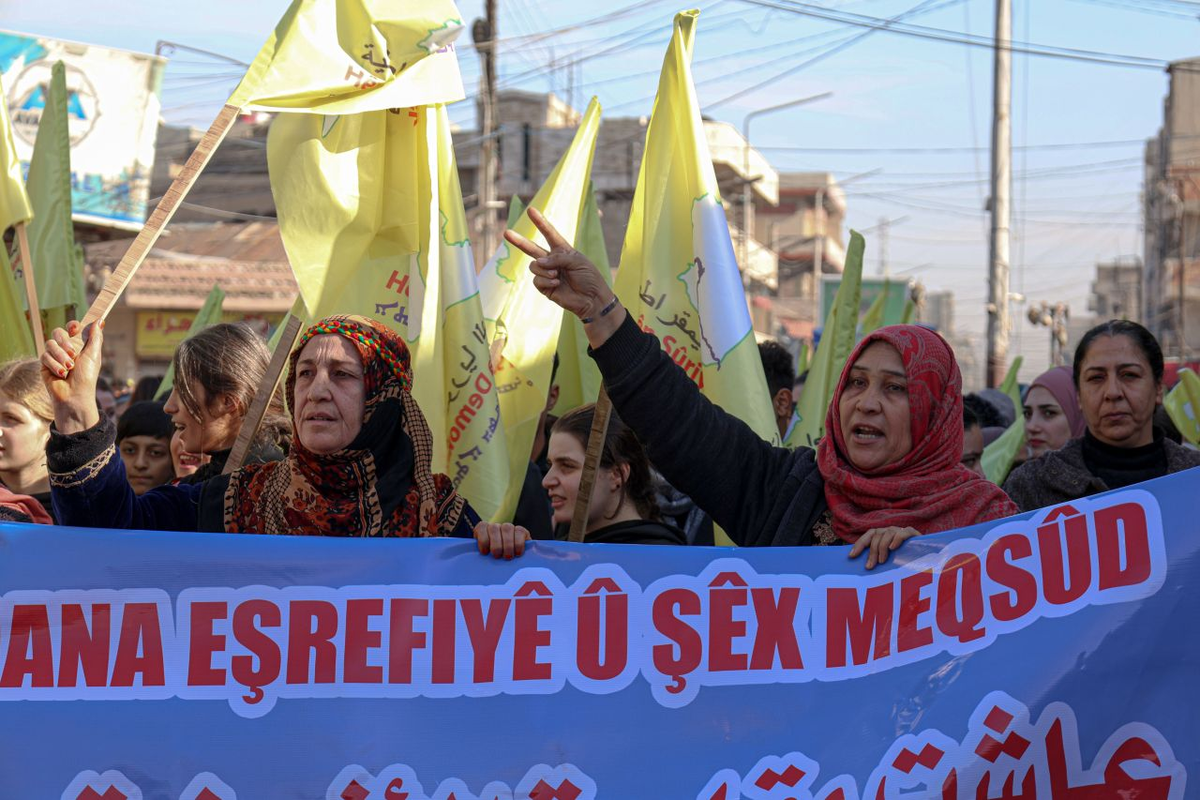
In September, they organized a conference with the women’s umbrella organization Kongra Star in Hesekê (Hasakah), where hundreds of women from across Syria discussed the role of women in building a democratic Syria.
Women from Aleppo, Damascus, and the Alawite-dominated western coast also attended the conference, and Druze women from Suwayda – a region that experienced a massacre at the hands of the Interim Government Security Forces and tribal factions – participated by video. The conference focused on demanding that gender equality be enshrined in a new Syrian constitution.
It has taken a while to rid minds of what ISIS wrought, Sara from Zenobia said. Relationships among women must be rebuilt. That is exactly what is still needed: “A federation of friendship among women.”

Lea Kleinsorge
Lea Kleinsorge is a journalist from Germany and currently based in Cologne.