Sipping in Silence: Fear and Alcohol Under Syria’s Islamist Authorities
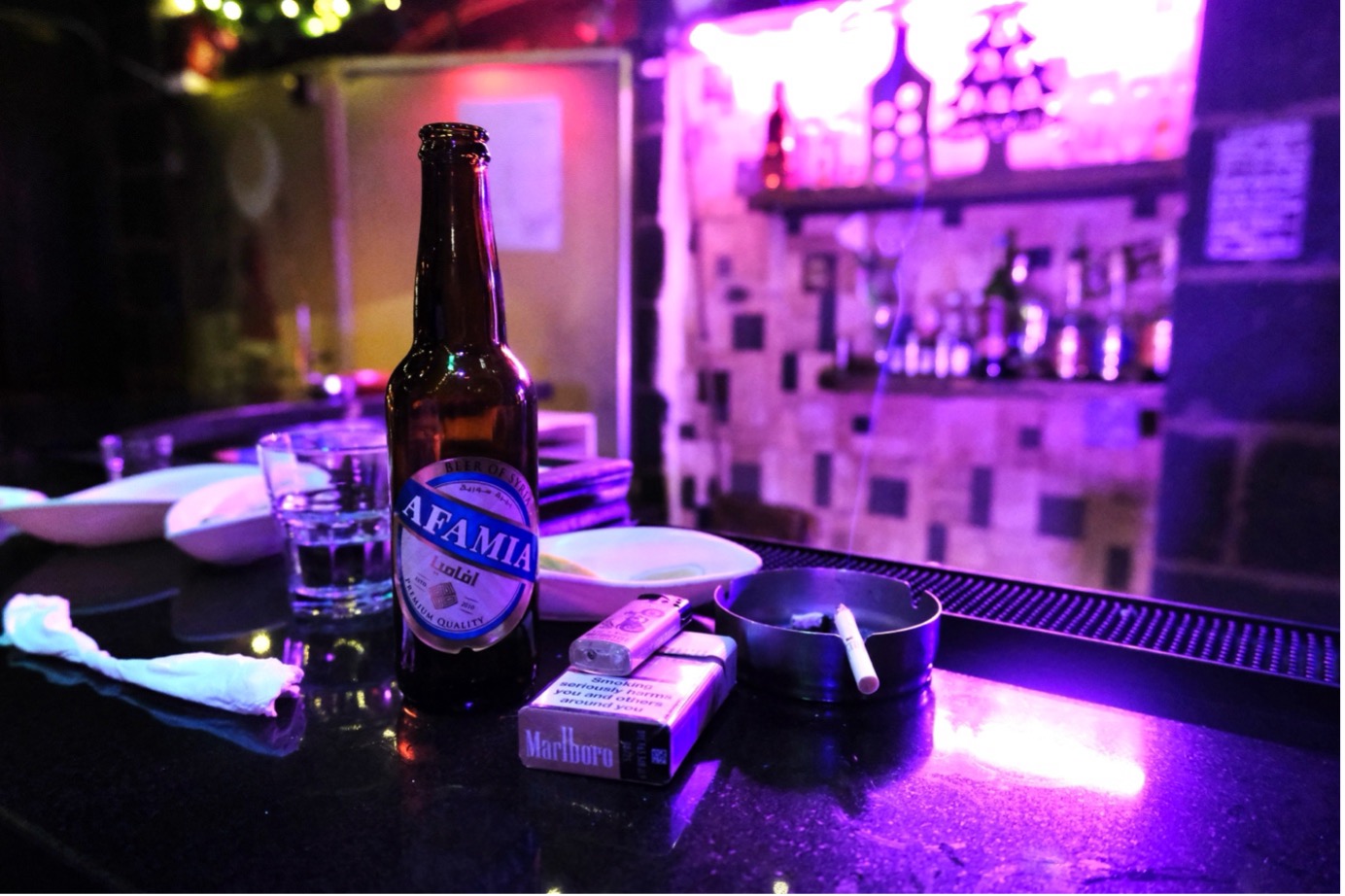
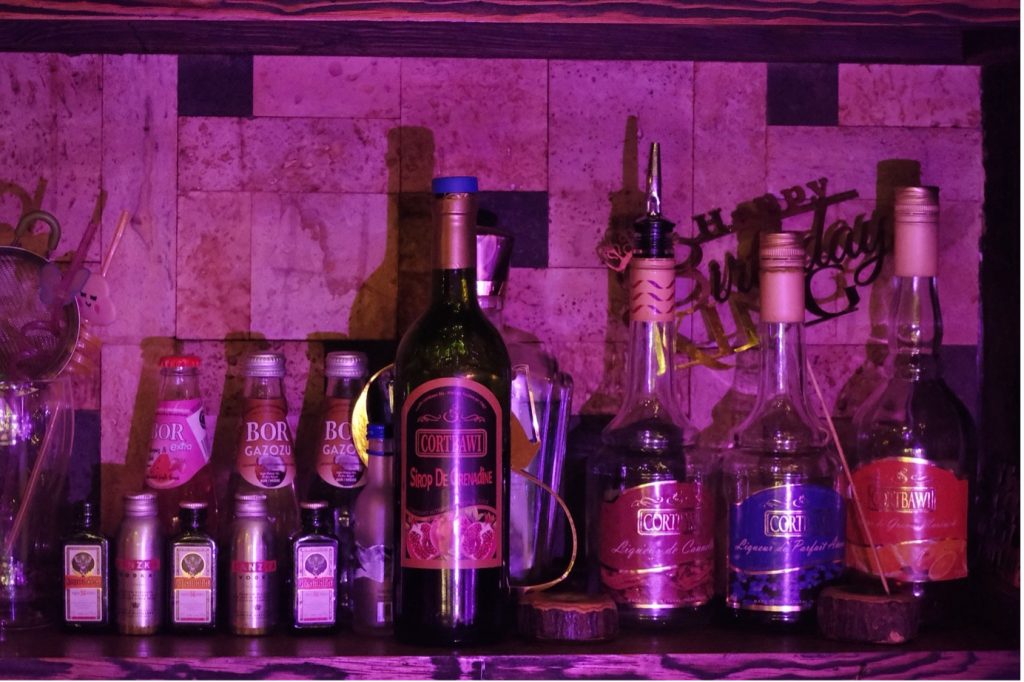
In a tucked-away corner of Damascus, the bar owner moves quietly behind the counter, preparing for the night ahead | Picture Credits: Katrine Houmøller
Since the new Syrian regime took power in December 2024, access to alcohol has become increasingly restricted due to informal rules and selective punishment. Some leaders label alcohol haram, forbidden, while civilians say the social ban violates their cultural values and traditions – others hide their drinking for fear of authorities.
These contradictions reflect a broader struggle playing out across Syria. The country’s new leaders, some of whom come from extremist Islamist movements, are still unsure how their conservative values can coexist with the secular habits of urban Syrians.
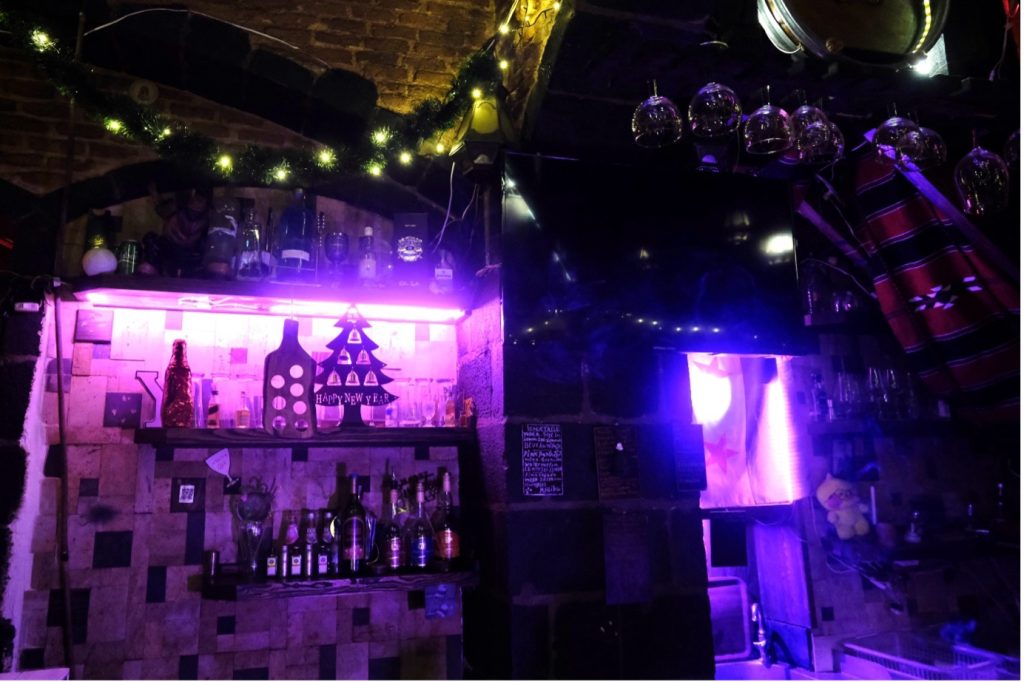
It is midday and the bar is sober. No clinking glasses, no raised voices, only Christmas music crooning softly through a speaker behind the counter. The interior is old Damascus style: dark wood, thick stone walls polished smooth by decades of hands, smoke, and alcohol-stained breaths. A glowing Happy New Year sign hangs above the bar, and Christmas trees stand in the corners; their purple, red, green, and yellow lights flicker against matte walls.
Behind the bar, the owner reaches up and pulls aside a large Syrian revolutionary flag, revealing rows of hidden liquor bottles. He laughs as he does it.
“For me, as a Christian, they [the authorities] are breaking my traditions, my privacy, everything I stand for,” he says, slicing carrots and cucumbers into thin sticks for the evening ahead. He agreed to speak only on the condition of anonymity.
Although authorities claim they have not banned alcohol, the reality on the ground is very different. This unofficial ban is clearer in the words of Imad al-Natour, 36, a deputy commander of Hayat Tahir al-Sham (HTS) in Yarmouk, south Damascus: “If someone is seen with a bottle of alcohol, we take it and break it,” he says. Though he also argues, “No one will touch people who drink alcohol,” reflecting the ambiguity around alcohol.
Bars under Pressure
In Damascus’ Old City, particularly around Bab Tuma, alcohol is still widely available, and bars line the narrow streets. But over the last year, several venues have been shut down for allegedly lacking authorization to sell alcohol.
Many of the closed-down locations are in Christian areas such as the Bab Tuma neighborhood and the Bab Sharqi quarter. The closures sparked outrage on social media, but on the streets, there was only silence.
But fear and uncertainty still ripple through Damascene Christian communities: where bars were once full, they now stand half-empty
One shopkeeper who sells alcohol in Bab Tuma would not discuss the subject at all, “We will not talk about that,” he says, ending the conversation.
Imad al-Natour claims that authorities mainly target Muslim-owned bars, “We respect the Christians’ religion, and they respect ours,” he says.
But fear and uncertainty still ripple through Damascene Christian communities: where bars were once full, they now stand half-empty, says the bar owner in Damascus.
Customers hesitate, worried about checkpoints, soldiers, or being stopped on the street. One of his customers was recently detained while carrying a bottle of whisky. It was confiscated, but he was allowed to go free because he called a sheikh – and because he was Christian.
These days, most bargoers are foreigners, journalists, or a small number of wealthy Arabs. Syrians, he says, tend to stay home. “People from the new regime are against alcohol,” he says. “It’s their opinion, but they are trying to impose it on everyone else.”
His bar has not yet been shut down, and for now, this part of Damascus still feels relatively safe. But the threat is constant.
“Under the Assad regime, the state was strict in other ways,” the owner says. “But private life was largely left alone. [We had] freedom to drink. Now, a bottle of alcohol is enough for someone to get stopped. That alone shows freedom is limited.”
Hidden Drinking in Yarmouk
In Yarmouk, a 40-year-old man could remember when alcohol was part of daily life; at weddings, family gatherings, and any occasion worth celebrating. When the new regime took over last December, he began drinking in secret, smuggling alcohol home and sipping it quietly, hoping no one would notice. But eventually he stopped, and he has not had a drink in five months – partly for the sake of his physical health; partly because the fear of being caught strained his mental health.
“If they catch you with a bottle, they send you to jail,” he says, requesting anonymity out of fear of the authorities. “They destroy the bottle of alcohol and punish you. Drinking is treated like taking drugs now.”
“When you drink, your mind drifts,” explains 33-year-old Ghiyas Tamimei, a local HTS leader in Yarmouk, arguing that alcohol is harmful to society. “You may end up committing crimes.”
Imad al-Natour has a different perspective. He draws a clear line between alcohol and drugs: while alcohol offers a brief respite for the mind, drugs make people act out of control and destroy the brain. He argues that this justifies the authorities’ harsher punishment for drug use.
“However, hopefully, God will release those who drink. Just as He released me,” he says.
Before the war in 2011, Imad al-Natour drank every day. Whisky, vodka, arak, beer. He spent many nights drinking until he passed out, an ordinary part of life and culture at the time. He adds that, although he was a Muslim, he knew little about his religion. Today, he understands that alcohol is haram, forbidden, as is written in the Quran.
“It’s written in the Quran: if you do wrong, hide it”
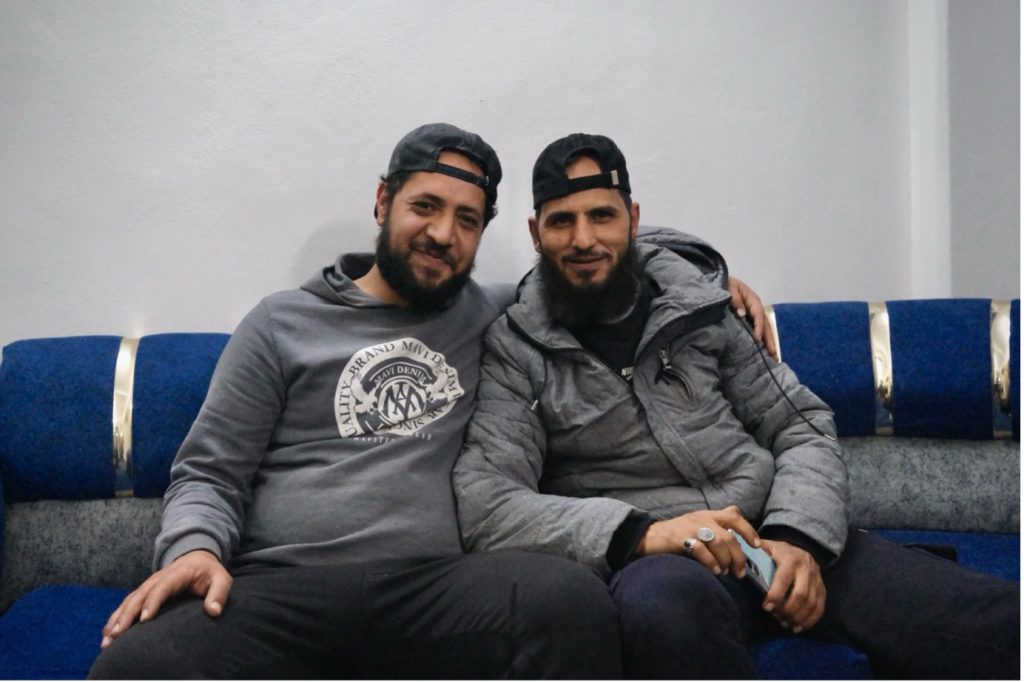
Despite the authorities and religious bans, Ghiyas Tamimei notes that many Muslims still drink. But he claims that as long as people drinking in the street do not harm anyone, the authorities generally leave them alone.
“It’s written in the Quran: if you do wrong, hide it,” he says.
Alcohol is still available in parts of Damascus, albeit discreetly.
Answering a question on how he feels about alcohol today, Imad al-Natour laughs, saying, “If alcohol were permitted, I would be back to drinking tomorrow. I wish it wasn’t haram.”
Similarly, the 40-year-old man who has gone without alcohol for five months also affirms that he misses having a drink, “Of course I would drink again!” he says with a smile.
In Syria today, strict laws have made alcohol a symbol of identity, of control, of the fragile boundary between what is allowed and what is merely tolerated. And in the quiet of an empty bar at midday, that boundary feels thinner than ever.

Katrine Houmøller
Katrine Dige Houmøller is a Danish freelance journalist based in Beirut, Lebanon, specializing in coverage of the Middle East with a focus on war, crises, and human rights. She was nominated for the Danish Kravling Prize for her reporting from Syria following Bashar al-Assad’s fall in 2024, and in 2025 she received the DMJX award for her project on child soldiers in Palestinian refugee camps in Lebanon.