Documenting War Crimes in Rojava: Interview with CPT’s Kamaran Osman
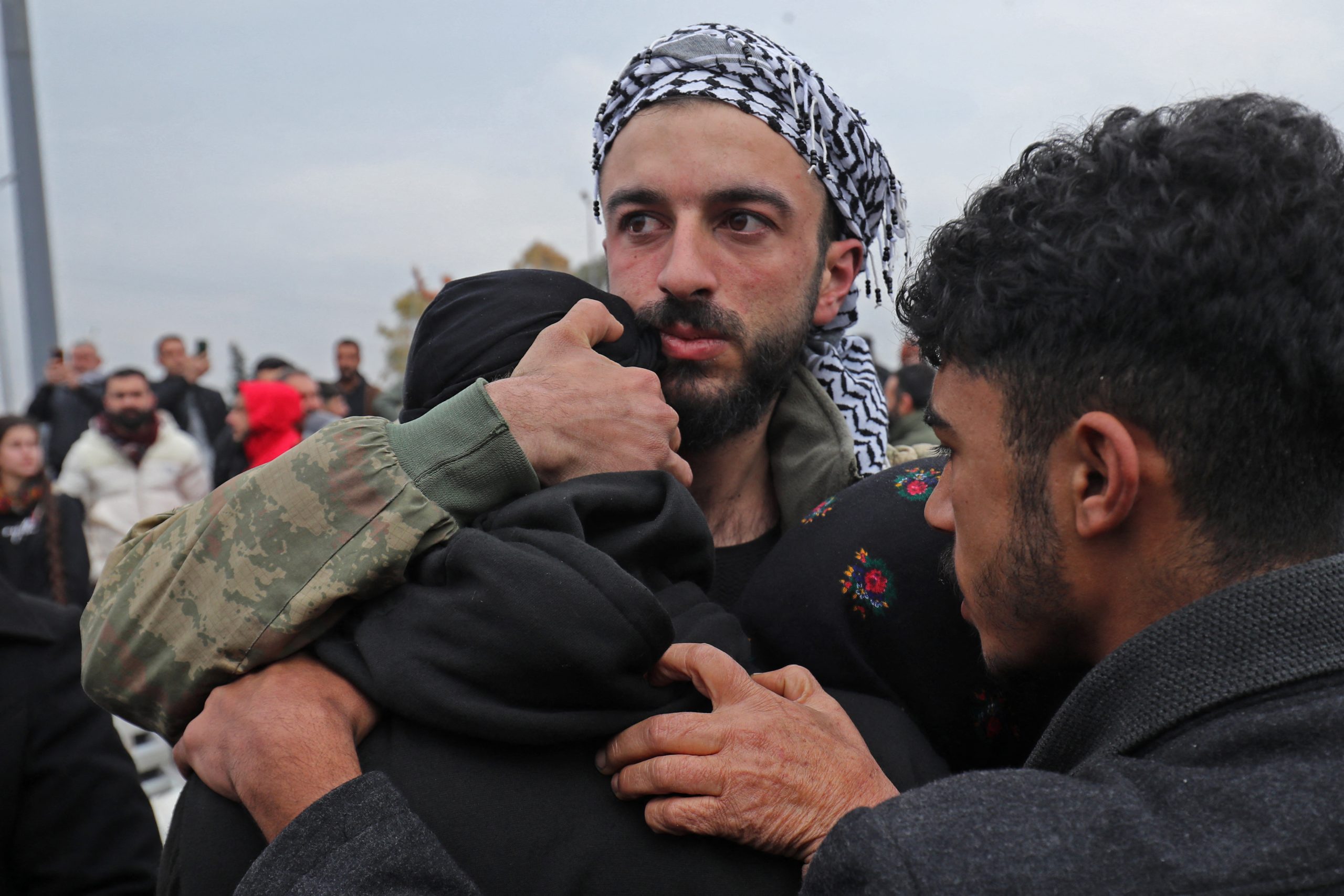
Families hug as they welcome the arrival of Kurdish fighters bused out of the northern city of Aleppo following a ceasefire, to the Kurdish-controlled northeastern city of Qamishli on January 11, 2026. (Photo by Delil SOULEIMAN / AFP)
The guns may have quieted in Syria, but for the people of Northeastern Syria (Rojava), the violence of early 2026 has left wounds that are far from healed. When factions of the Syrian Arab Army moved against Kurdish-held areas, a wave of fear swept through the region, and with it came reports that were deeply troubling: summary executions, blockades cutting off basic supplies, and a wave of international aid agencies pulling out just when they were needed most.
We sat down with Kamaran Osman, a member of the Community Peacemaker Teams (CPT), who was on the ground as events unfolded. He was there. He saw it. And in this archival interview, he shares a firsthand account of what Kurdish civilians endured during one of the most dangerous moments the region has faced in recent memory, and what the international community failed to do about it.
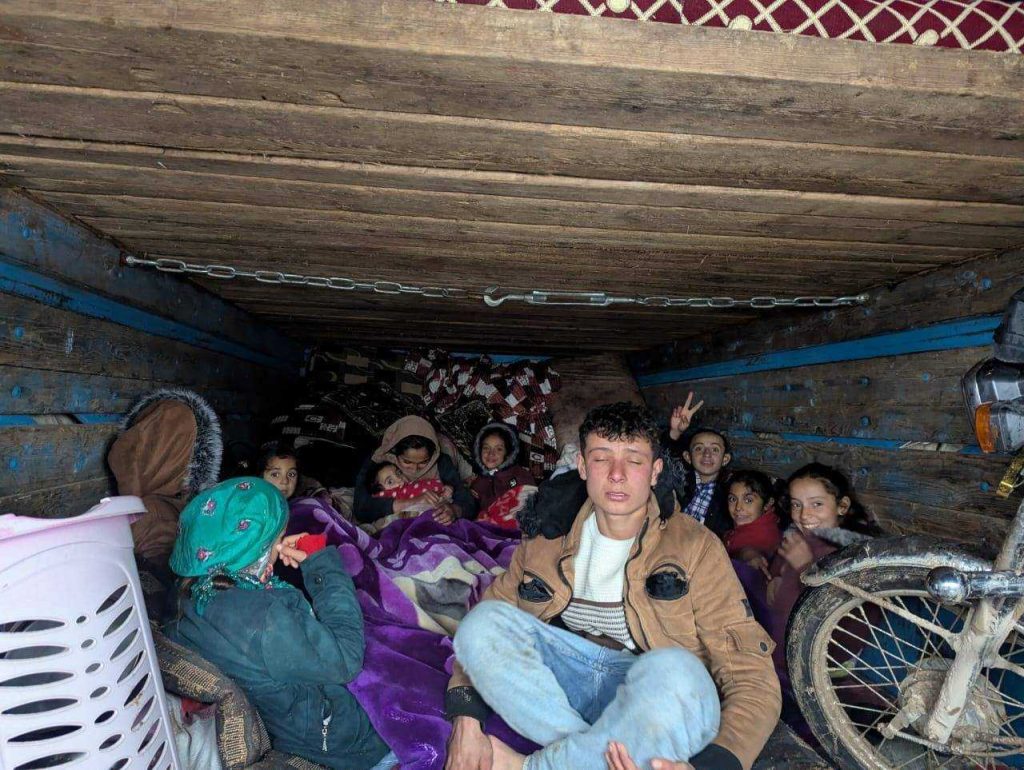
Q: We are looking back at a month of unprecedented change in Rojava and Northeastern Syria. Having been on the ground, how do you characterize the situation during that peak of instability? Was this a temporary complication of war, or are we witnessing a permanent shift in the region’s political and demographic makeup?
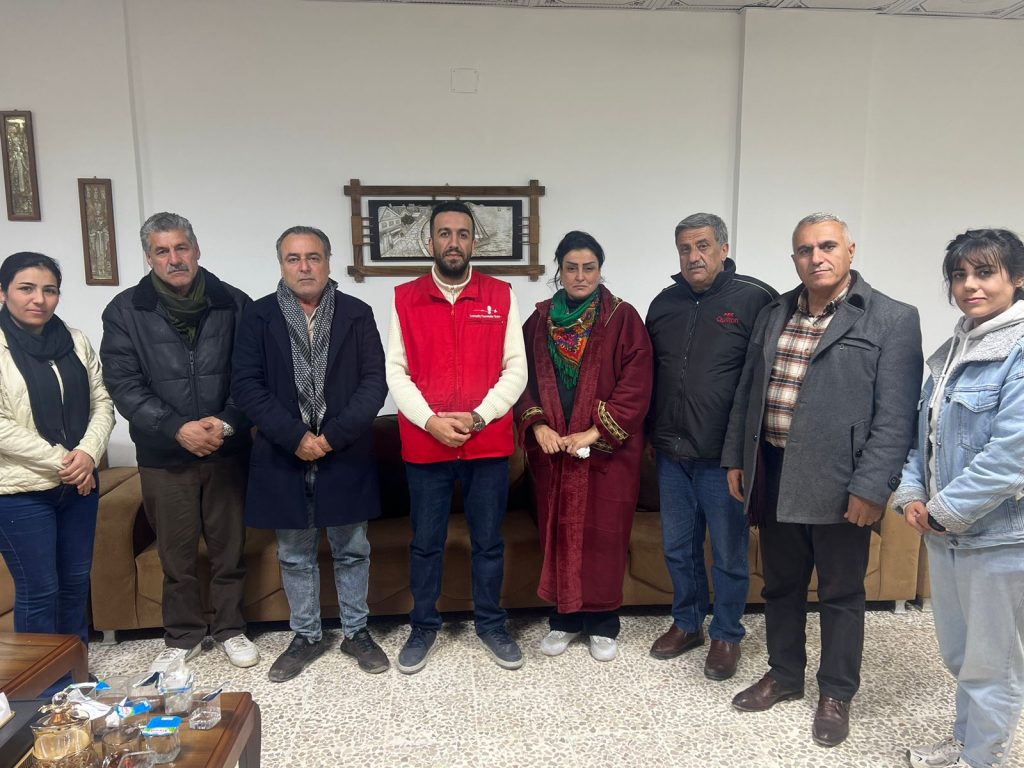
Kamaran: I was in Rojava and Northeastern Syria on behalf of Community Peacemaker Teams (CPT) to document the human rights violations conducted by various actors: the militias of the New Syrian Government, Arab tribes, and several unknown militia groups. What we witnessed were absolute war crimes.
The situation destabilized rapidly around January 6th. The New Syrian Government conducted massive military operations across Aleppo, Tabqa, Raqqa, and Hasakah, eventually blockading Kobane. No one was safe. Even in Qamishlo, which was relatively far from the front lines, people couldn’t sleep. They lived in constant fear of aerial attacks. The complexity here is that the Kurdish forces aren’t fighting just one enemy; they are facing a tripartite threat from government forces, tribal militias, and opportunistic groups formed solely for looting and killing.
Q: You visited these areas directly. We’ve seen reports of attacks on basic infrastructure, water, and electricity. In your documentation, did it appear that these services were being intentionally weaponized to force civilian displacement?
Kamaran: Absolutely. We documented multiple massacres and abductions, but the blockade of Kobane stands out as a clear example of using basic needs as a weapon. Because the Syrian government could not successfully conduct a ground operation to take the city, it placed it under a complete blockade. They cut off electricity and water and sealed the gates used for food supplies. It was an attempt to force a massacre through starvation and thirst rather than direct military engagement.
In terms of direct violence, we interviewed survivors of horrific events. We documented a case in the village of Abu Khashab involving a family of 12 trying to flee Raqqa for Hasakah. They were stopped by a militia and asked if they were Kurds or Arabs. When they confirmed they were Kurds, the militia leader ordered their execution. They killed the elderly and shot the mother in the head. They then killed the children. Six died, and six were left injured.
The brutality didn’t stop at the killing. We found evidence of body desecration. One 26-year-old man had his eyes removed. A woman had her face skinned and her abdomen cut open. These aren’t just stories; we have the photo and video documentation to prove it.
The Silence of the International Community
Q: One of the most concerning reports from that period was the sudden withdrawal of aid. What was the status of international NGOs while you were there?
Kamaran: This is perhaps the greatest tragedy. There were 91 international NGOs operating in Northeastern Syria; almost all of them implemented evacuation plans and left. Their excuse was a lack of safety for foreign staff. While it’s true that 52 NGO offices were targeted and looted by various militias, their withdrawal created a massive protection gap.
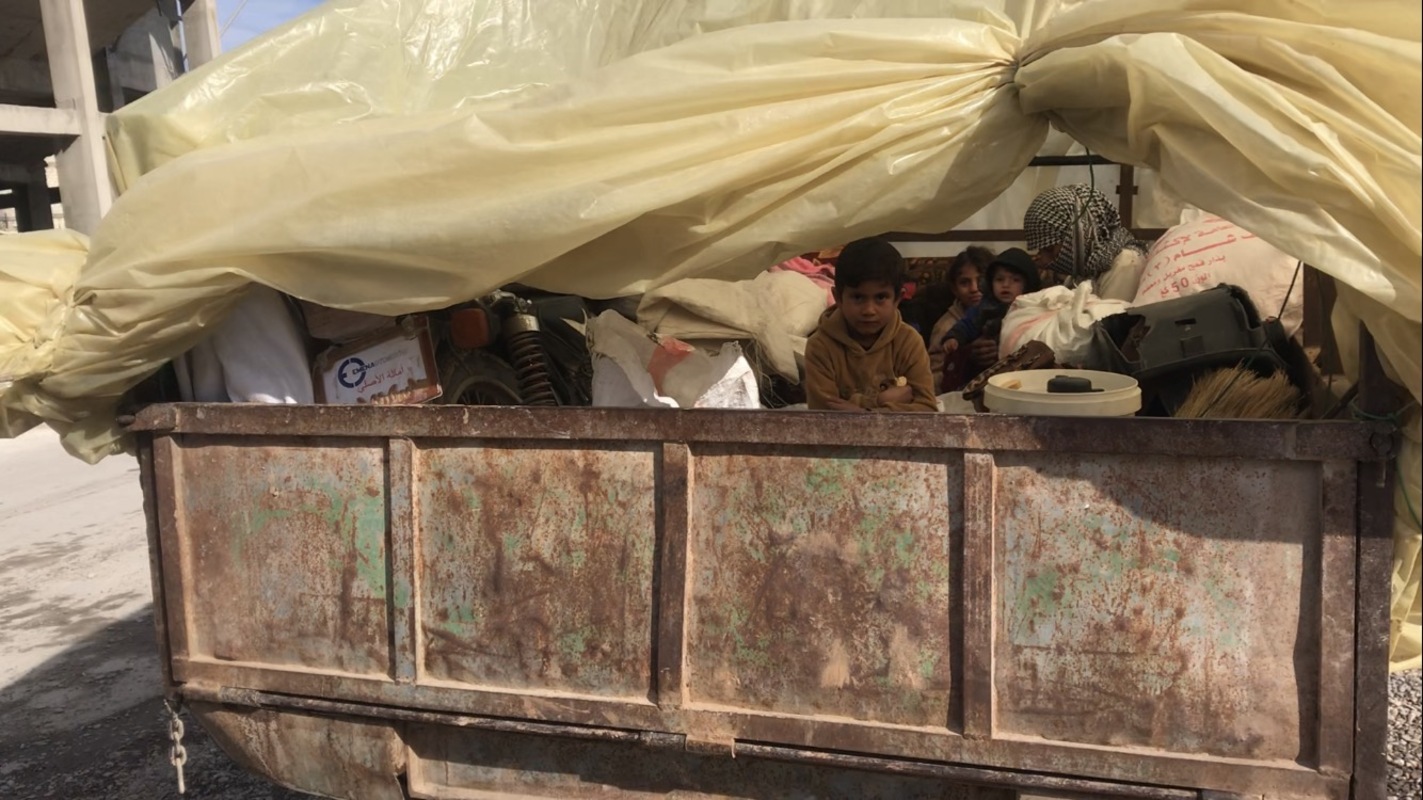
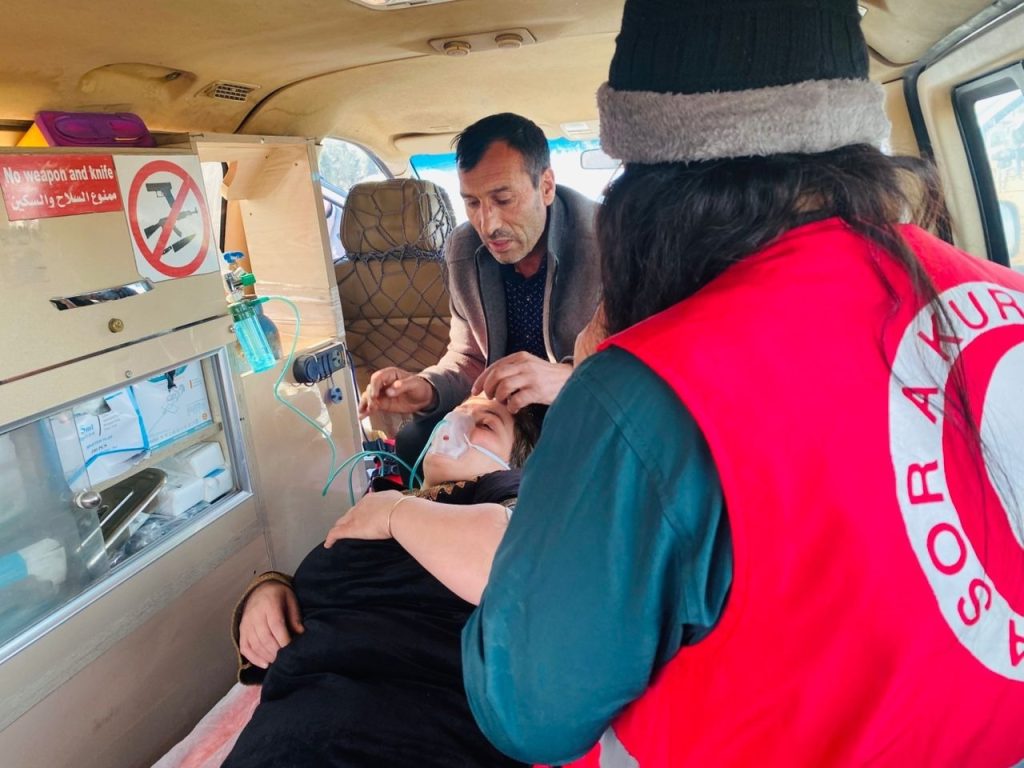
Over 130,000 people were displaced during those weeks, many for the fifth or sixth time in their lives. The local administration only has about 242 shelters. When I visited mosques and schools, there was no food. Infants were freezing because there were no heaters, blankets, or mattresses. At least five people died simply from a lack of medication and water during that time.
Q: Was any aid reaching Kobane or other besieged areas?
Kamaran: Most gates were closed. The only semi-functional crossing was Semalka/Fishkhabur from Iraqi Kurdistan. However, that border is under intense monitoring by Turkey using “Dragon” sensors and facial recognition technology. This creates a massive security risk for anyone delivering aid. Furthermore, there is immense political pressure on the KRG (Kurdistan Regional Government) from both Ankara and Damascus to limit this support.
The ISIS Factor: A Resurging Threat?
Q: There has been significant concern regarding the Al-Hol camp and other detention facilities. Did the chaos of the transition create a security vacuum that ISIS might exploit?
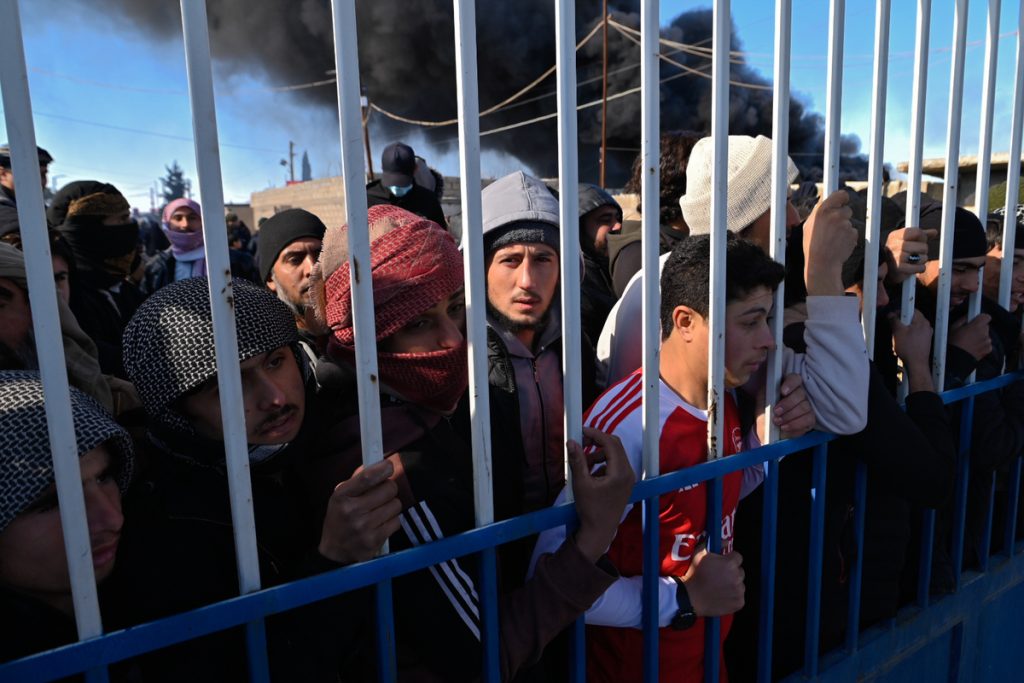
Kamaran: There is a severe power vacuum. Al-Hol camp, which held over 25,000 ISIS members, fell under the control of the New Syrian Government. Many of these prisoners were the same individuals who committed the 2014 genocide against the Yazidis in Sinjar.
There is a significant risk that these individuals will escape or reorganize. We know that at least 128 high-level ISIS leaders were delivered to prisons in Iraqi Kurdistan, but the fate of thousands of others remains uncertain. If they escape during this instability, they will not only target Kurds but the entire region once again.
Seeking Justice in a Complex War
Q: What is the CPT doing with the evidence you’ve gathered? Have you seen any positive movement toward accountability?
Kamaran: We have documented seven major massacres and over 20 cases of intentional summary executions. We are compiling a comprehensive report to be delivered to the UN, international embassies, the US Senate, and Congress.
But to be honest, the response so far has been vague. Every diplomat says they are “investigating,” but no one is acting. The Kurdish people feel betrayed. This isn’t just a local conflict; it’s a theater for the interests of the US, UK, France, Turkey, Qatar, and others. The civilians are being left behind in the geostrategic shuffle.
We are keeping these archives not just for today’s news, but for the day when these documents can be used in a court of law against those who committed these crimes. We need the international community to stop using a double standard for human rights. If it matters in Ukraine, it must matter in Rojava.

Shan Sabir
Shan Sabir is an independent journalist and human rights activist. A Data Science Master’s student at Leipzig University and a graduate of the University of Sulaimani, Shan’s work focuses on political analysis and civil rights through the lens of data and statistics.