Chronicle of The Clashes in Aleppo: From Hell to a Ceasefire
From our Correspondent in Aleppo
Aleppo witnessed its most tragic week since Assad’s downfall. Three days of fighting engulfed the predominantly Kurdish neighbourhoods of Sheik Maqsud and Achrafieh, forcing over 100,000 people to flee their homes, and more than 10 civilians were killed.
The technical military stalemate shifted on Thursday, 8th January, when the Syrian Army fulfilled its threats to forcefully enter the area to defeat the Asayish, the Internal Security Forces that had controlled the area since the withdrawal of the Syrian Democratic Forces (SDF) in April. After more than 12 hours of intense fighting, a ceasefire was declared, halting the hellish violence.
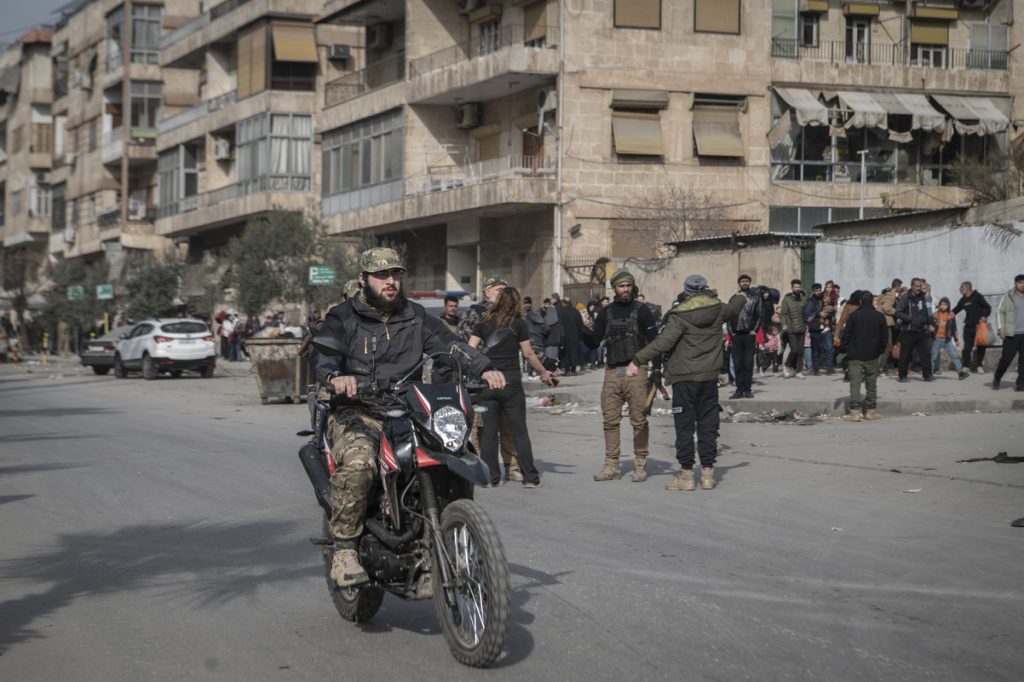
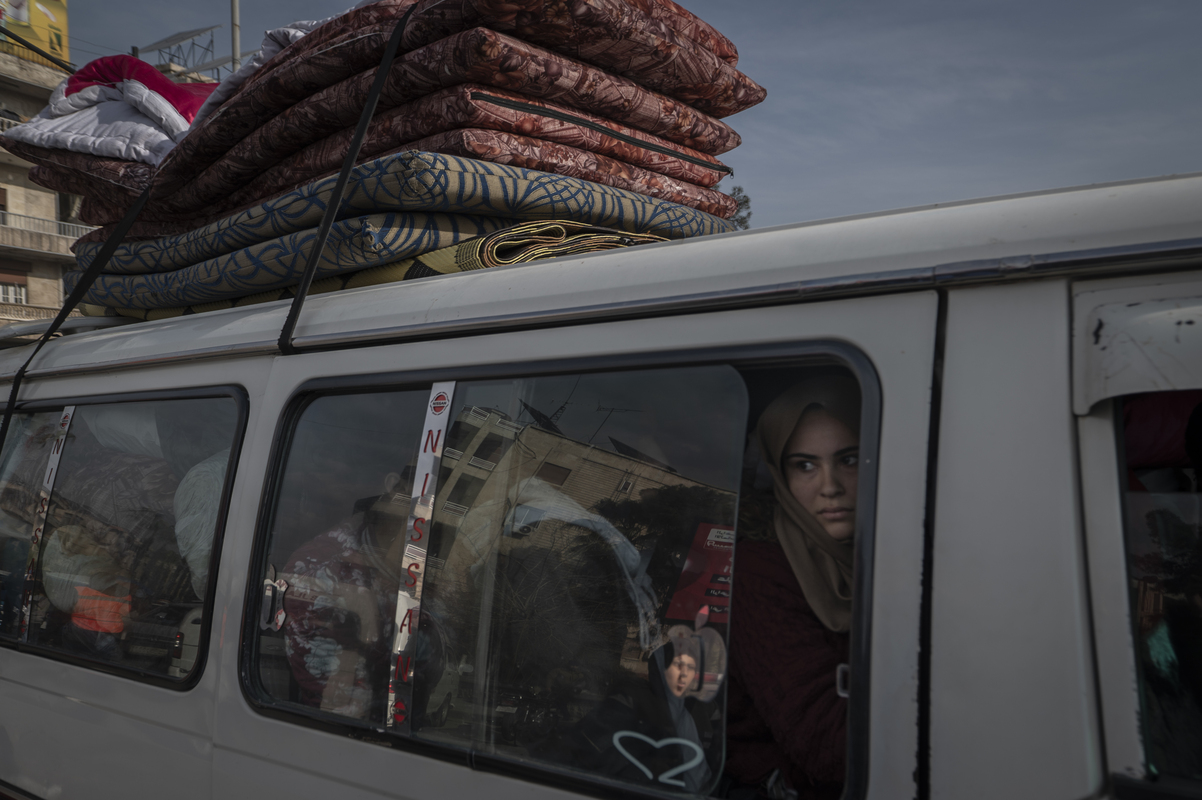
The city sank into chaos, sadness, and despair. The barrage of bombs, gunfire, and ambulance sirens stunned the historic city of Aleppo, bringing back memories of the darkest days of the Syrian war. Meanwhile, the exodus of over 100,000 people stirred fresh memories of the massive displacements experienced in recent years. “Many stayed in their homes; they are tired of being forced to flee again. We would rather die in our homes,” said Jina, a 45-year-old Kurdish woman. “We had to leave this morning when a bomb hit our house; it was destroyed. We survived hiding in the basement. We have nothing left,” she said, gathering her belongings and adjusting her daughters before boarding a van heading to Afrin.
The escalating tensions erupted on Tuesday, 6th January, leading to the first clashes. Syrian Army forces “cut off supplies of electricity, water, and food; we lived under total siege,” said Jiyan, who fled her home with her family. By Wednesday, two humanitarian corridors were established before the Syrian government declared the areas a “closed military zone”, meaning that anything “will be targeted”, trapping 500,000 residents with no choice but to flee before hell broke loose. Tens of thousands fled, many returning to Afrin, from where they had been displaced in 2019, and then from Tal Rifat in late 2024. Some sought refuge in relatives’ homes within the city, while others were evacuated by Civil Defence (White Helmets) to makeshift shelters in mosques. Shahet Baki Hasa, in charge of the Zain al-Abidin mosque, commented that the displacement centre “is at full capacity with over 300 people, with scarce supplies, and many are spending the night in the streets with nowhere to go, suffering in the cold.”
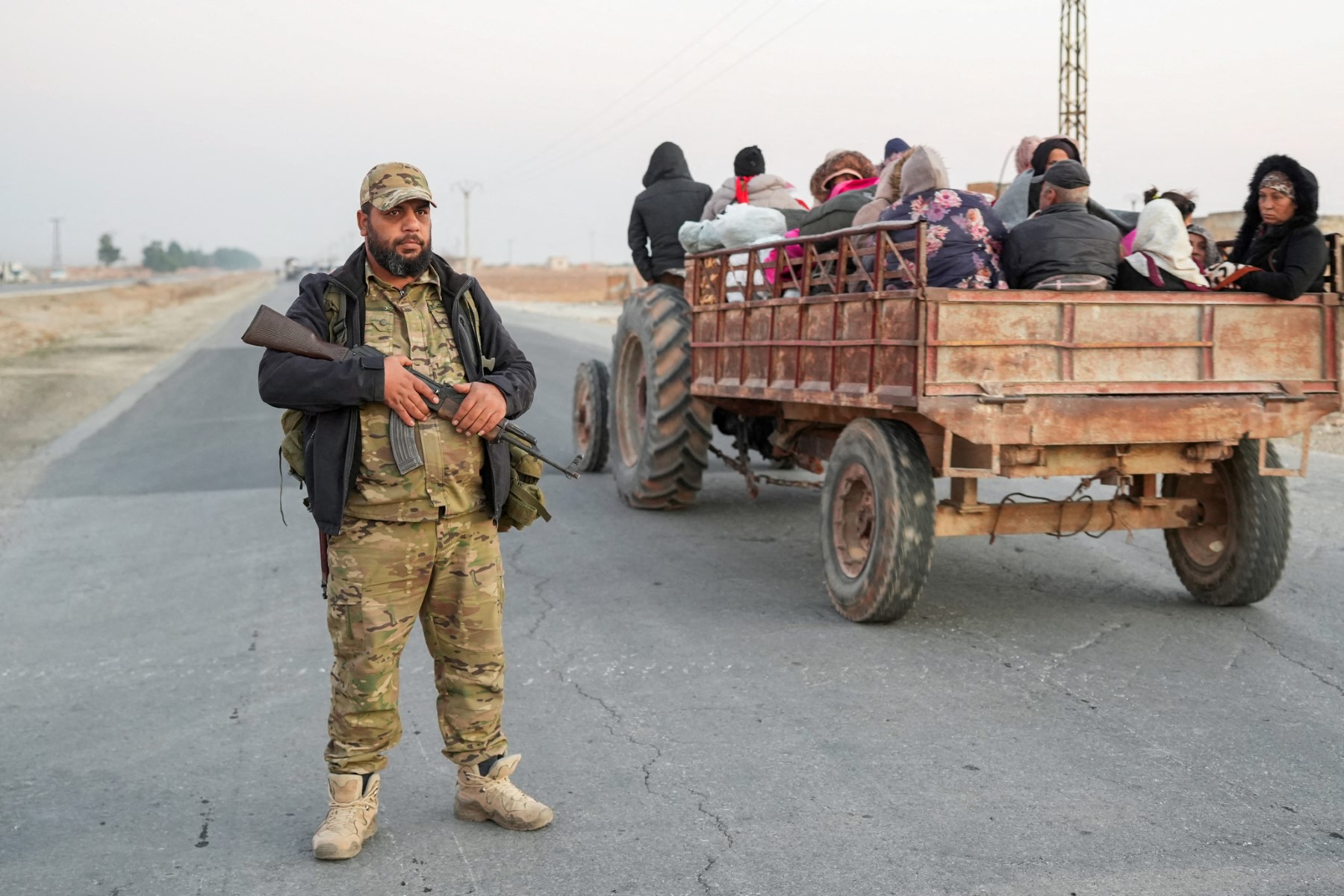
Thursday’s early morning offered no calm. Mortar shells rumbled through the buildings before fading away, while intermittent gunfire from machine guns echoed in the distance. As soon as the sun appeared, a ceasefire began, setting off a new exodus of families fleeing what was expected to be a large-scale Syrian Army operation at 1 pm. Farmers fled with their sheep and tractors, while General Security soldiers shot at drones flying overhead. Children carrying their pets in their arms expressed their innocence by playing, while others cried, unable to comprehend the desperation of their parents, who were loading suitcases onto their shoulders.
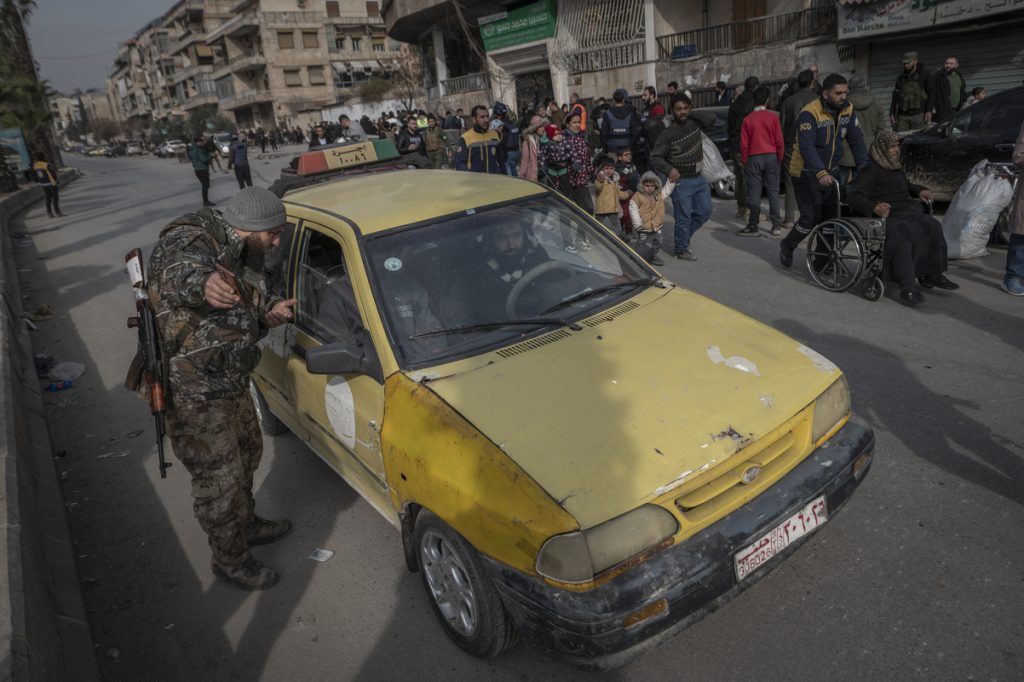
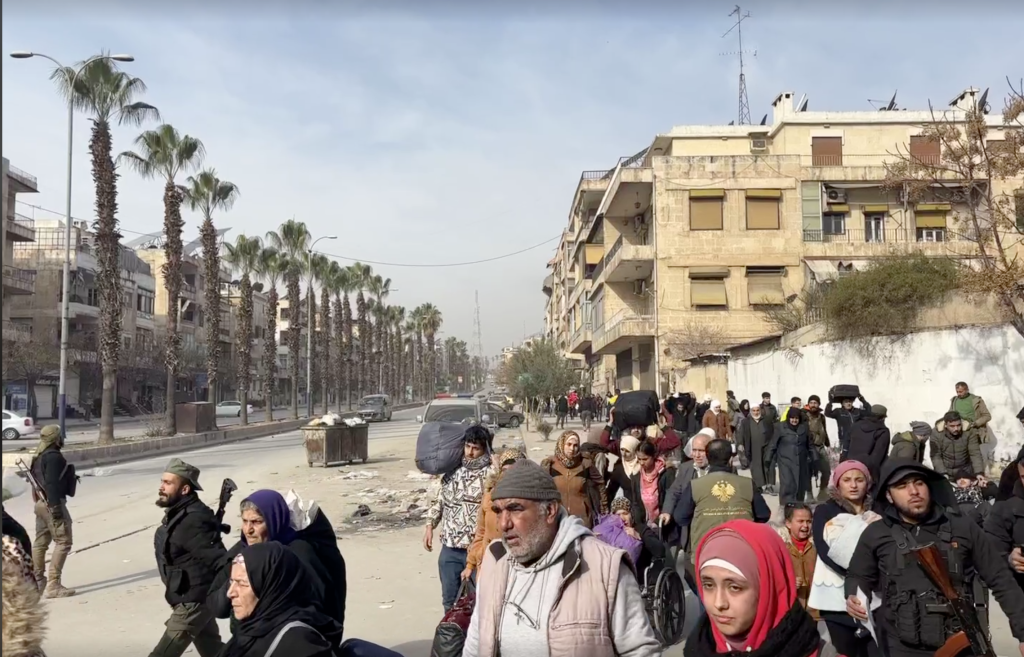
On Isharat al-Sirian Avenue, hundreds of small buses were waiting, thier occupants shouting “Afrin! Afrin!” According to UNOCHA, around 100,000 people arrived there. Cars flooded the streets, while others fled on foot, exhausted after a long night, stunned by the roar of fighting. Elderly, vulnerable women cried, clutching their heads every time mortars or gunfire rang closer. A woman, trying to walk while holding on to the wall after collapsing from nerves, was helped by her children, who rushed to get her to safety after crossing the last checkpoint, now controlled by the Syrian Army, where some men were arrested under suspicion of being supporters of the former regime or SDF members.
Meanwhile, a battle of narratives took place. “The SDF uses civilians as human shields,” said a Syrian Army soldier at the Al Zohoor checkpoint, justifying attacks on residential areas. “We are being threatened with death on social media; they identify all Kurds as members of the SDF, which means all Kurds are military targets,” said Lawand Muhamad, who was at university outside the neighbourhood when the fighting began and never returned home. “Nothing has changed since Assad’s fall; in fact, we’ve lost more rights. For example, Kurdish issues are no longer taught in schools. This conflict is against the entire people, not just a military enemy,” he said at a bar near the fighting. Mortar fire hit civilians on both sides of the city.
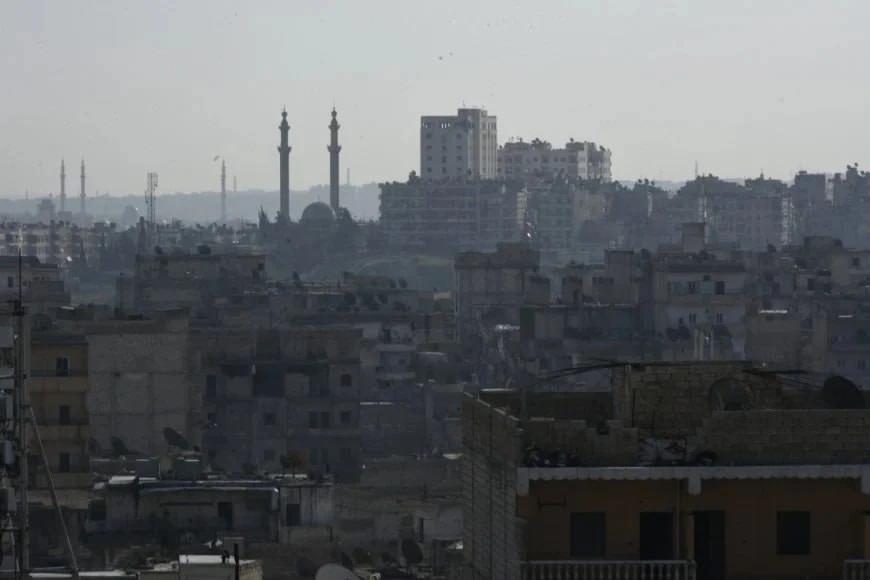
At 13:00, the whistle of a rocket marked the beginning of the operation. Tanks were positioned to support infantry units. Suicide drones filled the sky as hell broke loose. “The Asayish are equipped with light weapons, but they don’t have tanks or artillery like the Army,” explained Jiyan. The resistance was fierce, with at least 12 hours of intense combat. The whole city was on edge. Businesses shut, and the population ran to hide. Rockets flew across Aleppo, a grim spectacle.
At Al Razi Hospital, a car rushed uncontrollably to the entrance of the emergency room. A man in red desperately tried to pull a woman’s body from the back seat to place it on the gurney brought by nurses, already stained with blood. The woman’s body fell to the ground, and the man broke down in heartbreaking tears. The hospital hallways were stained with blood, crowded with concerned relatives, and every 5 minutes, a car or ambulance reached the doors with civilians wounded. In the intensive care unit lay seven-year-old Ibrahim, who was hit by a bomb alongside his brother while playing on the balcony in Midan on Tuesday. While his four-year-old brother Ghaith died, Ibrahim was fighting for his life.
Mortar fire and rocket launchers were positioned within residential areas of Aleppo, with projectiles launched from between civilian buildings toward Kurdish neighborhoods.
The situation in hospitals within Sheik Maqsoud was even worse. “Emergency rooms operated without medical supplies, water, electricity, or an internet signal to communicate,” but “they were also being attacked by the Army,” said Osman. The Khaled Fajr Hospital posted a video showing a direct attack. “They had already received over 100 injured before the final military operation,” Osman said as a witness inside Sheik Maqsoud, “it is impossible to know the situation there now”.
The Syrian Army finally prevailed, breaking the hard Asayish’s resistance, and the Ministry of Defense announced that the ceasefire was reached at 3 am. The agreement, backed byTom Barrack, the US ambassador to Turkey, stipulated that all security forces leave the area safely, only carrying their light weapons. The state news agency SANA reported that several people had died during the clashes without giving specific numbers, and 142,000 had been displaced. So far, there are no official death tolls; there are reports of more than 10 civilians, but military casualties are being kept secret on both sides.
The people of Sheikh Maqsud have decided to continue their resistance. The Sheikh Maqsud and Ashrafiyeh Neighborhood People’s Assembly issued a statement this morning, saying: “We have decided to stay in our neighborhoods and protect them.”
While many wonder who threw the first stone, the answer does not lie on the battlefield but in the failure at the political level. High-level negotiations between Damascus and SDF leadership, initiated on 10th March for the territorial integration of the Northeast, collapsed throughout 2025, putting the entire country at risk of sinking into a new war. The balance of power shifted after Israel and Syria reached a preliminary security agreement in Paris, aligning with US interests to stabilise the country. In the meantime, the Turkish authorities remained fully behind the Syrian government-affiliated forces. Trump may be willing to sacrifice the established alliance with the SDF in exchange for tightening ties with Al-Shara.
On the other hand, while the transitional government expels its enemies to the northeast using the same methods as the former regime, it is, in fact, undermining all chances of reunifying the country. Rather, it is destroying all possibilities of reaching a lasting agreement that could offer hope to a country weary of seeing its children die.

The Amargi
Amargi Columnist