A Ticking Bomb at the Center of Syria: The Amargi Visits Al-Hol After SDF Withdrawal
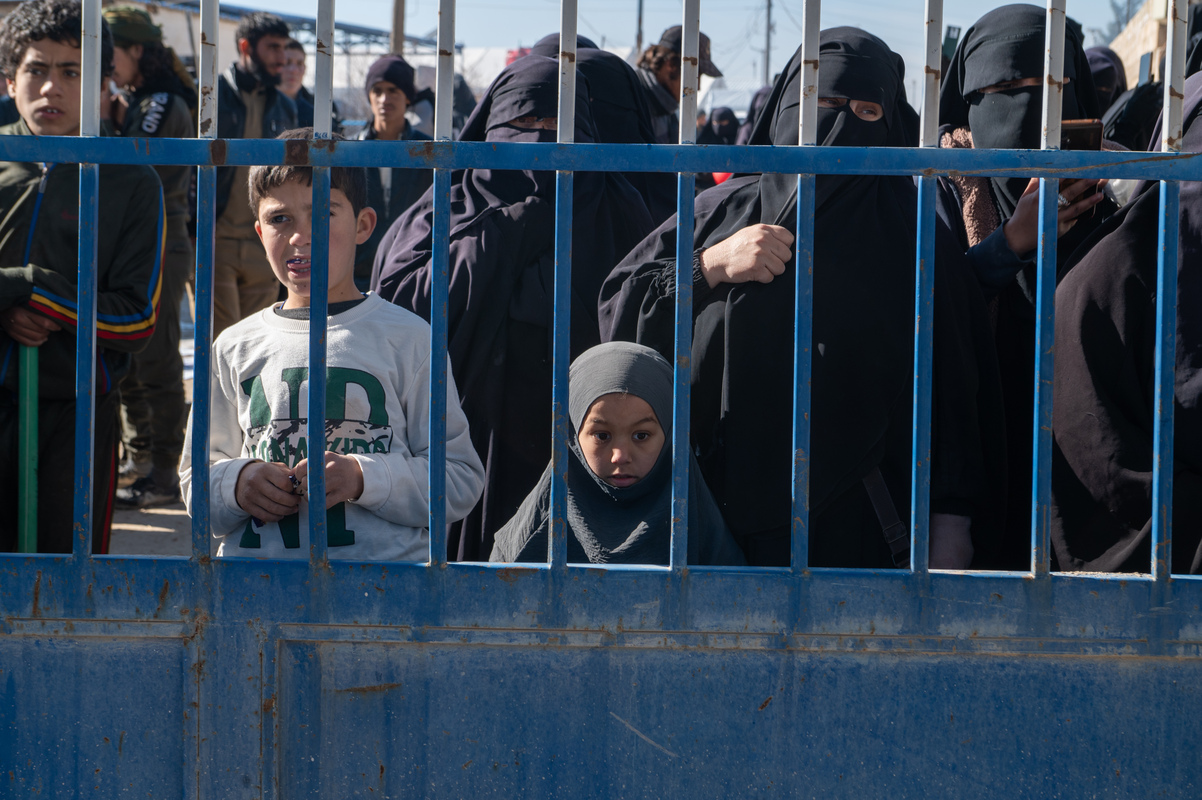
In the middle of the desert, hundreds of people press up against the fences of the Al-Hol camp, where many ISIS members and their families have been held. Children and young people climb them, but the barbed wire stops them. At the entrance, men and women argue with Damascus’s General Security. A man wearing a red kufiya shouts, “We want to leave, there is no food, there is no water.”
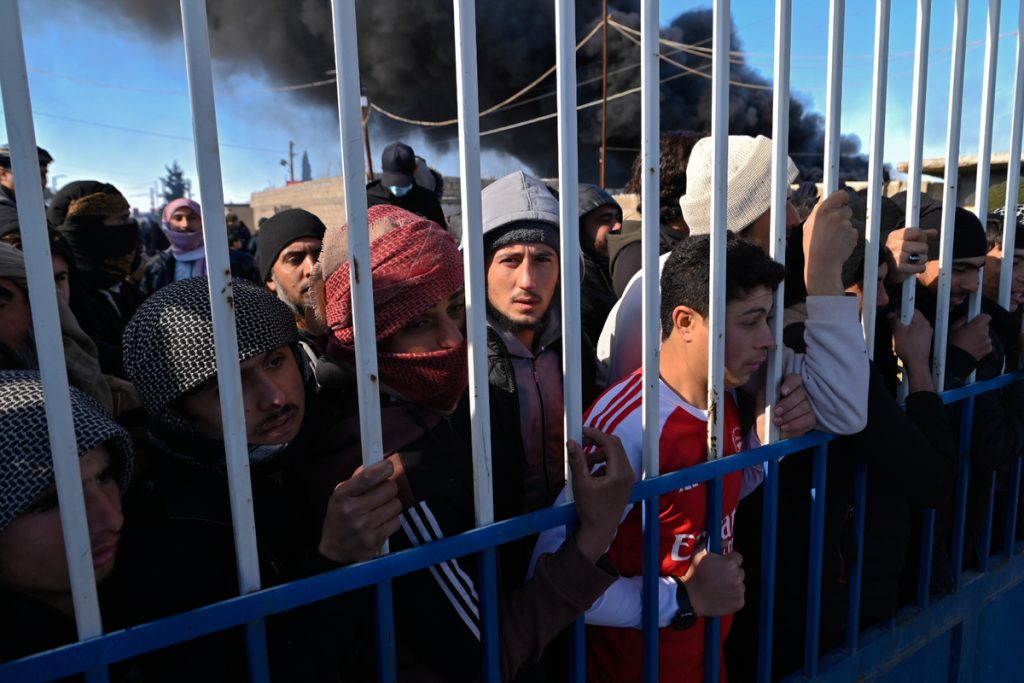
Soldiers warn people not to jump the fence. From the center of the camp, columns of smoke rise among tents ruined after years of waiting, while a group of young men climb onto the roofs of the offices. The Syrian Arab Army is overwhelmed, trying to coordinate with the leadership of the UN agency in charge of refugees. The entrance has become the eye of the storm, where security forces constantly face incidents as smoke continues to rise from inside the camp.
Humanitarian assistance has been halted because security is not guaranteed, while tens of thousands of people remain without food, medicine, and other basic supplies
The Syrian army arrived in Al-Hol on Tuesday after the Syrian Democratic Forces (SDF) were forced to leave the camp to defend other positions during their withdrawal toward Hasakah and Qamishlo. The Ministry of Defense – in coordination with Arab tribes from across the country – launched a large-scale operation against the Autonomous Administration of North and East Syria. The operation has destabilized the region, leaving many with questions about the planning and intentions of the attacks.
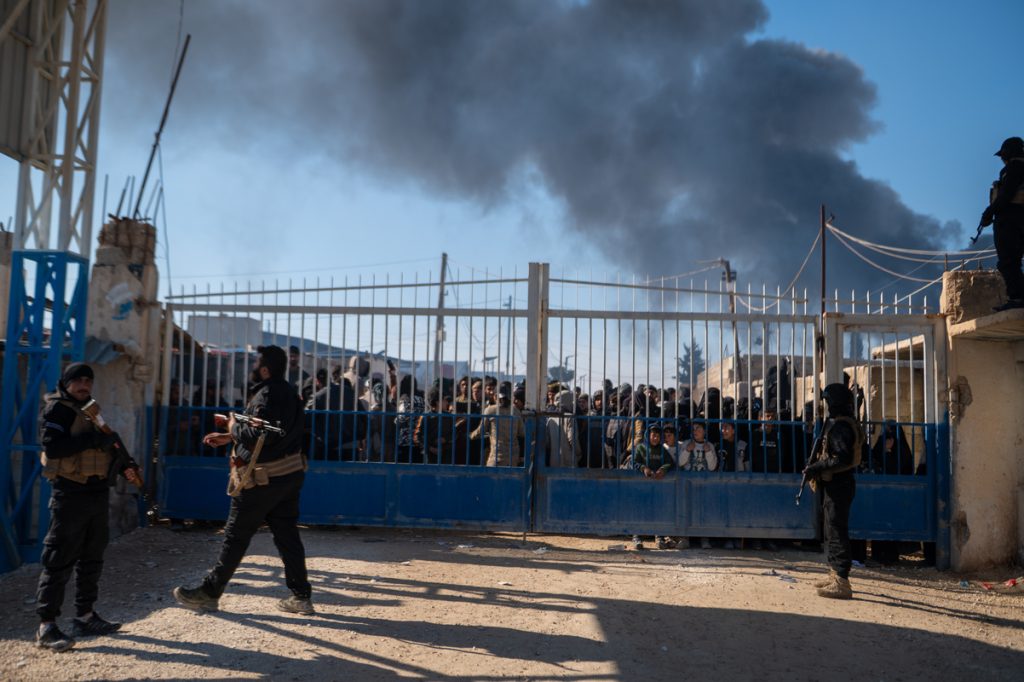
In what feels like the eye of the storm, soldiers patrol the area, brewing tea over improvised fires while waiting for instructions on the outskirts of the camp, which was established in 2019 after the defeat of ISIS. Tens of thousands of people were left under the responsibility of the international coalition, and reliance on humanitarian organizations such as Blumont was crucial, though the camp has been administered by the SDF since its creation.
The Syrian Arab Army now faces the challenge of containing a potential internal uprising, as residents demand to return to their homes. Humanitarian assistance has been halted because security is not guaranteed, while tens of thousands of people remain without food, medicine, and other basic supplies.
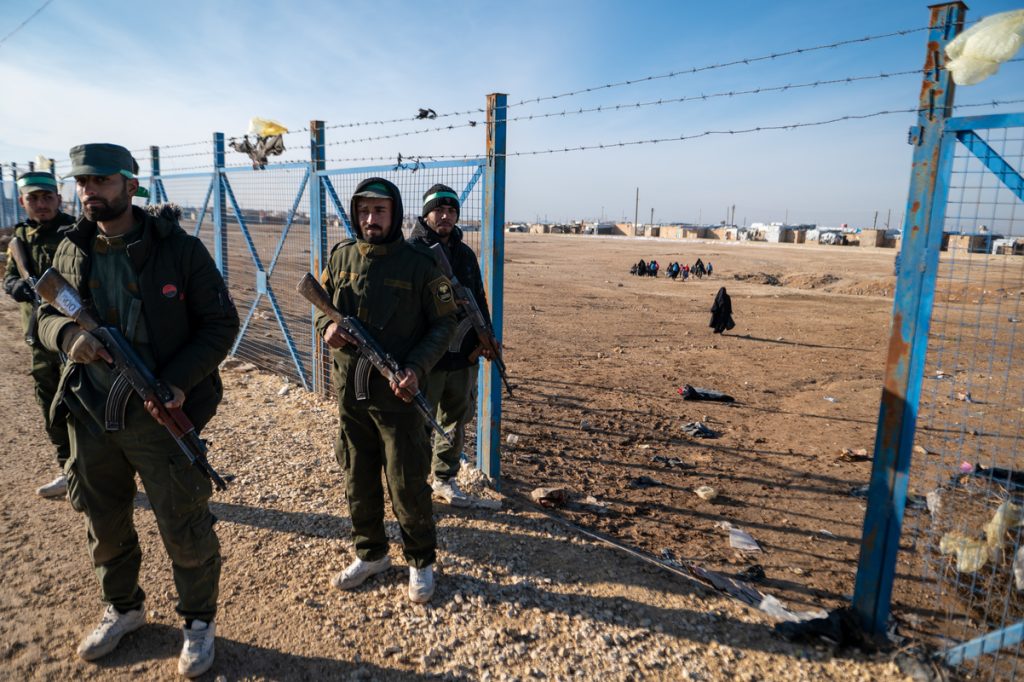
Near the main gate, Dr. Abd Alazeez Khalaf, head of health services in the Interior Security Directorate in Deir ez-Zor, commented: “The SDF abandoned the camp; neighboring villages arrived first, but we managed to take full control.”
“The situation is total chaos. We are providing healthcare services within the hospital and emergency system,” he said hurriedly, repeating a prepared statement. “We still do not have accurate statistics, as we have not yet effectively entered the camp,” he concluded.
According to Cihan Janan, former director of the camp, Al-Hol “was hosting around 24,000 people, mostly women and children linked to ISIS, including about 14,500 Syrians and nearly 3,000 Iraqis.”
In Raqqa’s Al-Aqtan prison, holding key ISIS leadership, SDF chose to stay and ensure security throughout the transition, but the Syrian Arab Army continuously struck the area with heavy weapons and did not heed calls for calm.
A military police officer explained that they had “not managed to enter the camp, but disturbances broke out and people attacked administrative offices and humanitarian centers.” Although authorities say no one has escaped, the fences have openings in several places. The government in Damascus accused the SDF of withdrawing from the camp without coordination as a pressure tactic during the fighting.
The SDF warned of the critical security situation in the prisons and camps holding ISIS-linked individuals repeatedly, but the international coalition did not intervene. In Raqqa’s Al-Aqtan prison, holding key ISIS leadership, SDF chose to stay and ensure security throughout the transition, but the Syrian Arab Army continuously struck the area with heavy weapons and did not heed calls for calm.
The SDF hopes the international coalition will participate neutrally to coordinate the transition. Al-Hol is now in limbo after the forced transfer between the Damascus government and the SDF, deepened by the role of the United States.
The Abandonment by the United States
The SDF withdrawal was marked by frustration over the fact that the United States would not lift a finger as part of the international coalition against ISIS. U.S. envoy Tom Barrack said earlier on X that the alliance between the U.S. and the SDF is “largely expired,” and that U.S. leadership is focused on securing detainees while encouraging talks between the Damascus government and the SDF, which are still negotiating amid an imminent attack on Kobane.
Meanwhile, U.S. Central Command reported that it had transferred around 150 ISIS detainees from Hasaka to Iraq, a sign of a lack of confidence in Damascus. “Ultimately, up to 7,000 Islamic State detainees could be transferred to Iraqi-controlled facilities,” CENTCOM said.
Although some 12,000 militants were held in prisons such as al-Aqtan in Raqqa, Shaddadi, or Sinaa in Hasaka, various active ISIS cells remain in the region, and they are suspected of being involved in the current attacks in the northeast.
Al-Shara and Trump shook hands in the Oval Office in November, two months before the start of the military operation in Aleppo against the Kurdish-majority neighborhood and SDF-backed local security forces. There, they strengthened their alliance under the commitment to continue the fight against ISIS and to transfer control of Al-Hol to the authorities in Damascus, both points being part of the March 10 agreement overseen by the United States.
During the war in Syria, the international coalition against ISIS focused on the U.S. alliance with the Syrian Democratic Forces in northeastern Syria. But after ISIS was defeated in 2019, the Al-Hol camp was established to contain the persistent threat posed by the group’s resurgence. For years, the SDF bore the burden of guarding Al-Hol like a ticking time bomb, waiting for the international community to develop a comprehensive plan to dismantle the organization’s extremist ideology.
What began as a temporary solution became permanent. At least 70,000 people came to live in the camp, displaced by the war in Syria and Iraq against ISIS. Although many had no direct connection to the organization, they lived in areas under its control. Among them are 8,000 women and children of 40 nationalities – families or individuals suspected of having ties to ISIS.
The ex-director of Al-Hol, speaking to The Amargi by phone, said:
“There must be a plan developed by the international community to address the situation of women and children from non-Syrian and non-Iraqi countries, taking into account the recommendations. The current situation poses a security and humanitarian risk to everyone, and all countries must bear responsibility for this issue. Full participation is crucial.”
Pandora’s Box is Open
A woman dressed in a black niqab shouted from inside, “We will kill you as infidels when we get out of here.” Her fury was aimed at the General Security and anyone who approached the fence.
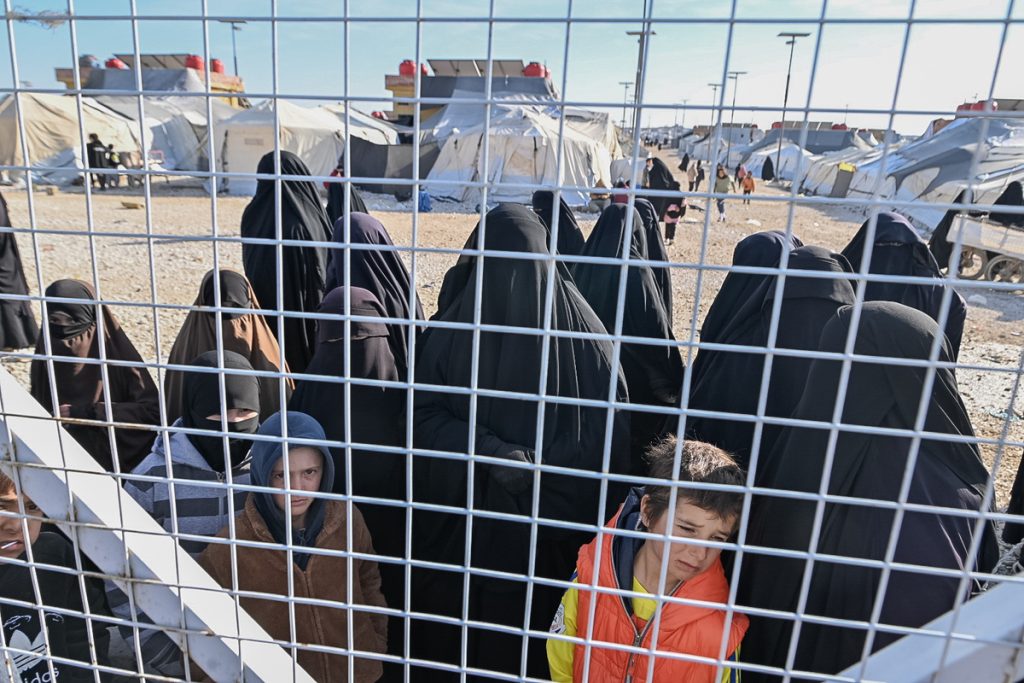
Women, young people, and children surged between the tents, running toward the fence of the foreigners’ section known as “the annex.” A pickup truck held the entrance gate shut, guarded by two armed soldiers. On the other side, girls wearing niqabs watched their new guardians with curiosity. Some hoped to speak to the press to find a solution to their legal status, as many embassies refuse to allow their citizens to return home. Others demanded they be allowed to leave.
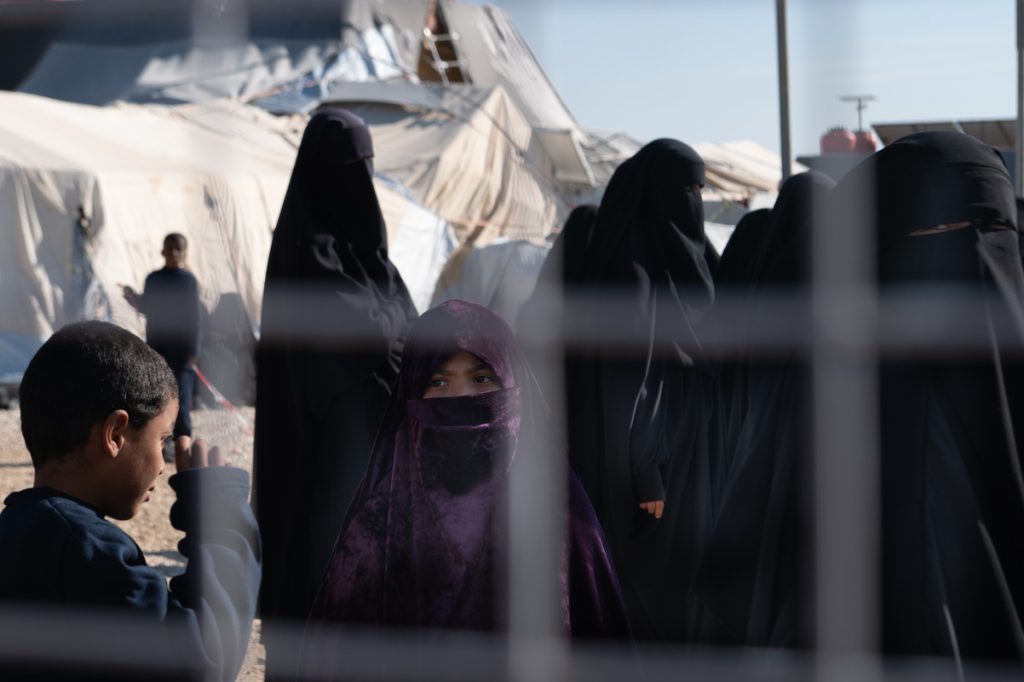
A woman dressed in a black niqab shouted from inside, “We will kill you as infidels when we get out of here.” Her fury was aimed at the General Security and anyone who approached the fence.
Another woman said, “We want the government to free us; we want security, stability, and to be respected,” but added that “the problem is that Iraq is worse than here.”
A group of women approached shyly; they had blue eyes. Among them, 20-year-old Umbara explained, “We want to return to Bosnia, but we also like Syria.” She was a minor when she arrived at the camp. “I have no dreams, I feel nothing,” she said anxiously. They were part of the thousands of people who traveled to join ISIS.
Beside her was Omm Ali, a 43-year-old Moroccan woman, who said, “Every mother is happy watching her children grow up, but we feel sad. There is no education here; children just kill time until they are arrested when they grow up,” she added.
The progressive cut in resources for humanitarian organizations in recent years – especially when Donald Trump suspended USAID – created one of the most favorable environments for ISIS recruitment and reorganization. Years of stigmatization, marginalization, and resentment due to living conditions, combined with radical ideology, formed a perfect breeding ground.
What Comes Next?
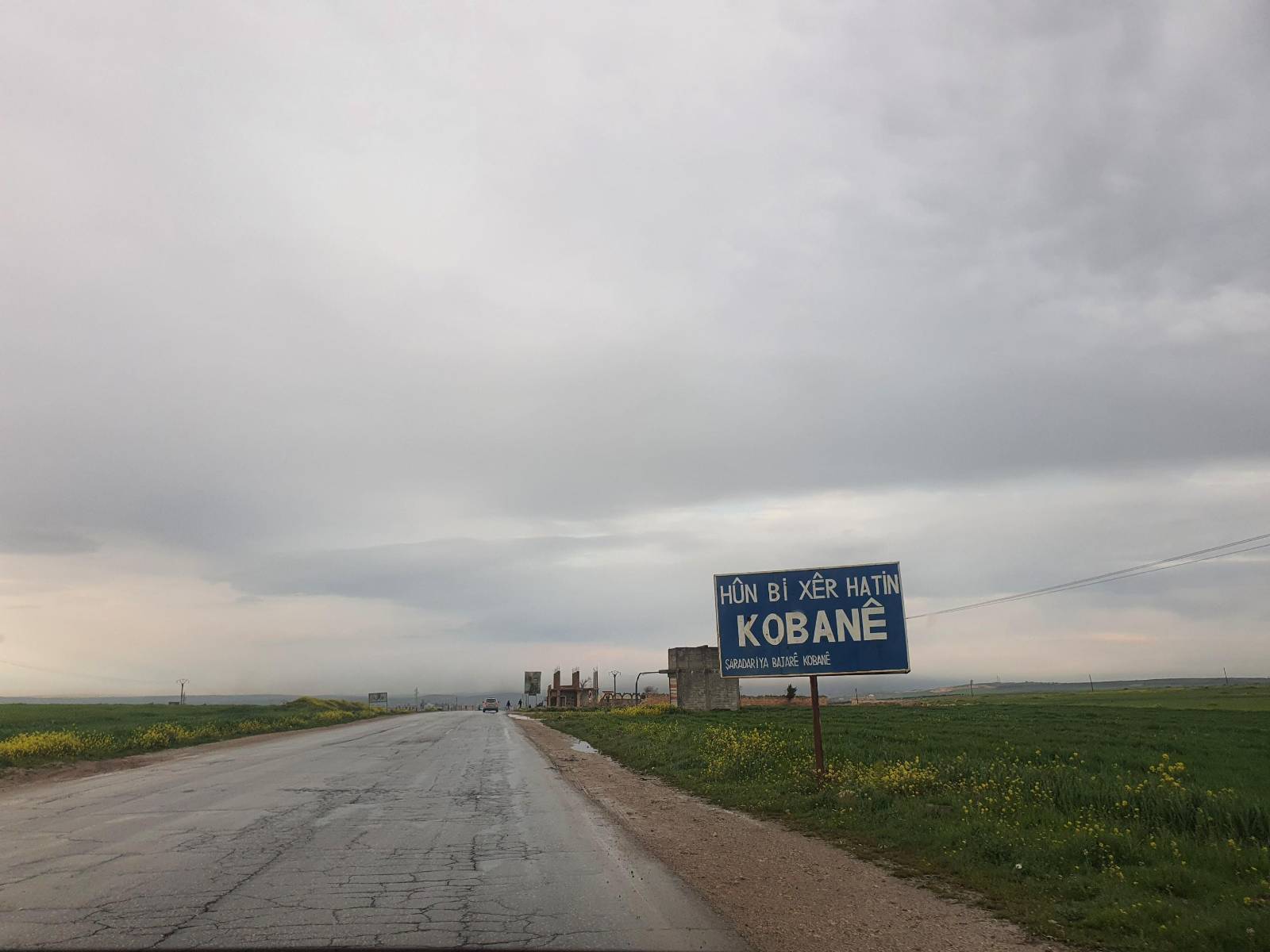
While the ceasefire officially continues until Sunday the 25th, clashes are taking place near Hasakah and Kobane, which remains isolated under siege. Tom Barrack met Mazloum Abdi in Erbil to pressure the SDF, aiming to merge the Autonomous Administration into the central government in Damascus.
What remains now is the question of what will happen to the Al-Hol camp under a government led by former jihadist fighters, many of whom have had their families there for years.
Although an agreement often seemed close, talks and ceasefires have repeatedly failed in recent days, leading the Syrian Army to take more Kurdish-controlled territory held for more than ten years.
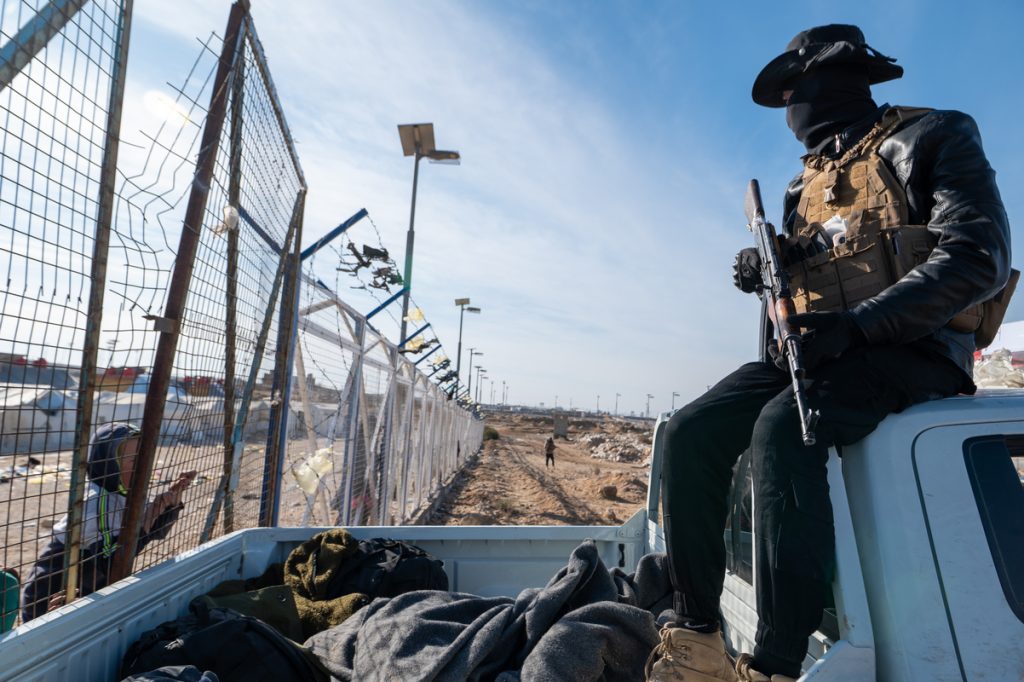
What remains now is the question of what will happen to the Al-Hol camp under a government led by former jihadist fighters, many of whom have had their families there for years.
According to Cihan Hanan, the ex-director of Al-Hol, “there’s no future for it.”

The Amargi
Amargi Columnist