Osman Kavala on the Peace Process: In a Just Country, the Law of Brotherhood is Strengthened
osmankavala.org
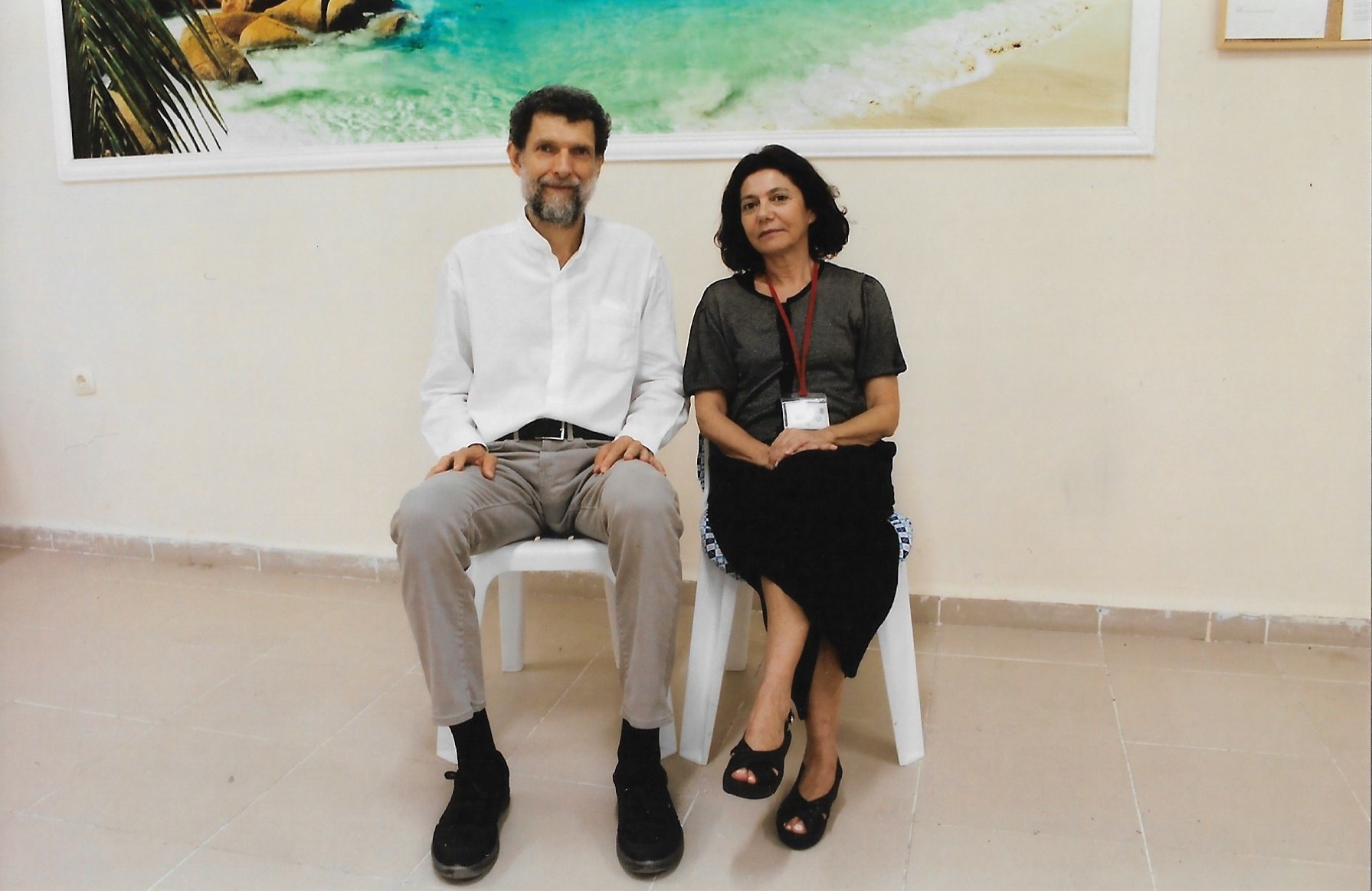
Photo Credits:osmankavala.org
This interview was conducted by İrfan Aktan and Yücel Göktürk
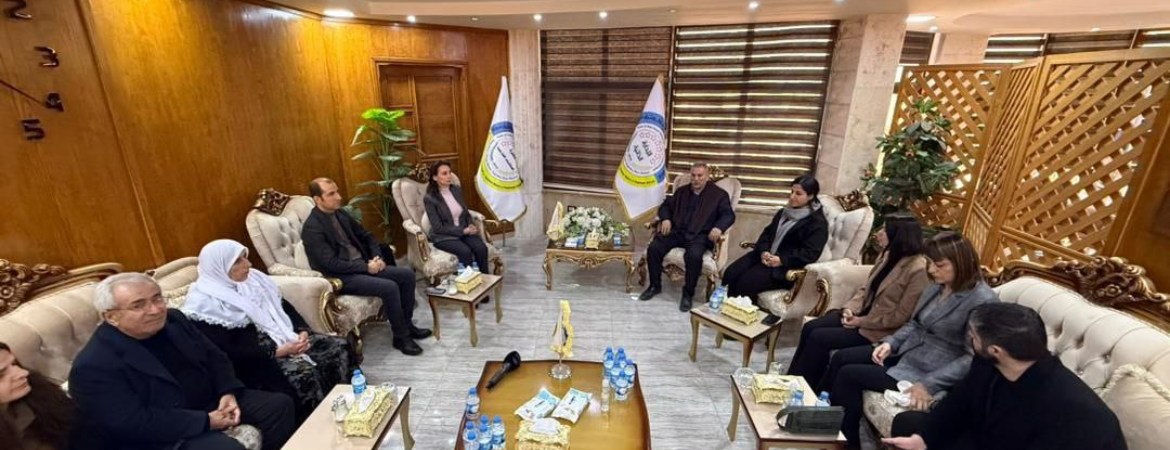
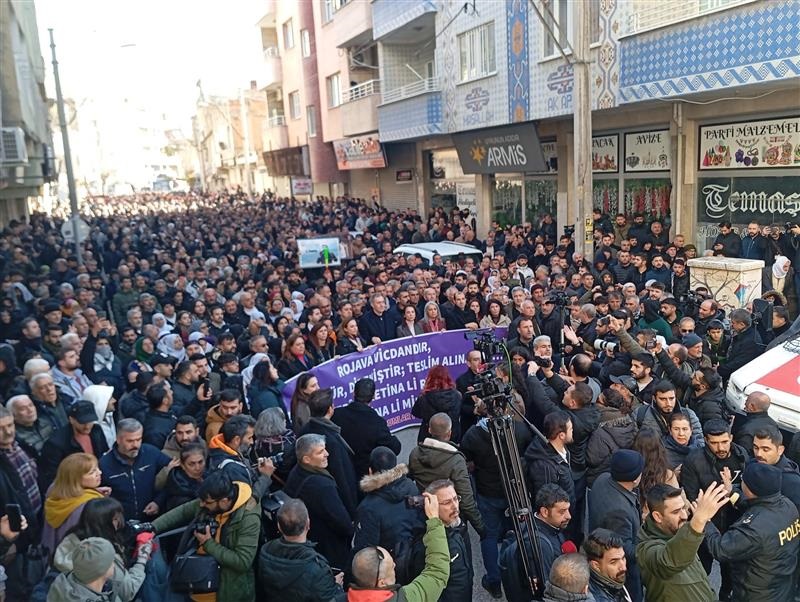
Osman Kavala, jailed Turkish businessman and founder of Anadolu Kültür, spoke to The Amargi and 1+1 Express from prison, discussing the prospects of political and societal changes in Turkey and Kurdistan, local autonomy, and the current peace process that started in October 2024 between the Turkish State and the Kurdistan Workers’ Party (PKK).
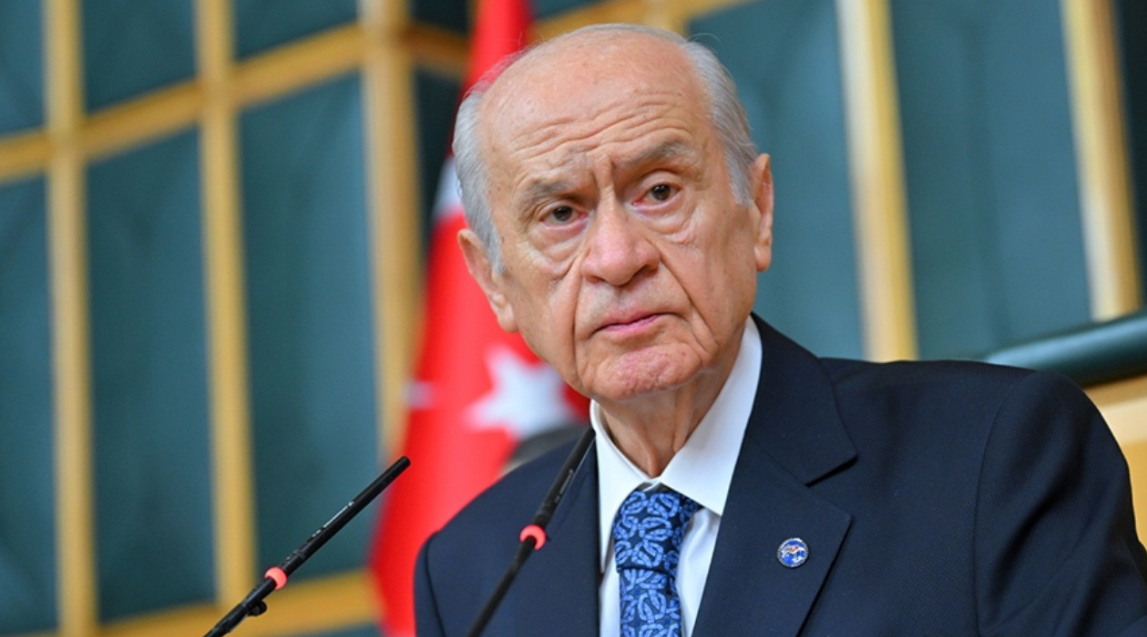
The process – which, among other things, aims to address the century-old political and cultural repression of Kurds in Turkey – launched with statements from Devlet Bahçeli, leader of the Nationalist Movement Party (MHP) that champions Turkism.
Background
Kavala is well-known for his civil society activities focusing on cultural diversity, cultural and artistic dialogue, and social peace. In 2002, he founded Anadolu Kültür to increase the visibility of cultural rights and cultural production in Turkey. Kavala has also worked on the preservation of cultural heritage, contributing to the documentation and restoration of destroyed cultural assets.
He was detained on October 18, 2017, and held for five years before he was sentenced to aggravated life imprisonment on April 25, 2022. The victim of legal and political injustice, he has been charged with “attempting to overthrow the government.”
In this written interview via letters from prison, Kavala answered questions submitted on behalf of The Amargi and 1+1 Express about how peace can be socialized, the question of “political culture and cultural politics,” and what can be done in this area.
There are concerns that a breakdown in the process that began last year with Devlet Bahçeli’s call will create even greater problems, as it did in 2015. How possible and how difficult do you think peace is in Turkey?
Kavala: From this point on, unless there is a large-scale conflict in Syria – which I doubt will happen – I don’t think the PKK will reverse its decision to abandon the armed struggle. For a long time, the PKK’s actions had lost their propaganda function and were also harming the effective functioning of local governments under the control of the Peoples’ Equality and Democracy Party (DEM). Furthermore, the PKK’s continuation of the armed struggle posed an existential risk to the Kurdish administration in Syria. The armed struggle has its own unique internal dynamic, and those dedicated to it live in a different reality. This latest initiative has likely enabled PKK leaders and cadres to make a more realistic assessment. However, achieving a transformation that will increase our Kurdish citizens’ trust in the state and prevent them from feeling like a minority deprived of equal rights requires more comprehensive efforts. A broad social consensus must be achieved to ensure that both the legal regulations regarding disarmament and future measures to increase Kurdish citizens’ trust in the state do not create new tensions. Today’s highly polarized political environment and the legal and democratic challenges we face are factors that hinder the achievement of such a consensus.
In discussions about the sincerity of the process, the fact frequently comes up that you and jailed Kurdish politician and co-founder of the HDP party, Selahattin Demirtaş, have not been released, despite the European Court of Human Rights (the ECHR) rulings. It’s said that Demirtaş could be released at any time. Do you think it’s likely that Turkey will comply with the ECHR’s ruling on Demirtaş but not the ruling on your case?
Kavala: Recently, a local court rejected the Constitutional Court’s decision and rejected the retrial of Tayfun Kahraman*. In such a context, it’s difficult to say whether something is likely or not. Journalist İpek Özbey asked [renowned] lawyer Adem Sözüer, “If the ECHR ruling is implemented and Demirtaş is released, will Osman Kavala also be released?” Sözüer replied unequivocally, “No.” Decisions about [individuals] going to prison and being released from prison are shaped by political circumstances, not the principles of the rule of law. It’s likely that Demirtaş will be released not by implementing the ECHR ruling, but by a decision issued by the Court of Appeals without reference to the ECHR.
Regarding the socialization of the peace process, Selahattin Demirtaş’s proposals for social peace and dialogue have been widely discussed. Demirtaş offered symbolic suggestions such as organizing a friendly match between Kurdish club Amedspor and Turkish club Trabzonspor, having Kurdish and Turkish youth meet at Atatürk’s mausoleum in Anıtkabir, among other things. Do you think such steps will contribute to the peace process?
Kavala: Mr. Demirtaş’s proposals reflect his belief that joint actions that convey a message of peace, and carry symbolic meaning, will be far more effective than legal regulations. Such activities are essential for developing and deepening a culture of peace in the future, and their continued existence with the support of civil society is essential. I hope Mr. Demirtaş will spearhead such initiatives after his release. However, it is also important that the initiatives are genuine and not perceived as superficial public relations efforts. The priority right now is to share the legal regulations that will be implemented within the scope of disarmament, if any have been determined, with the public, and to end the [public and media] speculation.
I’d like to touch on a sensitive point. It’s important to recognize the injustices Kurds have suffered and, in this context, to confront the past. However, even if aimed at reconciliation, symbols and activities that recall the PKK’s actions and evoke painful memories can negatively impact normalization, especially in the current polarized political climate. Therefore, I believe it would be more beneficial to wait for the wounds to heal for a while.
In my opinion, the most important element that will ensure our Kurdish citizens’ happiness as citizens of the Republic of Turkey is for our country to become a full democracy and a state governed by the rule of law. Even for Kurdish youth who have sympathized with the PKK, contributing to such an ideal can be meaningful. In a country where human rights are protected, where law and justice prevail, the law of brotherhood develops on a solid foundation.
As you mentioned, since the early 2000s, Anadolu Kültür has focused on bringing the two sides together through culture, arts, and building ties through joint projects. You also conducted similar projects between Turkey and Armenia. If you were out today, what kind of work would you do to socialize the peace process?
Kavala: I believe that the importance of cultural and artistic activities in the region will increase after the disarmament process is completed. Years ago, speaking in Diyarbakır on the occasion of the premiere of his film, [Kurdish] director Bahman Ghobadi advised young people to imagine carrying a camera on their shoulders, not a gun. We had envisioned the Diyarbakır Art Center as an artistic bridge between Istanbul and Diyarbakır, encouraging collaborative work. We also sought to contribute to the development of collaborations with European cultural institutions. I would like to consider institutional arrangements that would support such collaborations. I also believe it is important to expand the scope of arts and cultural activities in [Turkey’s] western cities, where Turkish and Kurdish youths, who have migrated from the east, live. All of this requires collaboration between local governments and civil society organizations. We’ve previously implemented several projects aligned with this model. I’d like to share our experiences with other initiatives.
Poet Lâl Laleş, founder of Lis Publications, whom 1+1 Express recently interviewed at the Diyarbakır Book Fair, stated that assimilation of Kurdish children, which used to start in primary school at the age of seven, now starts at the age of three. And one of the main reasons for this earlier assimilation is argued to be the lack of Kurdish content on platforms that children watch from the age of three onward. Anadolu Kültür has published bilingual books. Will such efforts be effective in preventing assimilation?
Kavala: The dissemination and use of bilingual children’s books will have a positive impact. It’s important for children whose native language is not Kurdish to be positively aware of this language and of the existence of Kurds. However, I believe the most important thing is for children from Kurdish families to be taught their native language in kindergarten and primary school, so they can master Kurdish grammar and vocabulary, and eventually learn and read Kurdish works. Elective Kurdish literature courses could be added to the curriculum.
The Kurds, an ancient people of Anatolia, have long been denied their ethnic identity and distinct language, and the use of Kurdish has been subjected to various pressures. Therefore, I believe the state bears a greater responsibility to ensure that children of Kurdish families learn their native language. Fulfilling this responsibility will also be meaningful as an initiative to repair the cultural damage that has been caused. Giving children the opportunity to learn their native language at an early age does not prevent them from developing their Turkish [language skills] in parallel. On the contrary, practices in various countries demonstrate that learning their native language facilitates the acquisition and use of a second language.
Beyond our borders, in Iraq and Syria, Kurdish is widely taught and used in public spaces. Given this fact, it is important to consider the discomfort our Kurdish citizens feel at not being able to speak their language and teach it to their children, as their neighbors do; this will negatively impact [Kurds’] relationship with the state. Conversely, allowing children to learn their native language in a public space at an early age boosts their self-confidence and civic awareness.
During [the military coup of] September 12th, 1980, the policy of banning Kurdish [language] was granted constitutional status. The prohibition on teaching the native language in educational institutions in Article 42 of our Constitution, dating back to this period, also contradicts the understanding of recognizing the cultural rights of minority communities as expressed in the Treaty of Lausanne. In Greek and Armenian schools, the native language is taught, and bilingual education is also available.
In Turkey, the concept of “autonomy” is often perceived as “division” and “a threat to the integrity of the country.” Yet, documents such as the European Charter of Local Self-Government define democratic autonomy as an international norm. How, in your opinion, is it possible to discuss autonomy as an element of democratic participation?
Kavala: Turkey became a party to the European Charter of Local Self-Government, drafted by the Council of Europe, in 1985. The charter was ratified by the Turkish Grand National Assembly in 1992 and became legal. However, the public is not widely aware of the content of the Charter of Self-Government.
Turkey implemented this charter by granting administrative powers to local governments at the discretion of the central state, and it annotated articles that would have permanently reduced [central government] tutelage and recognized autonomy as a right for local governments. But, since 2011, the [political] developments have increased the central government’s tutelage.
Trusteeship practices, which completely render local government bodies dysfunctional, are completely contrary to both the letter and spirit of the Charter. No other state party to this agreement has implemented trusteeships. Currently, there is talk of the possibility of certain regulations that would increase the oversight of provincial governorships over local administrations.
The full adoption and implementation of the European Charter of Local Self-Government would significantly expand local political spheres, strengthen pluralism, and enrich the cultural fabric of cities, especially in regions with a large Kurdish population. Autonomy encompassing a large geographical area is occasionally discussed in this context.
However, regional autonomy is not a natural consequence of adopting the principle of general autonomy, which aims to increase the powers and administrative capacity of all local governments. The implementation of regional autonomy on the basis of ethnicity carries the potential to create new tensions and conflicts in countries experiencing political polarization. If the region in question is economically disadvantaged, the implementation of autonomy could also prevent the increased use of central state funds for development.
The main reason why autonomy in our country is perceived as “division” and “a threat to the country’s integrity” is the developments in Iraq and Syria. In the former, a Kurdish government was established through armed struggle during the disintegration of the central state, and in the latter, during its weakening. In Iraq, the Barzani-Talabani forces, with US support, established full control over the predominantly Kurdish region and reached an agreement with the newly formed Iraqi government. The same process is unfolding in Syria.
From this perspective, the Kurdish forces’ process of gaining autonomy and their possession of combat-capable armed forces make the reality here quite different from regional autonomy practices in Europe, leading to their perception as examples that encourage division for the Kurds. The emergence of this demand during the trench events in our country reinforced the association of autonomy with division. For all these reasons and concerns, I do not anticipate that regional autonomy will be viable for Türkiye in the foreseeable future.
In both Turkey and Syria, efforts to recognize cultural identities are being considered a “survival threat.” What can be done to ensure that cultural rights are recognized and cultural diversity is seen as a social asset?
Kavala: Cultural rights and cultural diversity can cease to be a political risk only through the creation of a cultural environment that is inclusive of citizens of different faiths and ethnic backgrounds. I believe this requires not only education in schools that understand cultural diversity as a valuable asset, but also cultural institutions that organize events where young people from low-income families can participate. And of course, it is also important that we share a common political culture that upholds the values of democracy and law. This requires the proper functioning of democratic institutions at both the local and national levels and a state governed by the rule of law that protects civil rights.
*Tayfun Kahraman and six others have been charged with aiding Osman Kavala, during the 2013 protests

İrfan Aktan
İrfan Aktan was born in Hakkari-Yüksekova. He graduated from the Journalism Department of the Faculty of Communication at Ankara University in 2000 and completed his Master’s Degree in the Women’s Studies Center at Ankara University. He worked as journalist for Bianet, BirGün newspaper, Express, Nokta, Yeni Aktüel, and Newsweek-Türkiye magazines, Gazete Duvar, Artı Gerçek and IMC TV. His books include Nazê/Bir ‘Göçüş’ Öyküsü, Zehir ve Panzehir: Kürt Sorunu and Karihōmen: Japonya’da Kürt Olmak.