Fifty Unidentified Female Protesters Found in Tehran Morgue – Islamic Regime’s Use of Gendered State Violence
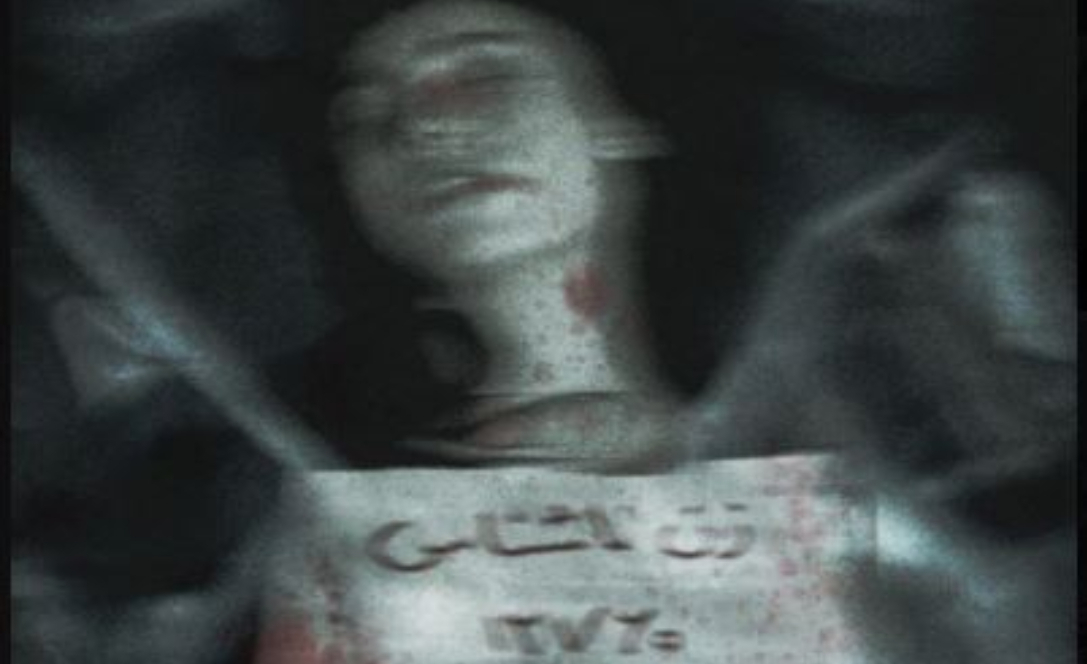
Picture Credits: the Student Scientific Society of Sociology Students of Tarbiit Madras University via the Instagram Account: sociology_modares
The recent discovery of approximately fifty unidentified female bodies at Tehran’s Kahrizak forensic complex has intensified fears about the scale and gendered nature of state violence in Iran amid country-wide protests against a regime with a history of targeting women dissidents using sexual violence.
On February 7, the Sociology Student Association at Tarbiat Modares University published a report titled In Search of Freedom, Equality, and Prosperity: Fifty Unidentified Bodies of Women Protestors in Tehran. The report states that forensic workers uncovered dozens of women’s corpses, many reportedly transferred under heavy security and with restricted documentation procedures.
Some of the women were clothed while some were undressed – a detail that suggests the possibility of sexual abuse
Students had to present themselves as relatives seeking to identify the dead in order to gain access to the victims. Most of the photographs they were shown were taken in the morgue, though some bodies were found elsewhere. Some of the women were clothed while some were undressed – a detail that suggests the possibility of sexual abuse, though the students could not safely investigate further. One woman still had an oxygen tube in her mouth, indicating that she had died in a hospital.
According to the report, while the majority of the bodies belonged to young women, some appeared to be in their fifties. Many of the corpses bore severe injuries, including skull fractures and extensive bleeding, with some faces so damaged that identification would have been impossible without specialized examination. In certain cases, faces were relatively undamaged and could have been identified by family members if allowed, which makes it all the more shocking that the bodies of fifty female protestors from Tehran remained under state control in the forensic center.
The report emphasizes that a lack of transparency, security interventions, and the absence of effective judicial procedures have effectively prevented the identification of female victims, turning the category of “unidentified corpse” into one of the state’s primary tools for concealing the scale of the crackdown.
conditioning the release of bodies on invasive examinations… may function as part of a broader pattern of coercive control over women’s bodies after death.
These observations add further context to the disturbing footage circulating online, which shows families at the Kahrizak forensic center attempting to retrieve the body of a female protestor and being told that no female corpse will be released until her womb is opened. Such a statement – which is neither a medical explanation nor a legal procedure – has been widely shared in reaction to these videos and has raised serious questions about Iran’s disturbing gendered post-mortem practices.
Critics argue that conditioning the release of bodies on invasive examinations without informed consent or transparent judicial orders – beyond being a human rights violation – violates human dignity and may function as part of a broader pattern of coercive control over women’s bodies after death.
State Control Over Women’s Bodies
These shocking reports from the January 2026 protests reflect a long-standing pattern: the targeting and control of women protestors’ and dissidents’ bodies, both before and after death, has consistently served as an instrument of state violence in Iran.
This form of gendered violence was implemented immediately following the 1979 revolution. The state specifically targeted virgin women to control their posthumous fate, reasoning that a virgin who dies unmarked could “go to heaven unblemished.” By raping these women prior to execution, the state symbolically prevented them from dying as virgins, and pushed the rhetoric that state power extended beyond life, into the afterlife, through asserting patriarchal dominance over both the body and spirit.
Several documented cases from the early 1980s illustrate how sexual violence functioned as a ritualized component of execution and was embedded into carrying out death sentences, particularly against women affiliated with the People’s Mojahedin Organization of Iran (PMOI/MEK).
In 1983, Flor Orangi, 20, and Elaheh Deknema, 21, both students and PMOI members, were reportedly raped prior to execution, with authorities later returning their bodies alongside symbolic gestures such as “dowry” payments or messages referencing the assaults. Similar patterns appeared in the case of Maryam Mohammadi, 27. In 1981, Sedigheh Bayat, 17, attempted suicide upon learning she would be sexually assaulted before execution but was revived, raped, and executed.
Their cases show that for the Islamic Regime’s practice of state power, rape operated not only as torture but as a deliberate ritual intended to degrade, dominate, and extend state control over women even in death. It was not until 2013 that the practice of raping virgin girls before execution was officially acknowledged at the UN level.
Governing Women’s Bodies Beyond Life
By denying families information about the whereabouts, condition, or treatment of women’s bodies, the state produces a secondary layer of humiliation
The persistence of such practices suggests that control over women’s bodies in Iran is not limited to suppressing political dissent during life but extends into the symbolic and administrative management of death. By withholding bodies, obstructing identification, or imposing invasive post-mortem procedures, the state exercises authority over mourning itself, disrupting families’ ability to grieve and communities’ capacity to memorialize victims.
This violence also operates through deeply gendered social norms, particularly the concept of “gheyrat” – a culturally embedded notion of male honor rooted in the protection and guardianship of female relatives. By denying families information about the whereabouts, condition, or treatment of women’s bodies, the state produces a secondary layer of humiliation that targets male relatives, who are socially expected to safeguard women’s dignity within their families. In doing so, state violence exploits patriarchal honor, transforming women’s bodies into instruments through which broader familial and social degradation is enacted.
The denial of dignity in death becomes not only a strategy of silencing victims but also a calculated mechanism for extending fear, shame, and power across kinship and community networks.

Mahtab Mahboub
Mahtab Mahboub is an Iranian feminist activist and PhD candidate in the Department of Sociology at the University of Duisburg-Essen, Germany. Her research focuses on the intersection of gender and migration within the Iranian diaspora in Germany, with particular interest in narrative research, intersectionality, identity, and decolonial feminist theory. She also writes on social movements and political developments in Iran.