Explainer: How the 1979 Iranian Revolution Really Happened And How It Was Hijacked
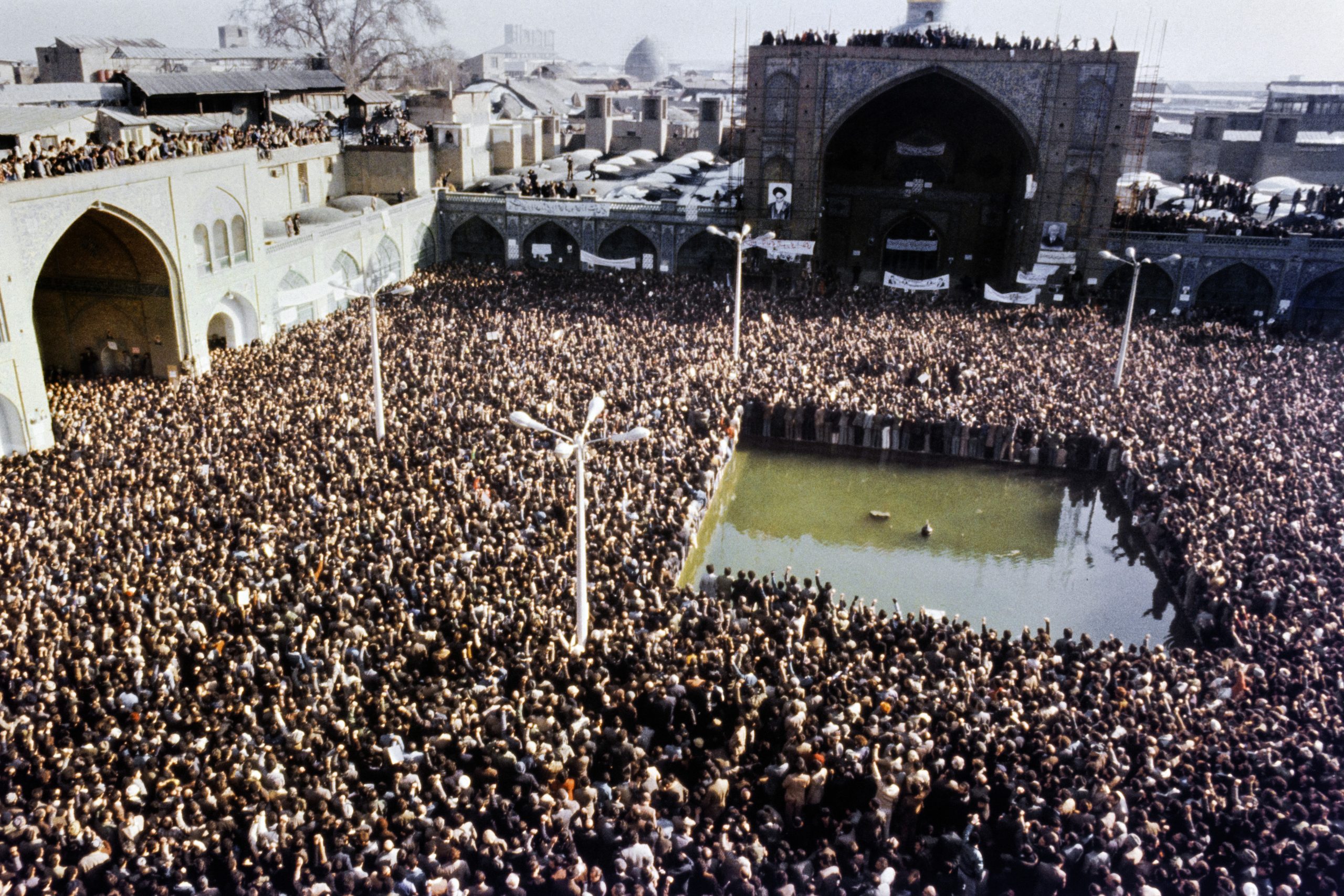
A huge crowd of Iranians gather in front of a mosque in Tehran on January 16, 1979, following the departure of the Shah of Iran, Mohammad Reza Pahlavi.
(Photo by Kaius Hedenström / EPU / AFP)
Was the 1979 Iranian Revolution religious from the start?
Who actually overthrew the Shah?
And was there ever a real coalition behind it?
The short answer: the revolution was not driven by a single ideology or class. It was a broad, uneasy alliance united by one demand — the Shah must go. What followed was not inevitable. It was the outcome of power, organization, and timing.
The Big Picture
The Iranian Revolution was a multi-centered uprising. Religious leaders, secular liberals, Marxists, students, workers, and ethnic movements all mobilized against Mohammad Reza Shah’s monarchy.
What united them was opposition to autocracy, repression, corruption, and foreign dependence — particularly the Shah’s close ties to the United States.
What divided them was everything else.
They disagreed on democracy, socialism, clerical authority, capitalism, secularism, and the role of religion in the state.
Scholars describe the alliance as a “negative coalition”: unity against the Shah, not unity for a shared future.
It was tactical. Fragile. Temporary.
The Opposition: A Broad Front
The religious camp itself was not monolithic.
Religious conservatives, including figures such as Ayatollah Shariatmadari and Ayatollah Shirazi, sought political change but not radical social transformation. Their base included senior clergy and bazaar elites.
Religious radicals, influenced by Ali Shari‘ati and groups like the Movement for the Liberation of Iran led by Mehdi Bazargan, combined revolutionary Shi‘ism with social justice and anti-imperialism. Their support came largely from students and young clerics.
Religious reactionaries demanded strict Islamic law and moral purification. They rejected democracy and modern culture outright.
Alongside them stood secular forces.
The National Front, led by figures like Karim Sanjabi and Shapour Bakhtiar, advocated liberal nationalism, constitutional democracy, and civil rights.
On the radical left were Marxist organizations such as the Tudeh Party and the Fedayi Guerrillas, who aimed for socialist revolution and workers’ power.
Another powerful actor was the Mojahedin-e Khalq (MEK), which fused Islamic and Marxist ideas. The MEK mobilized students, industrial workers, and urban youth through anti-imialist and social justice rhetoric.
Students and diaspora networks — including organizations like the Confederation of Iranian Students National Union — played a key role in organizing protests domestically and abroad.
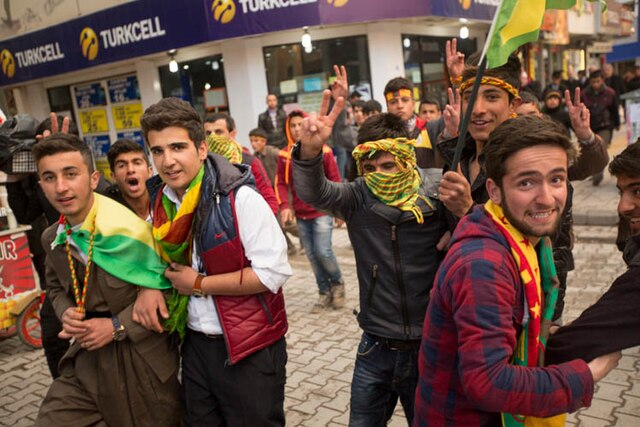
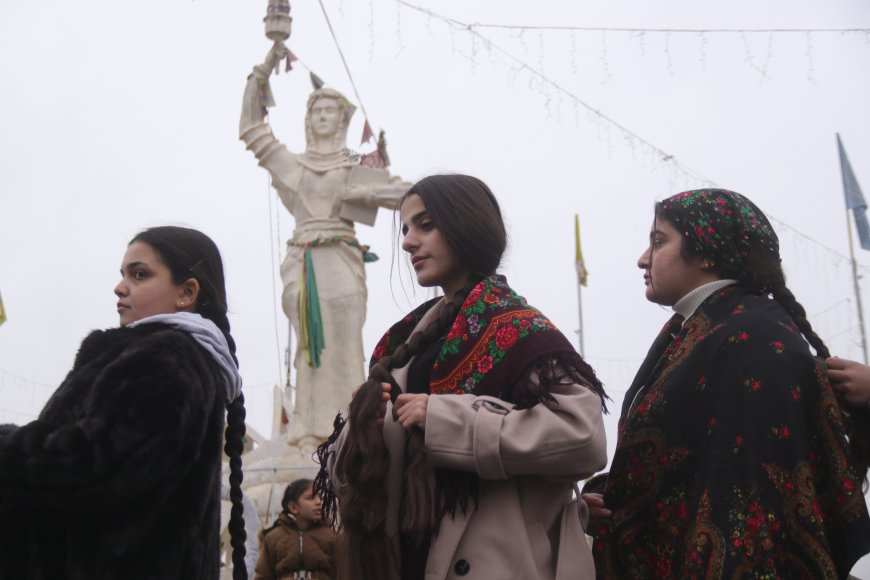
Ethnic movements also participated. Kurdish groups such as KDPI and Komala, as well as Arab, Baluchi, Turkoman, and Khuzestani organizations, mobilized strikes and demonstrations while seeking autonomy or structural reform.
This was not a unified front with a central command. It was a coalition of parallel movements converging temporarily.
The Organizational Advantage
At the center stood Ayatollah Ruhollah Khomeini.
Initially one among several opposition figures, Khomeini’s position changed dramatically after the regime publicly attacked him in early 1978. Even secular leaders began accepting him as the symbolic leader of the revolution.
The key to his advantage was organization.
Pre-existing mosque networks and bazaar committees were knitted together into Islamic Coalition Councils (Hayat ha-ye Moʾtaʿlefeh-ye Eslami). These networks coordinated sermons, distributed leaflets, financed strikes, and mobilized millions.
They provided local leadership, logistics, and communication across neighborhoods while remaining formally decentralized.
This structure gave religious forces something others lacked: a nationwide mobilization infrastructure.
How the Coalition Held Together
The coalition survived because of ambiguity.
Khomeini’s charismatic authority gave the movement symbolic unity. Anti-imperialist rhetoric provided a common language.
Most importantly, revolutionary slogans remained deliberately vague:
“Freedom.”
“Independence.”
“Social justice.”
“Islamic government.”
Each group interpreted these terms differently. Liberals imagined democracy. Marxists envisioned workers’ power. Religious radicals imagined Islamic social justice. Conservatives imagined moral order.
This strategic ambiguity allowed deep disagreements to remain temporarily submerged.
But the fractures never disappeared.
Hidden Tensions
Even at the height of unity, mistrust ran deep.
Religious forces rejected Marxist power-sharing. Marxists feared clerical domination. Secular reformers worried about theocratic rule.
The alliance was asymmetric. Diverse organizations retained their own structures, but converged through mosque-based networks and under Khomeini’s symbolic leadership.
Once the monarchy fell in February 1979, the common enemy vanished.
And so did the coalition.
The Collapse
Between February and November 1979, religious forces moved swiftly to consolidate power.
Secular reformers were marginalized and gradually purged from meaningful authority. Leftist organizations were initially tolerated — then suppressed.
From 1981 to 1983, a systematic crackdown dismantled opposition groups, including the MEK and Marxist organizations.
The Islamic Republic institutionalized clerical authority through the doctrine of velayat-e faqih — guardianship of the jurist — placing ultimate political power in the hands of religious leadership.
What began as a plural revolutionary alliance became a clerical authoritarian system.
What It Means
The Iranian Revolution did not begin as a purely religious uprising.
It began as a broad, multi-class, multi-ideological revolt against autocracy.
But revolutions are not decided only by who protests. They are decided by who organizes, who controls institutions, and who moves fastest once power vacuums open.
Khomeini and the religious networks had structure, cohesion, and clarity of leadership. Others had vision — but not institutional dominance.
The revolution was not simply “hijacked.” It evolved through asymmetry built into the coalition itself.
Unity against the Shah masked incompatible visions of Iran’s future.
When the moment of state-building arrived, the strongest organized bloc prevailed.
The Bottom Line
The 1979 Iranian Revolution was not inevitable in its outcome.
It was a tactical coalition driven by negative unity — a shared opposition to monarchy.
Once victory was achieved, ideological contradictions surfaced.
The result was not the democratic republic many had imagined, nor the socialist state others sought.
It became the Islamic Republic — a clerical authoritarian system that emerged from a revolution far more diverse than its final form suggests.
Understanding this complexity matters today. Revolutions often begin with unity. They end with power.

Rojin Mukriyan
Rojin Mukriyan has PhD in the Department of Government and Politics at University College Cork, Ireland. Rojin’s main research areas are in political theory, feminist and decolonial theory, and Middle Eastern politics, especially Kurdish politics. She has published articles in the Journal of International Political Theory, Philosophy and Social Criticism, and Theoria. Her research has thus far focused on the areas of Kurdish liberty, Kurdish statehood, and Kurdish political friendship. She has published many think tank commentaries and reports on recent political developments in eastern Kurdistan (Rojhelat), or north-western Iran. She has also frequently appeared on a variety of Kurdish and Persian language news channels. X account: @RojinMukriyan