Exclusive: PDKI Leader Mustafa Hijri Discusses Kurdish Politics and Iran’s Future in the Middle East
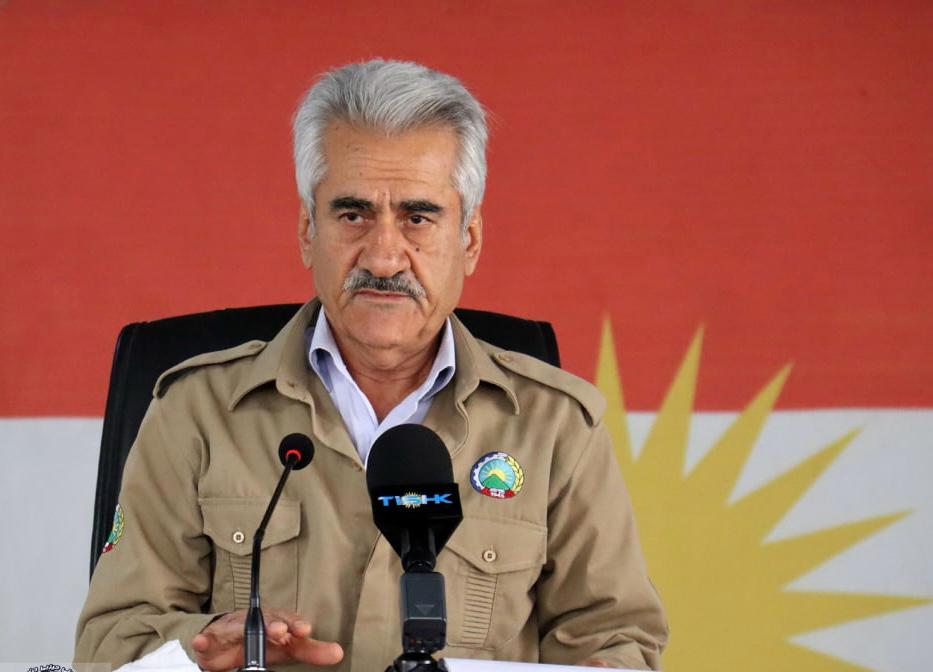
An exclusive interview with Mustafa Hijri on Iran post-7 October, the weakening of Tehran’s regional power, Israel and U.S. intervention, Kurdish unity, the lack of an alternative opposition for Iran’s future, and the country’s future. Interview conducted by Kamal Chomani, Editor-in-Chief at The Amargi.
In an exclusive conversation with The Amargi, Mustafa Hijri—long-time leader of the Democratic Party of Iranian Kurdistan (PDKI)—reflects on what he calls a historic turning point for Iran and the wider Middle East. From the collapse of Tehran’s regional hegemony to the limits of the Iranian opposition, Hijri lays out why he believes the Islamic Republic cannot return to its pre–7 October posture, why Kurdish unity is now essential, and what a democratic, federal future for Iran must look like.
After 7 October 2023, the Middle East entered a new historical phase in which it is expected that alliances will undergo changes and that new regional powers as hegemons will emerge, especially Saudi Arabia and Israel. How do you understand this “new Middle East,” and what is the place of the Kurds within these changes?
As you pointed out, alliances in the Middle East shift rapidly, and therefore, the political situation of the region is unstable. For this reason, we cannot precisely know where these changes are heading, but the accelerating transformations we have seen since 7 October 2023 indicate a profound regional shift. I see the roots of these changes in the transformation of the situation inside the Islamic Republic of Iran.
This regime, since coming to power, has pursued a policy of exporting revolution through financial and human resources. By means of its proxy forces such as Hamas, Hezbollah, the Houthis in Yemen, and the government of Bashar al-Assad in Syria, the Iranian regime besieged Israel as a fiery pawn. It embarked on developing nuclear capability, and its missile and drone forces were strengthened day by day for two purposes: first, to destroy and destabilize Israel; and second, to use those proxy forces as a defensive shield in case Iran is placed under external threat.
Until the events of 7 October, the Iranian regime was day by day increasing its power and hegemony, becoming a major threat, especially in the Middle East.
During that time, the United States and Europe made many attempts to change the regime’s policies and behavior, but these developments demonstrated to the West that the regime cannot change its policy. Therefore, they took direct steps to diminish the regime’s capabilities in all fields.
Now, contrary to the period before 7 October, and especially after the 12-day attack this year by Israel and the United States, the Islamic Republic of Iran has become a weakened and fragile state. Its proxy forces have been struck hard. The Syrian government, which once served as Iran’s strategic arm, has now become a government opposed to the Islamic Republic and is currently in talks with Israel to join the Abraham Accords. Lebanon, which had been in Hezbollah’s grip, has now become aligned with the coalition pushing for demilitarization. I see the continuation of this trend (Iran’s weakening) as the erosion of Iran’s hegemony. And the more this hegemony shrinks and weakens, the stronger the hope becomes for greater stability in the Middle East and for reducing the flames of war: an outcome that benefits the people of the region and the world.
Kurdistan, which is located in that region, will undoubtedly benefit from these transformations, on two conditions: first, that its policies align with the direction of these changes; and second, that internally it unites around a national agenda. Kurdish unity, in every part, is essential for benefiting from the outcomes of these transformations in a way that serves the people and the homeland.
Until the 12-day war, Iran was acting as a significant regional power in the Middle East, but now Iran has suffered setbacks in advancing its nuclear capabilities, its non-state militias have weakened and lost effectiveness, and its missile capabilities have been restricted. Do you believe Iran can ever regain the position it held before 7 October?
As I mentioned in part of my answer to the first question, I believe that after more than 40 years of attempts by the Islamic Republic to reshape the region and after the patience of Western states has finally run out, there is no longer any possibility that this regime can return to the situation it had before 7 October. This is especially true given the regime’s systemic corruption, the shortage of electricity, water, and other basic services on the one hand, and the collapse of the Iranian currency, the crisis of unemployment, and widespread social despair on the other. Combined with this is the daily suppression of freedoms, and the deep anger and disillusionment among the Iranian population, especially among non-Persian nationalities who no longer believe in the regime. Even within the circles of power itself, the current situation has produced mutual hostility that is now openly expressed.
In 2015, you announced Rasan (the PDKI Peshmerga resuming armed struggle) and carried out several military activities at a time when Iran was still in a strong position. But in recent years, both during the Jina Amini uprising in 2022 and during the 12-day war, you have, to an extent, distanced yourselves from military activity. Is this distancing a deliberate strategic political decision, meaning that you do not want to restart armed struggle? Or is it because you were not confident you could succeed, due to not being fully prepared?
We Kurds—or any of the oppressed nationalities, but especially the Kurdish people—have endured the greatest sacrifices during the lifetime of this regime, more than any other. But the truth is that none of these nationalities can, on their own, overthrow the regime, especially since the regime’s hostility toward the Kurds is deep and enduring. It is always ready, under any pretext, to unleash its anger against the Kurds. For this reason, armed struggle costs our people an enormous amount of human loss. And because we want to continue our struggle, however it may take shape, shoulder to shoulder with the other peoples of Iran, we do not want to place the entire burden of sacrifice and bloodshed for changing the government solely on the shoulders of the Kurdish people.
However, at the same time, we are fully prepared to continue the struggle, including armed struggle, and we remain committed to maintaining that capability.
Another truth in this regard is that, in this period, civil and organizational struggle carries far fewer human casualties, and at the same time, it is more resonant and better received internationally. Therefore, at this stage, we are focusing more on this form of struggle and giving it priority.
Over the past two years, Iran and Iraq, with the participation of the Kurdistan Regional Government, have signed several security agreements aimed at restricting the activities of the East Kurdistan (Iranian Kurdish) parties. After the implementation of these agreements, the activities of the Kurdish Iranian parties have become more limited. Are you not concerned that these agreements may eventually completely restrict you?
What has been restricted under those agreements so far has been the armed activities of the Rojhelat [eastern Kurdistan, referring to the Kurdish part of Iran] parties. Other forms of struggle continue on all sides according to each party’s capacity and work program.
However, the Islamic Republic has not stopped, and it continues to pressure the Kurdistan Regional Government and Baghdad in order to drive us out of this country. But we have stood our ground. From my perspective, especially now that the power of the Islamic Republic has weakened throughout the region—including in Iraq—Iran can succeed in this regard.
Considering the series of crises occurring one after another in Iran, it seems this country will face even deeper crises in the future, for example, the water crisis. Has the Kurdistan Democratic Party of Iran prepared a long-term plan to deal with the consequences of these crises? And in the event of political change in the future, what is the party’s plan for participating in rebuilding Iran’s socio-political foundations?
Yes, in our leadership meetings, we have discussed the possible scenarios of power transition in Iran, and for each potential change, we have defined an appropriate program and are working on it.
In recent years, despite some criticism, the Cooperation Center of the Parties of East Kurdistan played an important role in organizing and highlighting the historical demands of the Kurds. But after the recent developments, this center became inactive again. What are the main obstacles to establishing a unified front among the parties of Rojhelat (East Kurdistan)?
The Cooperation Center of the Parties of East Kurdistan, which continued its work for more than five years, was an important step in advancing the collective struggle of its member parties. However, afterward, due to some internal difficulties, it stalled.
But in the early months of this year, the Democratic Party took a new initiative to reconvene the Rojhelat parties once again around a joint program. Fortunately, this step was welcomed by the other sides, and so far, several meetings have been held. The positions of the parties regarding the formation of a shared platform for joint action have come significantly closer together. I believe that in the near future we will reach a successful conclusion and that this cooperation will resume.
After the Jin Amini uprising, there were many attempts to bring the Iranian opposition together to take joint steps and present a political alternative. But they were unable to agree on a single alternative for Iran’s future. What are the main problems that have prevented you from establishing a new paradigm among yourselves until now?
The lack of unity among the Iranian political forces is one of the main reasons the Islamic Republic has remained in power. This absence of unity has also made the Iranian people anxious about the future of Iran after the Islamic Republic, and it has left the international actors who want to support the overthrow of the regime uncertain about which side they should engage with.
Given this reality, and with the aim of filling that gap, the PDKI has, for several years, been in dialogue with the Persian parties. But unfortunately, we have not achieved success. I see the reason in the fact that over the past hundred years, there has been no democratic system of joint political work in Iran that would teach people practical dialogue and formal recognition of the opposing side. As a result, even though each of these groups proclaims democracy and democratic values, deep down, each of them remains authoritarian, accepting only themselves and their own views. What I mean is that people in Iran have not been trained in collaborative political work, and political pluralism has not been allowed in this century.
However, at the same time, the Democratic Party has succeeded in building unity among the oppressed nationalities of Iran, such as the Kurds, Arabs, Baluch, and Turkmen. Several years ago, we formed a coalition under the name “Congress of Nations of Federal Iran,” which is composed of the parties of these nations.
There is also another platform called “Alliance for Freedom and Equality in Iran,” in which we have a joint program for the struggle against the Islamic Republic.
What is the position of the Democratic Party regarding the attempts by some states, such as Israel, to elevate certain opposition figures, like Reza Pahlavi, as the leader of a unified opposition? Have these efforts strengthened cooperation among the opposition, or have they increased divisions?
We believe that charismatic leadership emerges from continuous work, struggle, experience, and leadership within the people, not through media promotion or the endorsement of a state or an external actor. Reza Pahlavi does not have a base among his own people, he has no political party, and he has no experience in leadership. It is not enough that he is the son of [the former shah of Iran] Mohammad Reza Shah, whose government the Iranian people overthrew 47 years ago.
And now, when the freedom-seeking people of Iran have sacrificed tens of thousands of lives over these years against both the monarchical regime and the Islamic Republic, they will not establish another monarchical system after the Islamic Republic.
For these reasons, the presence of this gentleman has not only failed to help unify the opposition forces and the people, but has, in fact, been one of the causes of increasing divisions among them.
At a time when the United States has neutralized Iran’s nuclear capabilities, it is also demanding a new agreement from Iran—something President Trump reiterated in his meeting with Saudi Arabia’s Crown Prince Mohammed bin Salman. Have the United States or European countries held any discussions with you to gain an understanding of Iran’s future? How can they help resolve the Kurdish question in Iran beyond the military dimension?
One of the main concerns of the United States and Europe is the lack of unity within the Iranian opposition and, consequently, the absence of a credible alternative that these countries—or the Iranian people—could accept. Western states do not know what Iran’s situation will look like after the fall of the regime, especially since they have the painful experience of unsuccessful attempts to support the overthrow of several authoritarian governments in the region, such as the monarchical regime in Iran, the situation in Iraq, and even Afghanistan.
Therefore, I believe that until now, the Western states have not yet reached the point of formulating a concrete plan for toppling the Islamic Republic. Instead, they have shifted their efforts toward negotiating with Iran and imposing their wishes and demands on it in order to reduce the regime’s threats to the region and to their own interests.
It may be for this reason that, until now, they have not made any serious attempt to hold meetings or consultations with the Iranian opposition organizations, including the PDKI, with the purpose of creating a program for the overthrow of the Islamic Republic.
In recent years, there has been discussion about several formal and informal talks between you and the Islamic Republic of Iran, especially the Oslo talks, which drew significant attention. Is there currently any dialogue underway with the Islamic Republic aimed at reaching an agreement?
It is true that at that time, as the Cooperation Center, and under the facilitation of a Norwegian institution, we were prepared to enter dialogue in order to explore a suitable solution based on the demands of the Kurdish people. But as the process unfolded, it became clear to us that the regime only intended to waste time and had no real intention. In the end, the process came to a halt, and at present, there is no dialogue between us.
If there were to be negotiations, or even generally, what are your main demands from the Islamic Republic in order to reach an agreement? Are you prepared to engage in peaceful negotiations with the Islamic Republic, similar to the peace talks between the Kurds and the Syrian state, or the Kurds and the Turkish state?
Our demand from the government in Tehran (whichever government it may be) is that, just as all power in Iran is concentrated solely in Tehran today, that power should be distributed; and that the Kurds and the other nationalities of Iran should, in a legal manner, participate in governing the country, and that the administration and governance of their own regions be entrusted to representatives elected by their own people.
The languages of these nationalities should be official in their own regions, and the activities of the political parties should be legally recognized. Overall, we believe these demands can be fulfilled within a democratic, federal, and secular Iran.
At that point, all these nationalities will consider Iran their own country, and all of them will work for its reconstruction and progress, leaving no place for a centralized and monopolistic system.
Mustafa Hijri is an Iranian-Kurdish politician and a long-standing leader of the Democratic Party of Iranian Kurdistan (PDKI). Born in 1945 in Salmas, West Azerbaijan Province, he trained as a teacher and later earned a degree in Persian literature from Tehran University before returning to teach in his hometown.
Hijri entered the PDKI’s senior leadership during the 1979 revolution, serving on both the Central Committee and the Political Bureau. Following the assassinations of the two PDKI Secretary Generals, Dr. Abdul Rahman Ghassemlou in 1989 and Dr. Sadegh Sharafkandi in 1992, he rose to the highest ranks of the party, serving multiple terms as General Secretary and Vice-General Secretary across successive congresses.
Hijri has been a central figure in shaping the PDKI’s political vision since first becoming General Secretary in 1992, regaining the position in 2008, and holding it continuously ever since.

The Amargi
Amargi Columnist
![[Amargi Exclusive] In the Zagros Mountains, PJAK’s Co-chair Says Iran has “Already Collapsed” and Warns Against “Another Dictatorship”](https://cms.theamargi.com/wp-content/uploads/2026/01/ressize-Screenshot_2026-01-12_at_15.05.23-1.png)