Exclusive Interview With DEM Party Co-chair: Inside Turkey’s Most Delicate Peace Process Yet
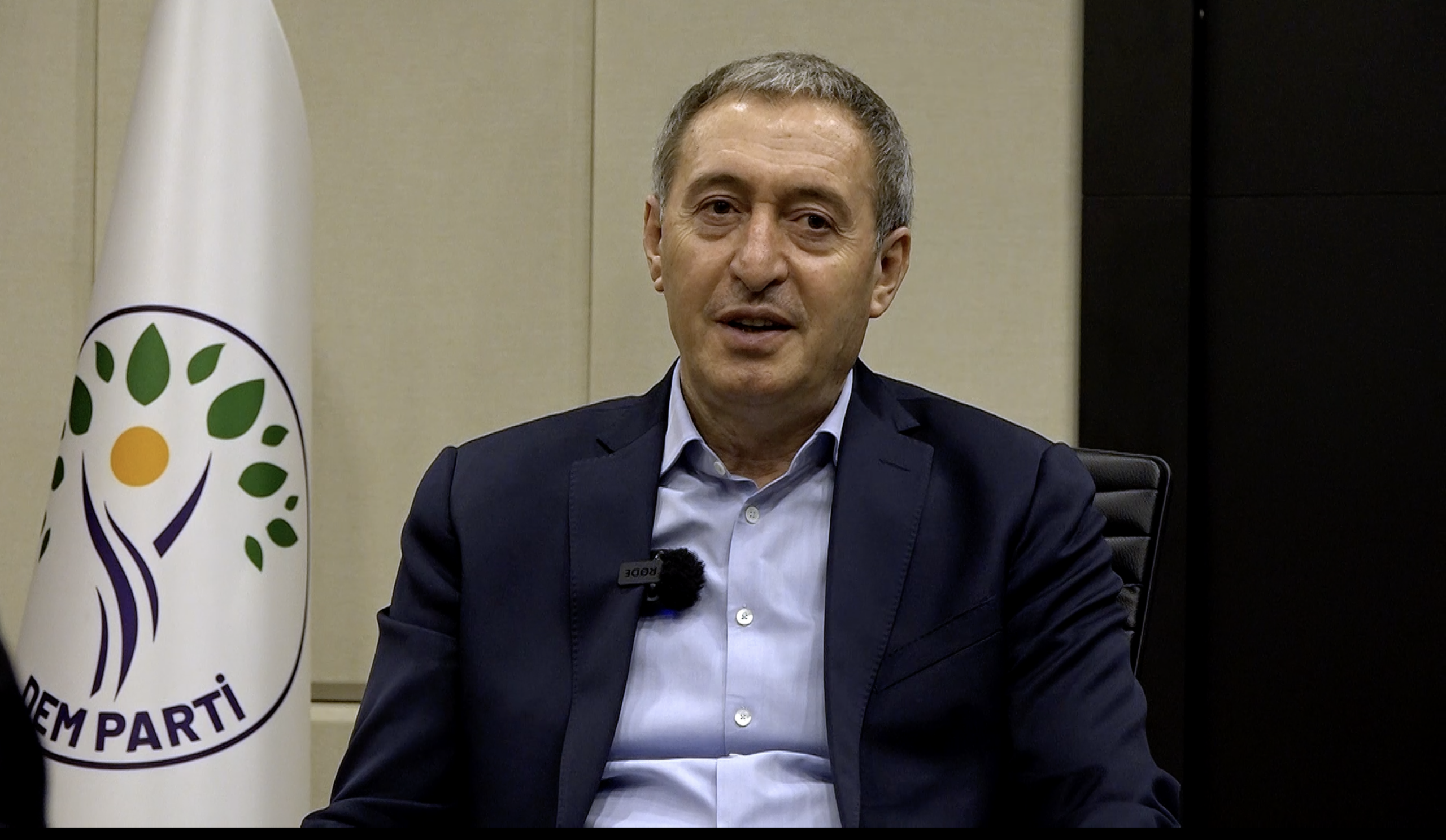
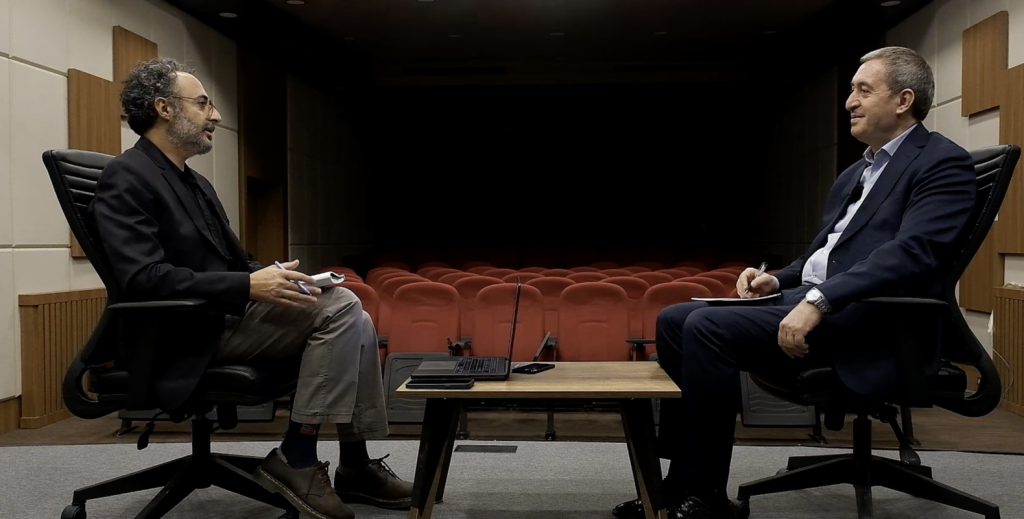
In an exclusive interview, DEM Party Co-Chair Tuncer Bakırhan tells The Amargi’s Irfan Aktan that Ankara must take the next steps in the peace process with Kurds – or risk losing the most promising opening in decades.
For nearly a year, Turkey has been engaged in what may be its most delicate effort to peacefully resolve the century-old Kurdish question. A parliamentary commission – almost entirely behind closed doors – has been working toward a legal and political roadmap that could pave the way for the Kurdistan Workers’ Party’s (PKK) full disarmament and the normalization of political life for millions affected by the four-decade conflict and century-old Kurdish question.
In the interview (full video can be watched here) the People’s Democratic and Equality (DEM) Party Co-Chair Tuncer Bakırhan offered an inside account of how the process is unfolding: its cautious beginnings, its structural challenges, and the pressure now on Ankara to take the next step, following “three historic steps” taken by the PKK.
“It’s a slow process, moving at its own pace – but at this stage, it needs to accelerate a bit; it needs to pick up its rhythm, shift gears. Because the first phase is over,” Bakırhan said. “Historic steps have been taken. Now the government must act. Society is waiting.”
A Process Conducted Behind Closed Doors
Unlike the 2013–2015 peace process – highly public, politically volatile, and ultimately short-lived – the current initiative was designed to progress quietly. A commission within the Grand National Assembly has held consultations with political parties, civil society groups, former state officials, and, crucially, Abdullah Öcalan on Imrali Island.
Three commission members, representing the ruling AKP, MHP, and DEM Party, traveled to Imrali and held a lengthy meeting with the imprisoned PKK leader.
With that visit, Bakırhan said, “The first phase is over.”
The commission’s report will soon go to the Turkish parliament, where lawmakers are expected to discuss a special legal framework addressing the PKK’s disarmament, the reintegration of guerrilla fighters and PKK members, and possible amnesty or legal reforms for thousands of people prosecuted under anti-terror laws.
But the silence surrounding the process has opened a space for parts of the political spectrum to spread uncertainty, suspicion, and obstructionist rhetoric.
“People ask: ‘What has changed in our daily lives?’ We hear this everywhere,” Bakırhan said. “The hardest steps have already been taken, but there has not yet been a single step that people can point to as a concrete democratic gain.”
A Fragile Optimism and a Growing Demand for Clarity
What most concerns Kurds, according to Bakırhan, is not only the absence of legislative progress but the continuation of punitive policies unchanged since the collapse of the last process in 2015.
Bakırhan’s message throughout the interview was consistent: the peace process is real, it is advancing, and its success depends on the government taking immediate legal steps to restore public confidence.
“Credit where it’s due: people have not been losing their lives for a year,” he said. “And there is now a sense of hopeful expectation.” But he argued that without concrete actions, this hope can morph into anxiety and mistrust.
What most concerns Kurds, according to Bakırhan, is not only the absence of legislative progress but the continuation of punitive policies unchanged since the collapse of the last process in 2015:
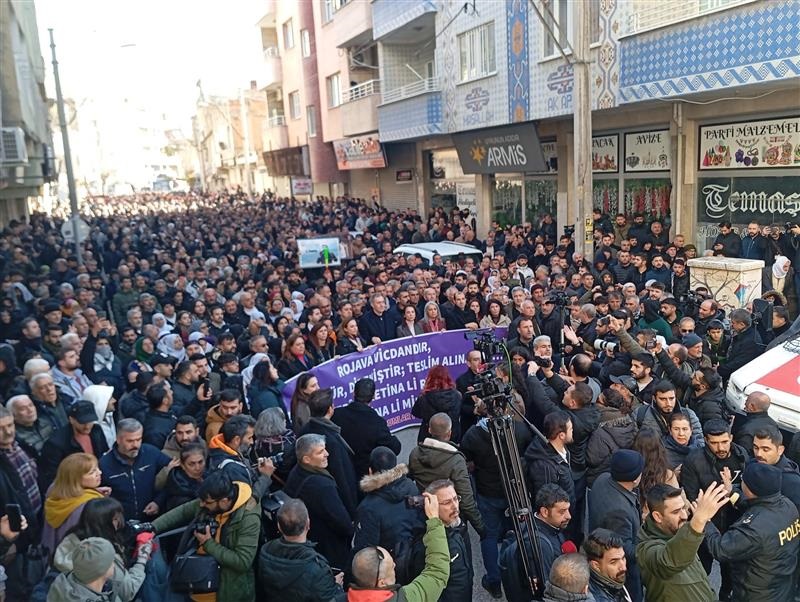
- Government trustees (kayyımlar) continue to replace elected Kurdish mayors.
- University students continue to face detention for social media posts.
- Thousands remain imprisoned under broad terrorism charges.
- Court rulings, including binding ECHR judgments on Kurdish politician Selahattin Demirtaş’s release, remain unimplemented.
“The government needs to directly take part in this process – until now it has brought it forward only through words,” he said. “Since the government is the actual decision-making body, it must now take concrete steps.”
For many, the release of Selahettin Demirtaş, or even a clear legal pathway toward it, would be the most powerful sign of serious intent from the government.
“This ruling is final. It must be implemented,” Bakırhan said bluntly. He argued that these legal ruling cannot be ignored, and their implementation would grant legitimacy and foster calmness in society, “One of the steps the government could take to reduce the anxiety among Kurds and anxiety among Turks is to implement these decisions.”
What the Government Wants and Fears
While Ankara remains cautious, several developments have pushed the state toward re-engagement: the impossibility of a military solution, the regional importance of Kurdish actors in Syria and Iraq, and the destabilizing consequences of prolonged conflict.
But there are deep anxieties within the government and its nationalist allies:
- Fear of political backlash from the right-wing
- Fear of empowering Kurdish autonomy demands
- Fear of appearing weak before municipal elections
- And, most of all, the fear of opening a process that cannot be easily controlled
Bakırhan acknowledged these concerns but insisted they cannot dictate the process. He also argued that certain specific concerns are out of touch and unrealistic, such as two different systems of law for Kurds and Turks:
“Democracy for Kurds but an authoritarian and repressive system in the West [of Turkey] – Kurds would not accept that.”
“This issue cannot be resolved through security policies,” he said. “A democratic solution benefits all 86 million people, not just Kurds.”
A Special Law and Far More Than That
The core of the upcoming parliamentary debate revolves around a “special law”, a legal mechanism that would regulate disarmament, reintegration, and the status of those in exile or under prosecution.
Bakırhan supports such a law but warns that it cannot stand alone.
“This is a democratization process,” he said. “Yes, there must be a special law. But we also need reforms to the Anti-Terror Law, the execution regime, freedom of expression protections, and equal treatment under the law.”
Without broader reforms, he argued, the foundations of peace remain too fragile to carry the weight of public expectations.
“The Kurdish issue does not end with a special law,” he said. “If the roots of discrimination and repression remain, the process will not hold.”
The Syria Equation: Rojava and Turkey’s Lack of Initiative
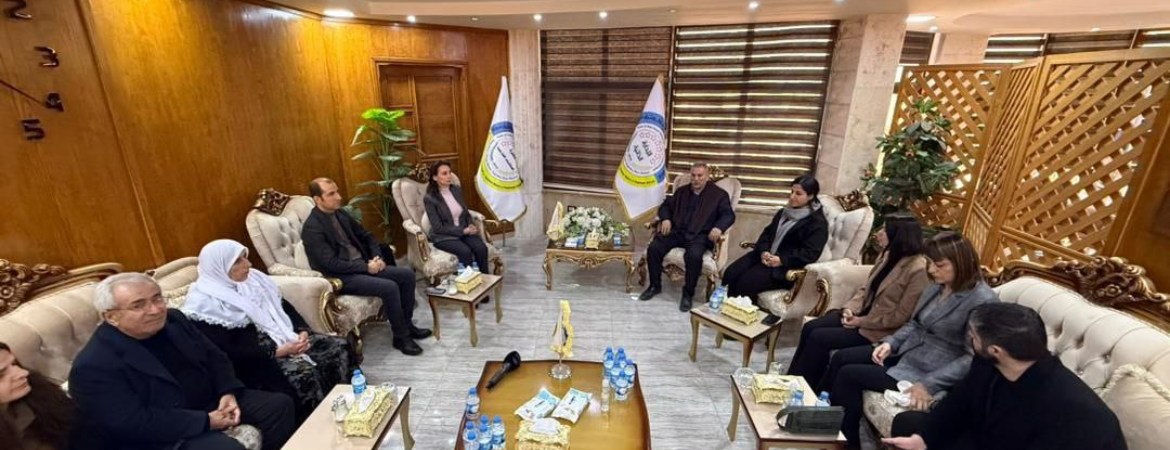
One vital topic in the interview was that of Northeast Syria, where Turkey’s military presence, political anxieties, and security doctrine intersect directly with the Kurdish peace process at home.
Bakırhan openly challenged Ankara’s longstanding refusal to engage with the Democratic Autonomous Administration of North and East Syria (DAANES) or its political arm, the Democratic Union Party (PYD), even though they are internationally recognized as legitimate actors.
“It is not possible to understand this,” he said. “[the foreign minister of Rojava] Ilham Ahmed speaks in European parliaments. The U.S. Special Envoy meets [Syrian Democratic Forces General Commander] Mazlum Abdi regularly. Why can Turkey not speak with them?”
Kurdish society in Turkey and in Syria remains interconnected, as familial and societal ties, despite borders, remain strong. He argued that Turkey’s fear-driven approach deepens Kurdish distrust at home and abroad. He added that if Turkey wants peace at home, it must also rethink its approach to Kurds in Syria.
“We would wish that a Turkey which resolved the Kurdish issue through democratic means at home could have been a guarantor country in Syria as well.”
He said that the government’s refusal to allow Ilham Ahmed to attend the DEM Party’s upcoming international conference on 6 and 7 December sends the wrong message at the wrong time.
What Happens if the Process Fails?
Bakırhan refused to entertain the idea of collapse, but he does not minimize the stakes.
“We have lived through the catastrophe of a broken process before,” he said. “No one benefited. Not Kurds, not Turks, not the state.”
“If Kurds had aligned with imperial powers during the War of Independence, perhaps they would have a state today. But they chose the peoples they lived with”
He insisted that Kurds will not seek alliances with external powers and will not align themselves with any regional actor – like Israel, as some conspiracy narratives have claimed. Rather, they will continue to seek a solution within Turkey.
“If Kurds had aligned with imperial powers during the War of Independence, perhaps they would have a state today. But they chose the people they lived with,” he said. “We believe our future is with the people we live with.”
On the claims regarding Israel, he said, “Israel has become a significant power in the region in recent years. But Kurds are not seeking a remedy or a solution there because Israel is a regional power. As far as I can see, Kurds in Syria [also] want to resolve their issue with the Syrian regime.”
However, the message was clear: this moment is rare, and it will not last forever. “Hesitation can slow the process,” he warned. “Not taking steps makes things difficult. The responsibility lies with the government.”
A Rare Window and a Choice
The picture that emerges from Bakırhan’s account is that of a delicate but genuine opportunity: a mutual ceasefire, direct engagement with Öcalan, and a parliamentary mechanism capable of producing a legal framework unprecedented in scope.
“A major responsibility is placed on Mr. Öcalan in this matter – by the government itself, by political parties in Turkey.”
“This is not a Kurdish issue alone. It is Turkey’s issue. It is a democracy issue.”
Such a combination has appeared only twice in the last century: in 2013 and now. But the clock is ticking. The public mood is mixed. The political cost of inaction grows daily. And the region, particularly Syria, is moving quickly.
“This is not a Kurdish issue alone,” Bakırhan said. “It is Turkey’s issue. It is a democracy issue.”
If Turkey can seize the moment, the benefits could reshape the country for generations. If not, the consequences, political, regional, and human, could be severe.
“Historic steps have been taken, but on the other side [the Turkish Government], things are moving very slowly,” Bakırhan repeated. “So we need these steps to be taken, so that people can believe in this process – or at least grow more hopeful – without being overly influenced by external factors.”

İrfan Aktan
İrfan Aktan was born in Hakkari-Yüksekova. He graduated from the Journalism Department of the Faculty of Communication at Ankara University in 2000 and completed his Master’s Degree in the Women’s Studies Center at Ankara University. He worked as journalist for Bianet, BirGün newspaper, Express, Nokta, Yeni Aktüel, and Newsweek-Türkiye magazines, Gazete Duvar, Artı Gerçek and IMC TV. His books include Nazê/Bir ‘Göçüş’ Öyküsü, Zehir ve Panzehir: Kürt Sorunu and Karihōmen: Japonya’da Kürt Olmak.